


Atlas of freshwater aquarium fish - SpotMeUp guide
The world of freshwater fish is huge - there are hundreds of popular aquarium species alone, and large atlases describe over a thousand varieties.(agroswiat.pl)
This guide is the "essence" - an atlas of the most frequently chosen aquarium fish, collected to help you:
select species according to the capacity,
avoid aggression and beginner's mistakes,
ensure proper water parameters.
Most tropical aquarium fish do well in water with a temperature of approximately 24-27°C and a pH of 6.5-7.5.(aqueon.com)
Specific species may have their own preferences - I mark them in the descriptions.
How to read this atlas?
For each species you will find:
Difficulty level: easy / medium / difficult,
Fish size: approximate length of an adult fish,
Minimum capacity: real, not "marketing",
Water parameters: temperature and pH range (approximate),
Behavior: gregarious, territorial, calm, aggressive, etc.,
Who you can hang out with: typical cast, what to avoid,
1. Aquarium fish for beginners (easy species)
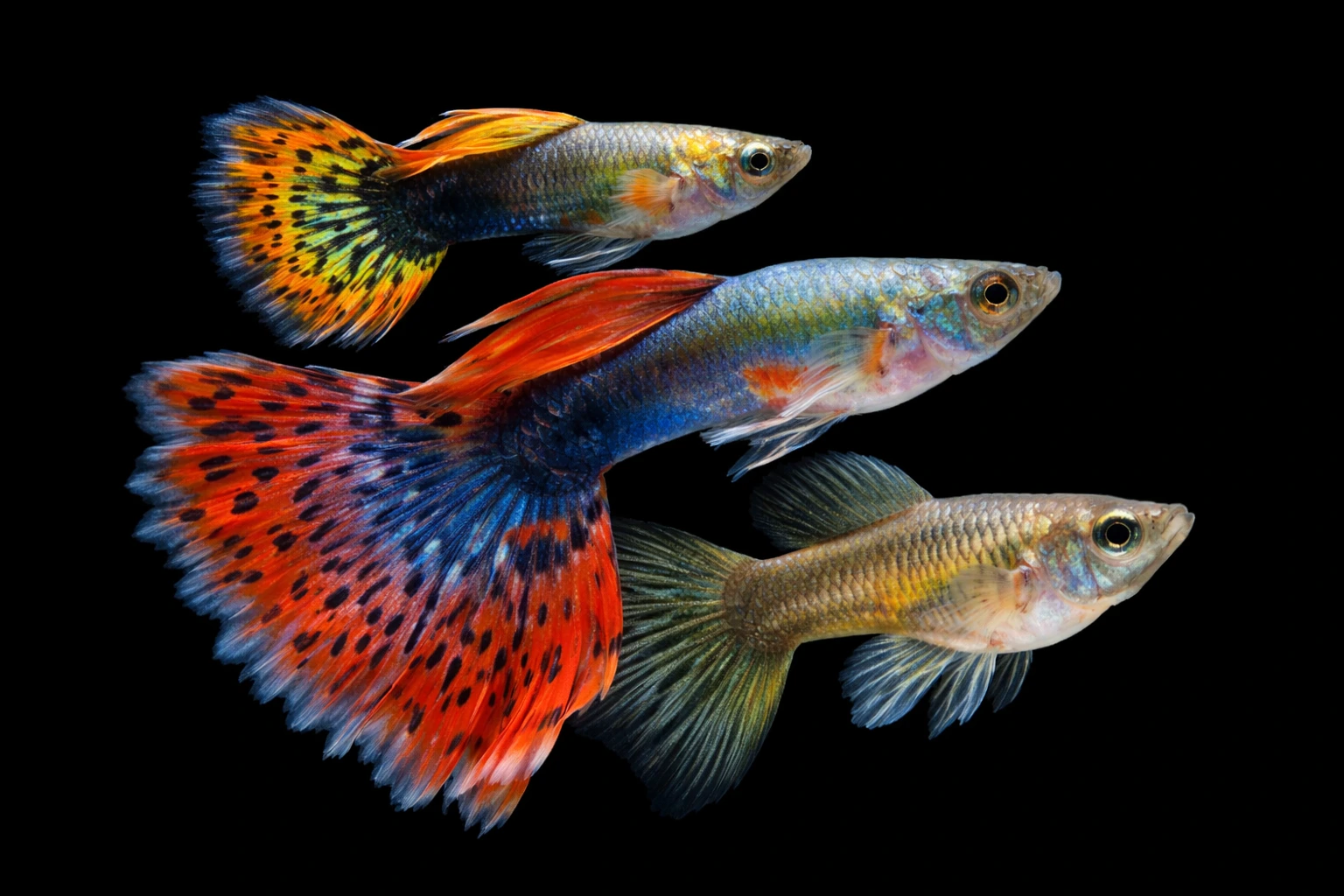
1.1. Peacock-eye guppy
Poecilia reticulata – Guppy
Difficulty level: Easy
Size: 3–5 cm
Minimum capacity: from 40 l (better 60 l and up)
Water: 23–26°C, pH 7.0–7.8 (likes water from slightly neutral to alkaline)
Behavior: Viviparous, mobile, very reproducing
Characteristics:
A classic for home aquariums. Males are intensely colored, females are larger and more modest. It is a school fish - three guppies in 30 liters is not a flock, it is really worth aiming for 8-12 pieces or more. Due to their easy reproduction, they quickly "clog" the tank.
Who to stay with:
Other peaceful livebearers (mollies, swordtails, platies), small characiformes (neons, razboras), catfishes, otoskis.
What to avoid:
Large cichlids, predators, aggressive barbs.
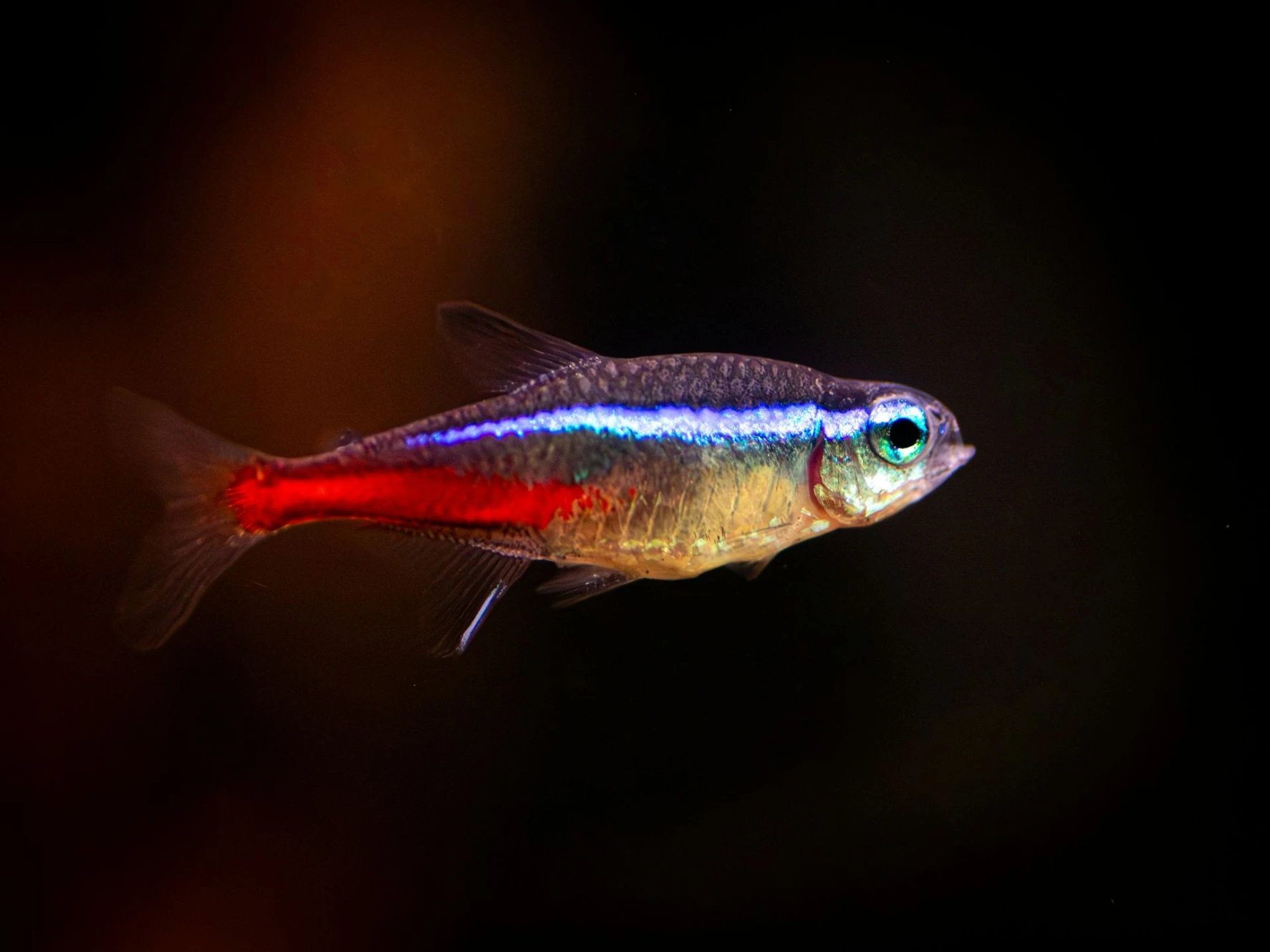
1.2.Neon Innesa
Trigonostigma heteromorpha
Difficulty level: easy / medium
Size: 3–4 cm
Minimum capacity: 60 l for a herd of 10-15 animals
Water: 22-26°C, pH 6.0-7.2 (slightly acidic to neutral)(Aquaforest)
Behavior: Gentle, gregarious, feels best in a large group
Characteristics:
One of the most popular aquarium fish in the world. The blue-red strip reflects light and makes an impression even in a small tank. They require stable parameters and good filtration.
Who to keep:
Cyris, Otos, small razbors, calm cichlids, small viviparous birds.
What to avoid:
Large cichlids, aggressive barbs, tanks that are too small (neons are timid).
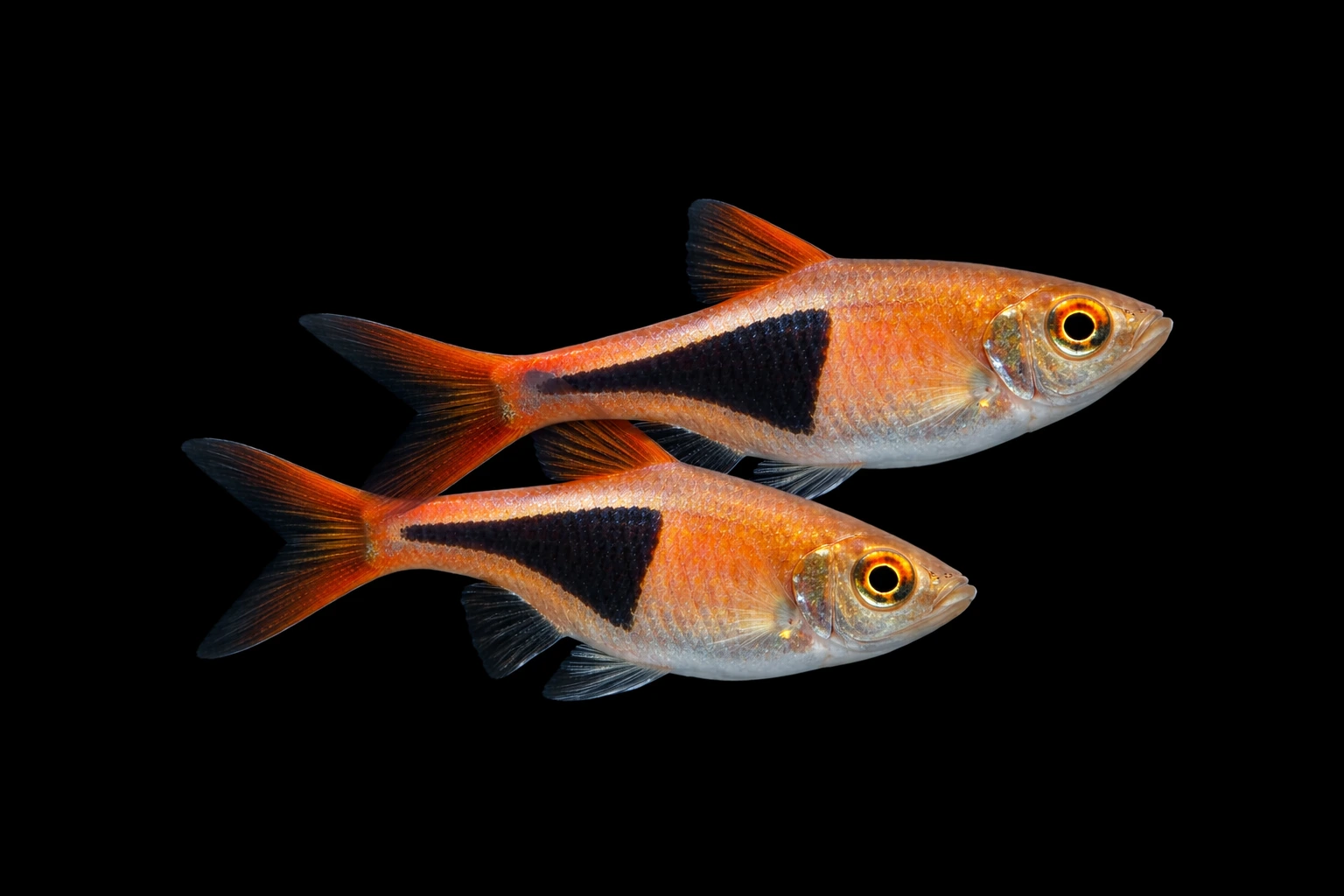
1.3. Rozbora Klinowa
Razbora clinowa (ang. Harlequin Rasbora)
Difficulty level: Easy
Size: 4–5 cm
Minimum capacity: from 60 l (herd of min. 10 animals)
Woda: 23–27°C, pH 6,0–7,5
Behavior: calm, gregarious, looks beautiful in a school
Characteristics:
Perfect for a planted aquarium - orange body with a dark "wedge-shaped" triangle. It adapts well to most waters.
Who to keep:
Neons, catfishes, otoskis, small shrimps (in case of dense vegetation), peaceful livebearers.
Photo suggestion:
"A group of wedge-tailed razbors against the background of tall stem plants."
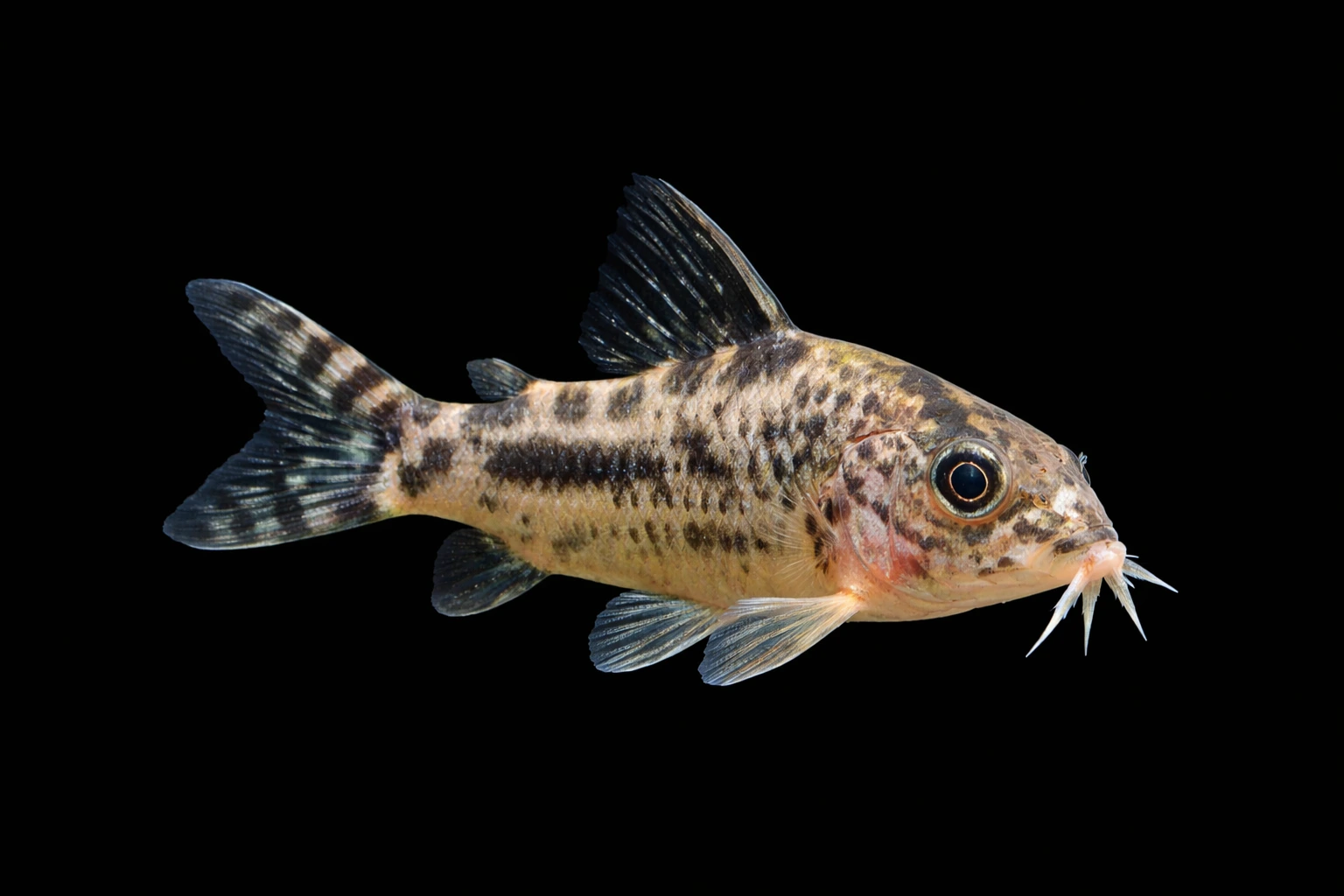
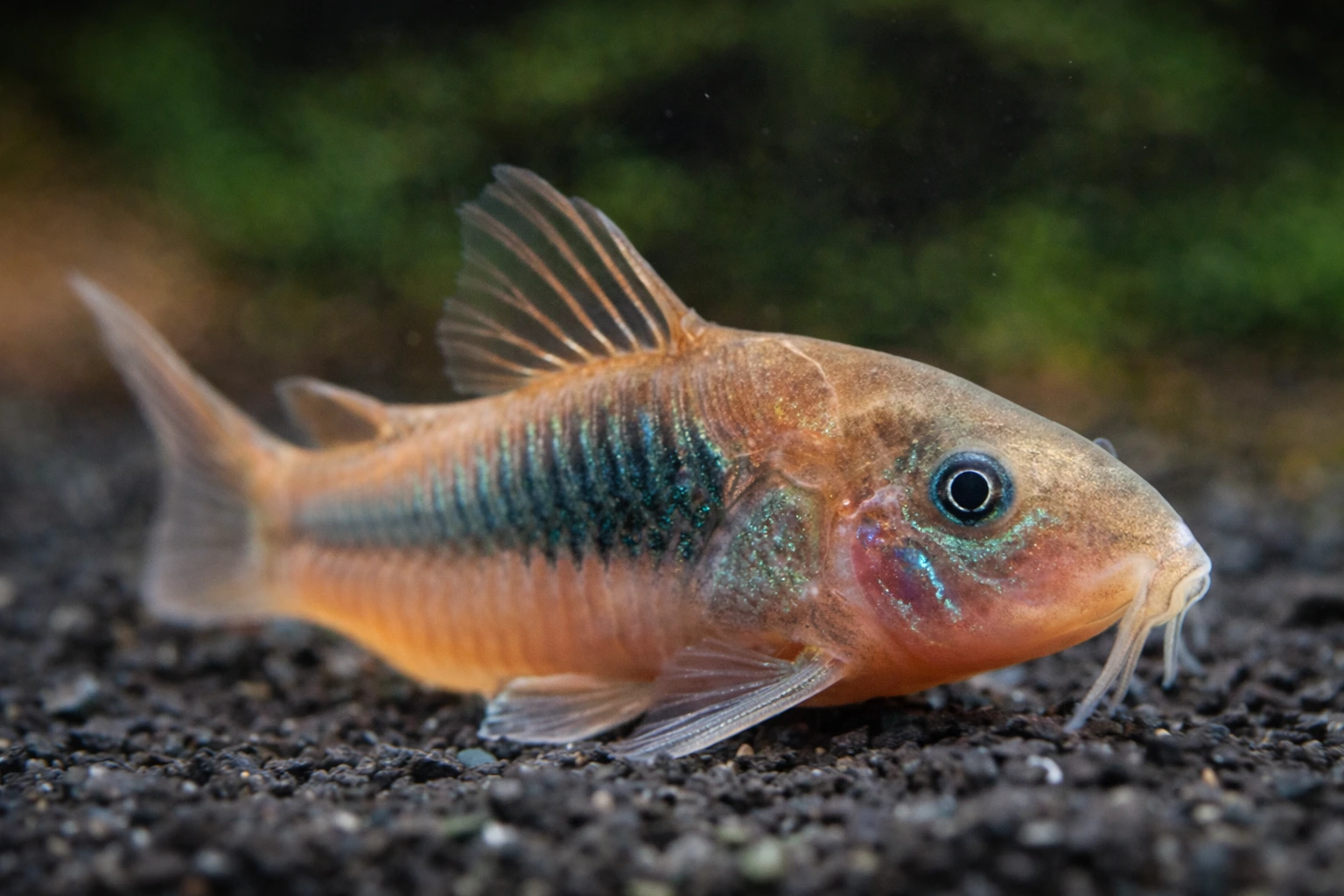
1.4. Kirysek pstry
Corydoras paleatus / Corydoras aeneus – Cory catfish
Difficulty level: Easy
Size: 5–6 cm
Minimum capacity: 60 l (herd of at least 6 pieces)
Woda: 22–26°C, pH 6.5–7.5(Aquania)
Behavior: bottom-dwelling, gregarious, active mainly at the bottom
Characteristics:
They are not "cleaners" who will eat all the leftovers, but they make a great addition to the cast. They requiresoft substrate (sand or fine gravel)so as not to damage the delicate whiskers.
Who to keep with:
Most peaceful small fish - neons, razboras, guppies, mollies, cichlids.
Kirysek spiżowy (Corydoras aeneus)
Level: beginner
Litage: from 60 l (for a group)
Temperature: 22–26°C
pH / hardness: pH ~6.0–7.5, soft–medium
Size: ~6–7 cm
Behavior: very calm, demersal, gregarious
How many pieces: min. 6, better 8-12
Feed: sinking tablets, bottom granules, frozen food (bloodworm with caution), artemia
Arrangement: fine sand (the most important), hiding places, roots
Connection: great for communities; avoid aggressive ones that stress him
Bugs: sharp litter → damaged whiskers; too small group → stress.
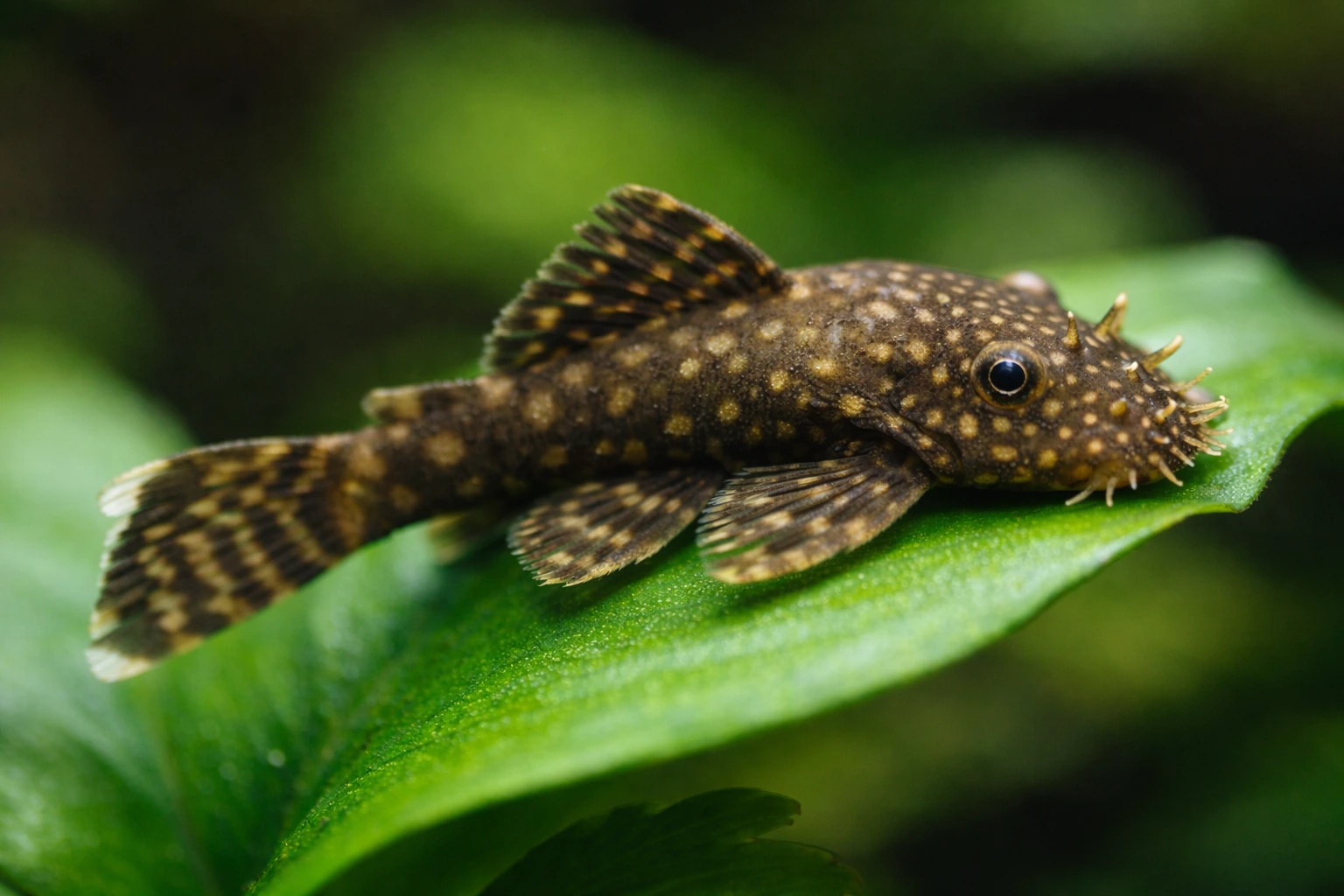
1.5. Blue spider mite (popularly: algae eater)
Ancistrus sp. – Bristlenose pleco
Difficulty level: Easy
Size: 10–12 cm
Minimum capacity: from 80 liters
Woda: 23–27°C, pH 6,5–7,5
Behaviour: bottom-dwelling, territorial towards its own species in a small space
Characteristics:
An excellent "glass and root cleaner", but you cannot base its diet solely on algae - it needs plant foods, tablets for algae eaters, and vegetables. It likes hiding places made of roots and coconuts.
Who to stay with:
Most sociable fish, provided the appropriate size.
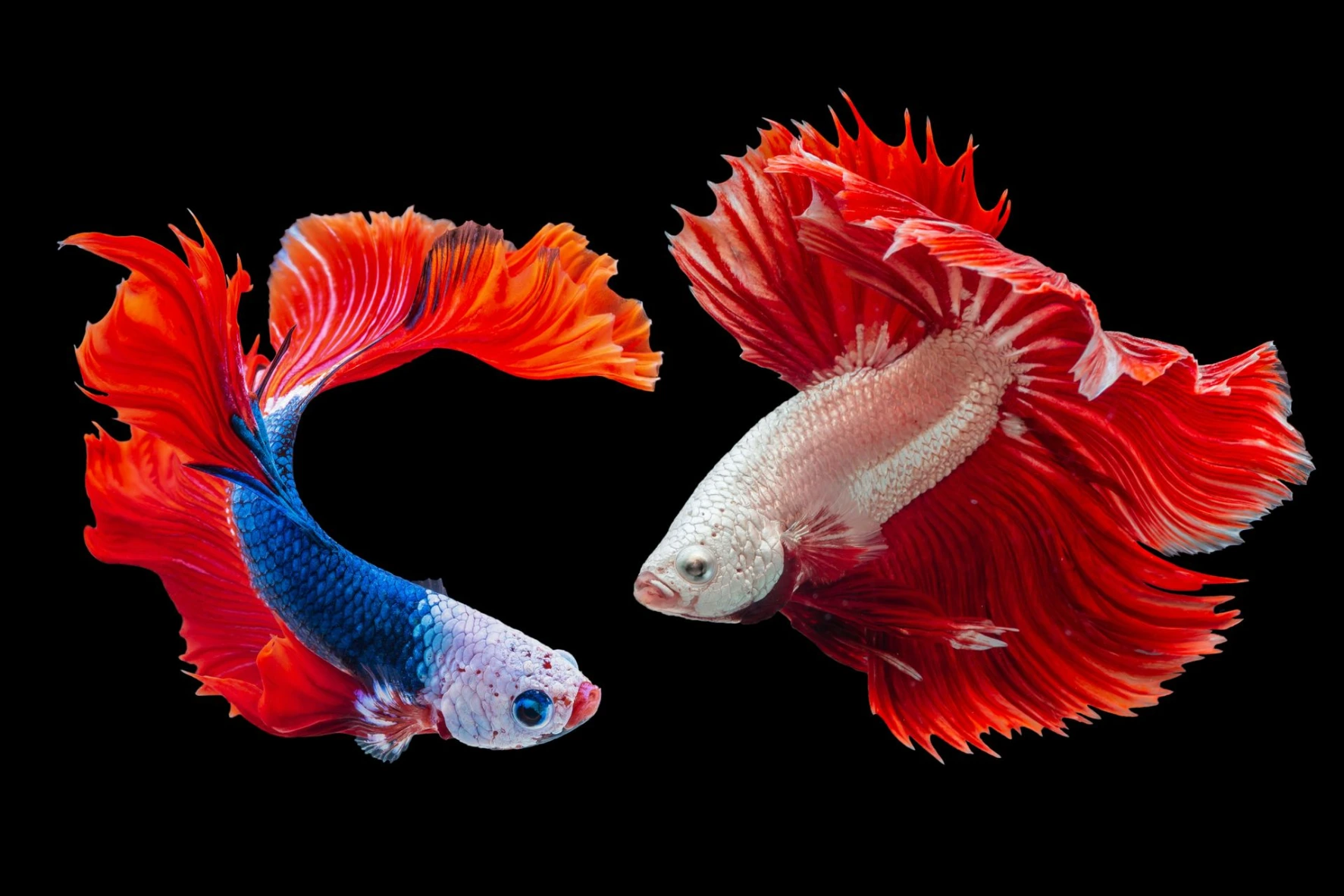
1.6. The Magnificent Fighter (careful in selecting the cast)
Betta splendens – Siamese fighting fish
Difficulty level: easy / medium
Size: 6–7 cm
Minimum capacity: min. 20–25 liters per male (actually better 30–40 liters)
Woda: 24–28°C, pH 6,5–7,5
Behavior: Territorial male, likes a quiet environment
Characteristics:
Beautiful, long-finned varieties, often kept in microcubes - which is abad idea. It needs heated, filtered water and calm companions (if any).
Who to stay with:
This is a topic for a separate article - preferably aseparate tank, or possibly very peaceful, small species that do not nibble their fins.
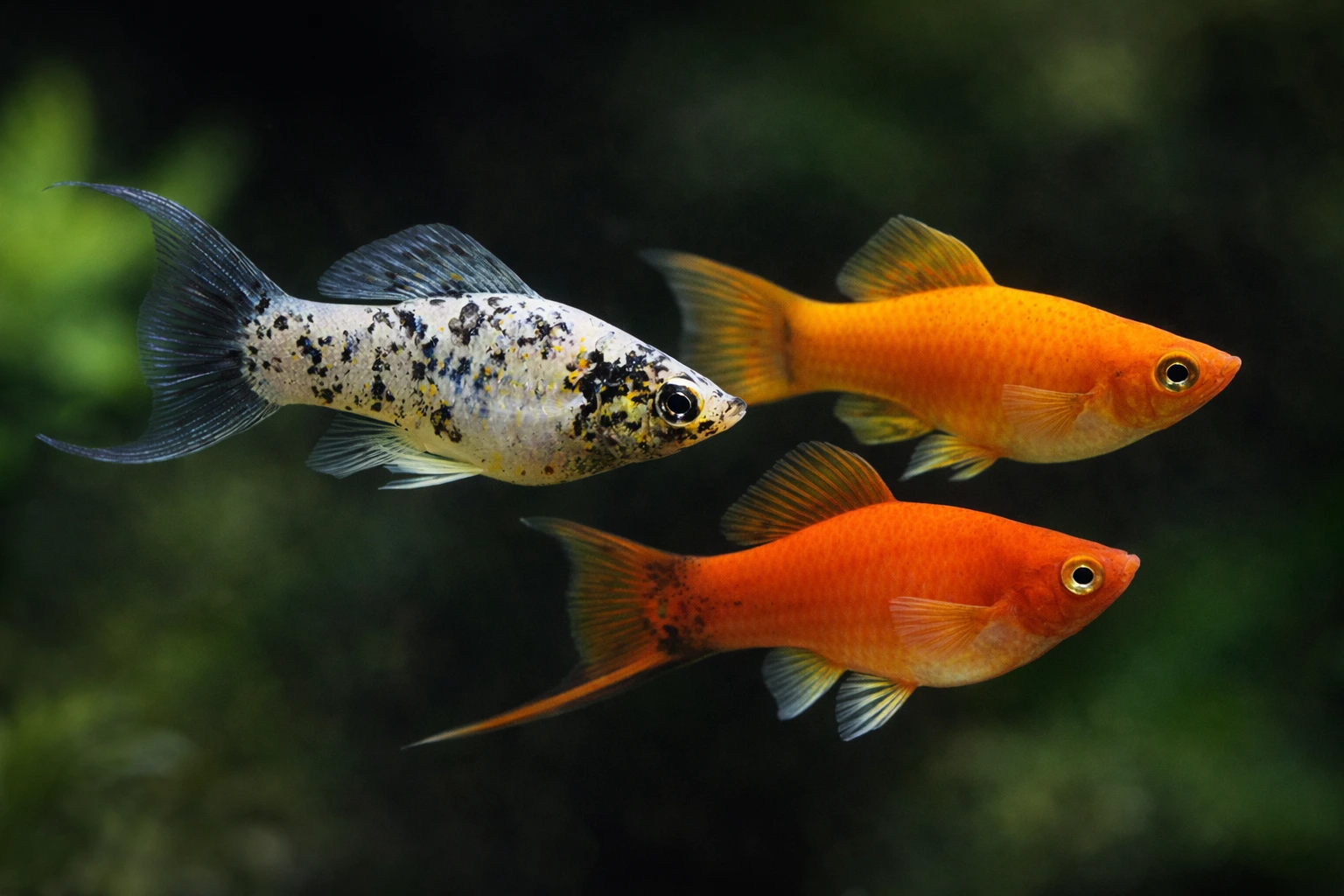
1.7. Molly / Shawl / Gladiolus
Poecilia / Xiphophorus
Difficulty level: Easy
Size: 5–8 cm (depending on the species)
Minimum capacity: from 80 l and above (for mixed viviparous stock)
Water: 24–27°C, pH 7.0–8.0 (they like harder, alkaline water)(rybyakwariowe.eu)
Behavior: Viviparous, mobile, reproduce intensively
Characteristics:
A colorful "classic" - great for family aquariums, but requires population control (males can torment females and it is easy to overstock them).
1.8 Amanda's mole (Hyphessobrycon amandae)
Level: beginner/intermediate (easy, but likes stable conditions)
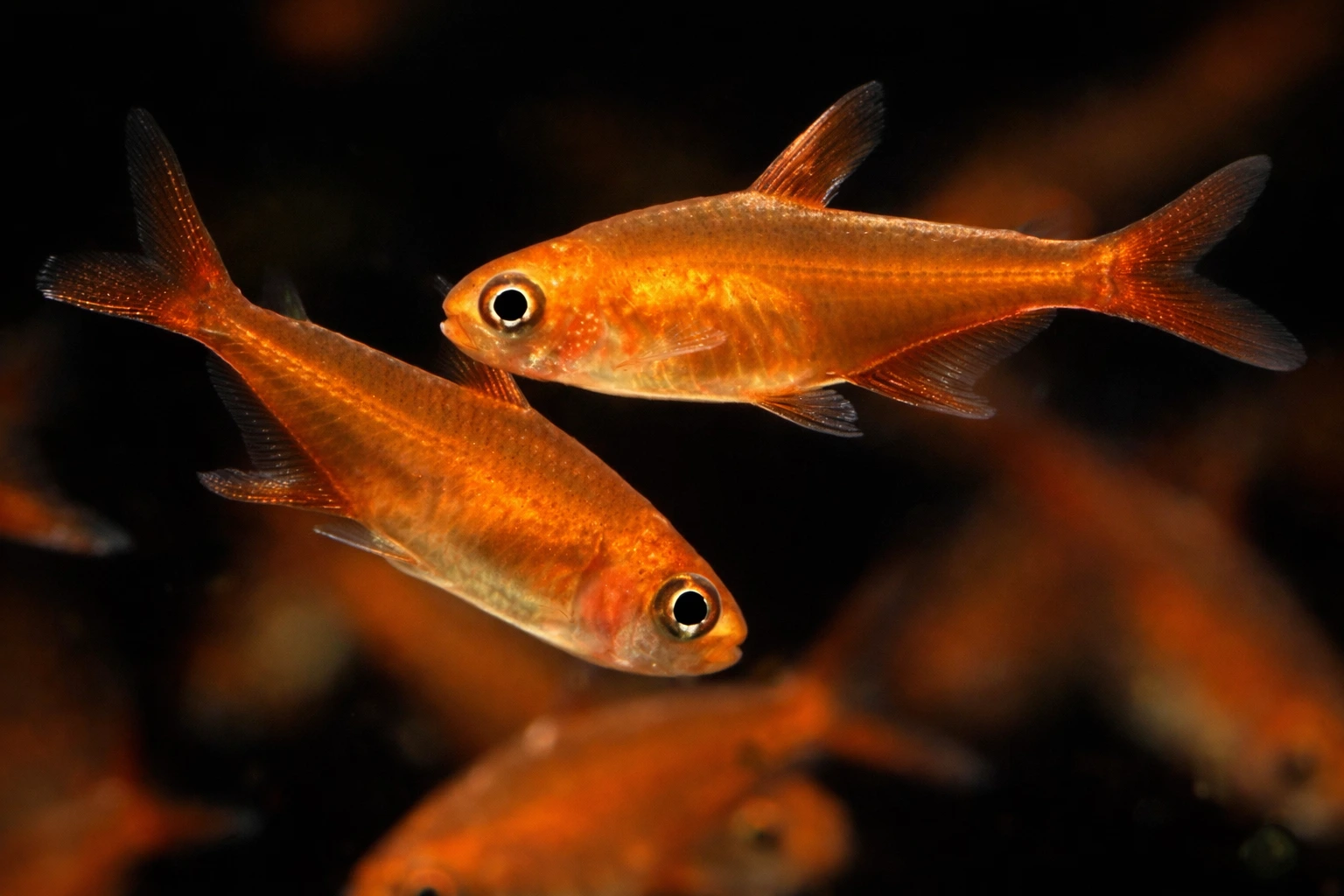
Litage: from ~40 l (better 60 l+)
Temperature: 24–28°C
pH / hardness: pH ~5.5–7.5, soft-medium (the more stable, the better)
Size: ~2 cm
Behavior: very calm, shoaling
How many pieces: min. 10–12 (the more, the better it looks and is more reliable)
Feed: fine (microgranules, crushed flakes, artemia, daphnia)
Arrangement: plants, darker background, gentle current, subdued light
Combination: ideal for quiet plantings (kiryśki, otoski, small razboria)
Errors: Too small a group = shyness, "disappearing", worse colors.
2. Moderately difficult genres (for people with basic experience)
2.1. Skalar ( Pterophyllum scalare / Angel fish )
Difficulty level: medium
Size: 15 cm high (with fins)
Minimum capacity: from 150 l (tall aquarium)
Woda: 24–28°C, pH 6,0–7,5
Behavior: Territorial, can snack on very small fish
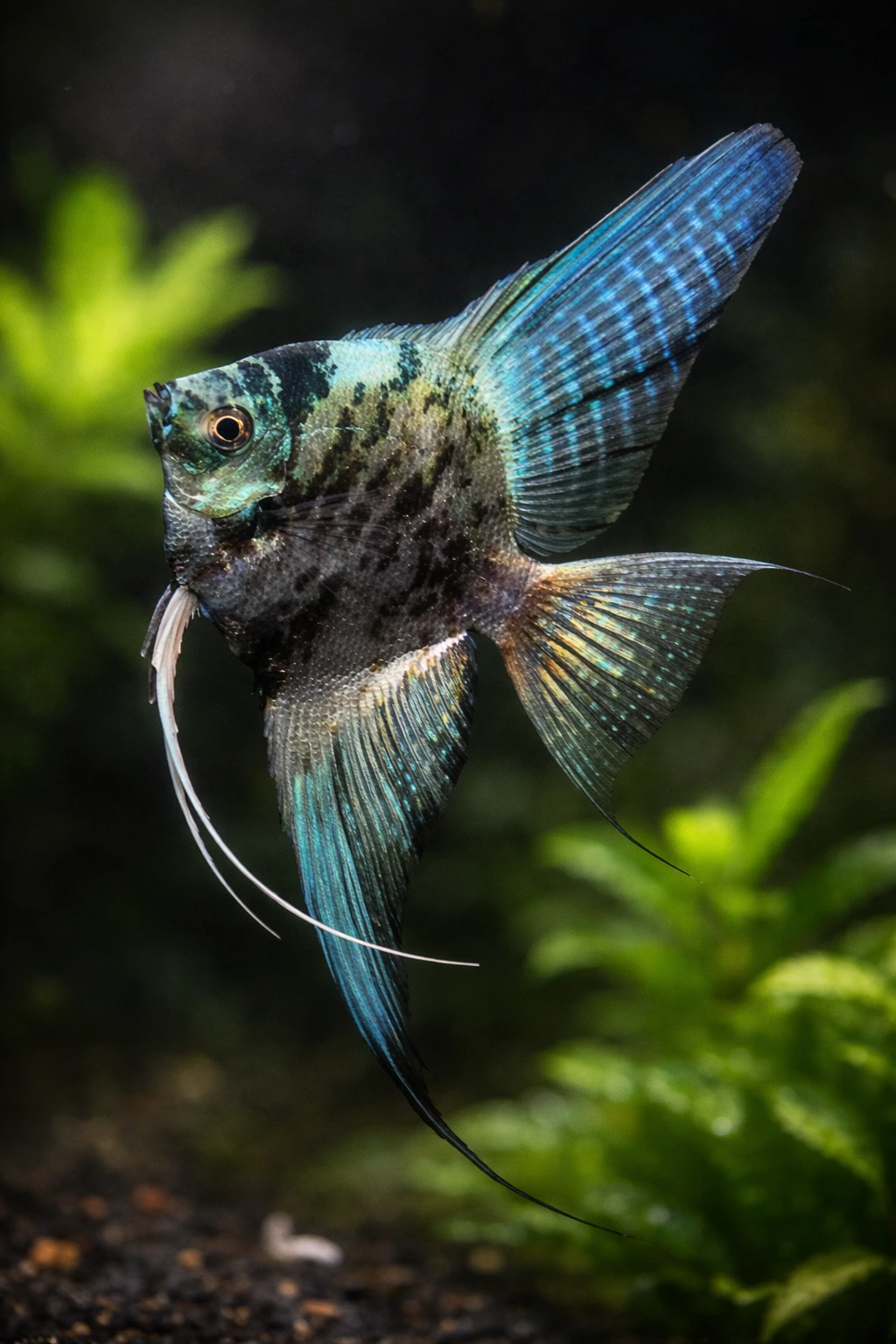
Characteristics:
An elegant fish with a tall body. It does well in a quiet crowd, but adult angelfish will eat neonsif they are too small. They like shady, tall aquariums with roots.
Find out more!
2.2. Ramirez's nurse
Mikrogeophagus ramirezi – Ram cichlid
Difficulty level: medium / difficult (sensitive to water quality)
Size: 5–7 cm
Minimum capacity: 60–80 l for a couple
Water: 25–29°C, pH 5.5–7.0 (clean, soft)
Behavior: Territorial during spawning, otherwise peaceful
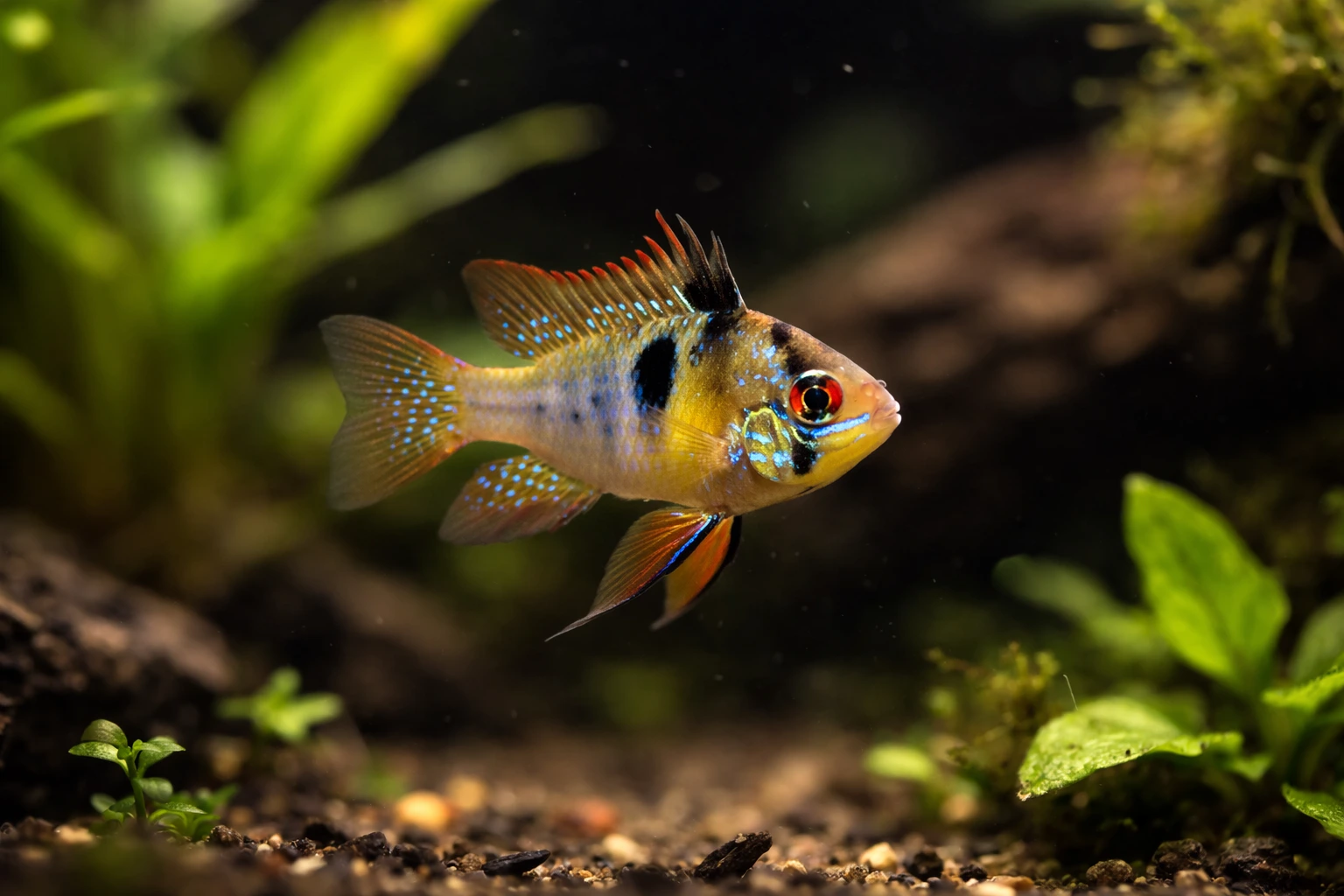
Characteristics:
A very colorful small cichlid, great for a community aquarium provided it has very good filtration and stable parameters.
2.3. Mosaic/striped gourami
Trichogaster spp. – Gourami
Difficulty level: medium
Size: 10–12 cm
Minimum capacity: from 100 l
Woda: 24–28°C, pH 6,0–7,5
Behavior: rather calm, males can be territorial
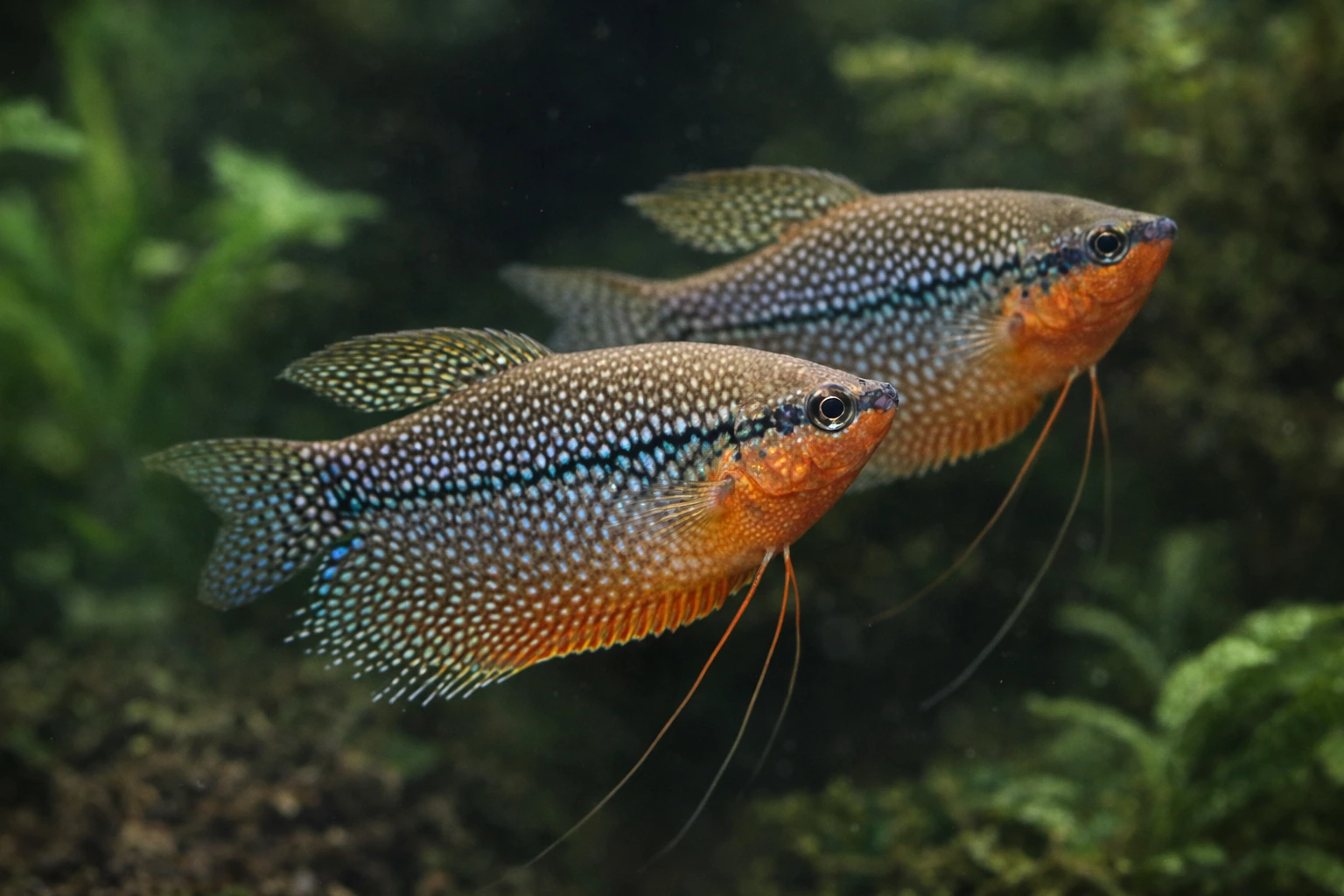
Characteristics:
Labyrinth fish - can breathe atmospheric air. It likes dense vegetation and quiet plantings.
2.4. Zebrafish
Danio rerio – Zebra danio
Difficulty level: medium (easy, but likes exercise and cooler water)
Size: 4–5 cm
Minimum capacity: 60 l (herd of min. 8–10 animals)
Woda: 20–25°C, pH 6,5–7,5
Behavior: Very active schooling fish, likes stronger currents
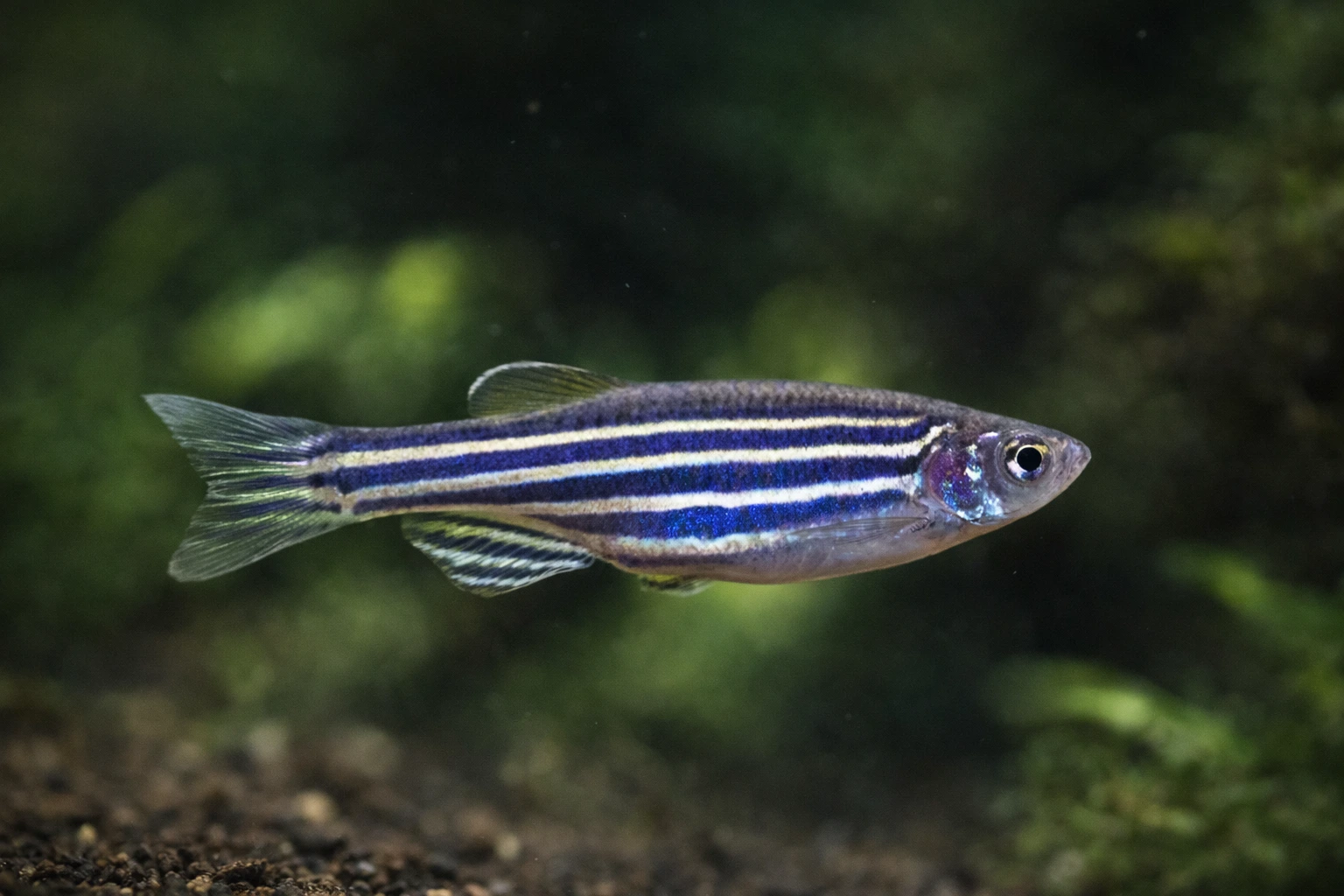
Characteristics:
Great for tanks with current; may be a link between "tropical" and slightly cooler casts.
2.5. Barbs (e.g. Sumatran barb)
Difficulty level: medium
Size: 6–7 cm
Minimum capacity: 100 l (herd of 10+ animals)
Woda: 23–26°C, pH 6,0–7,5
Behavior: mobile, can nibble the fins of other fish
Characteristics:
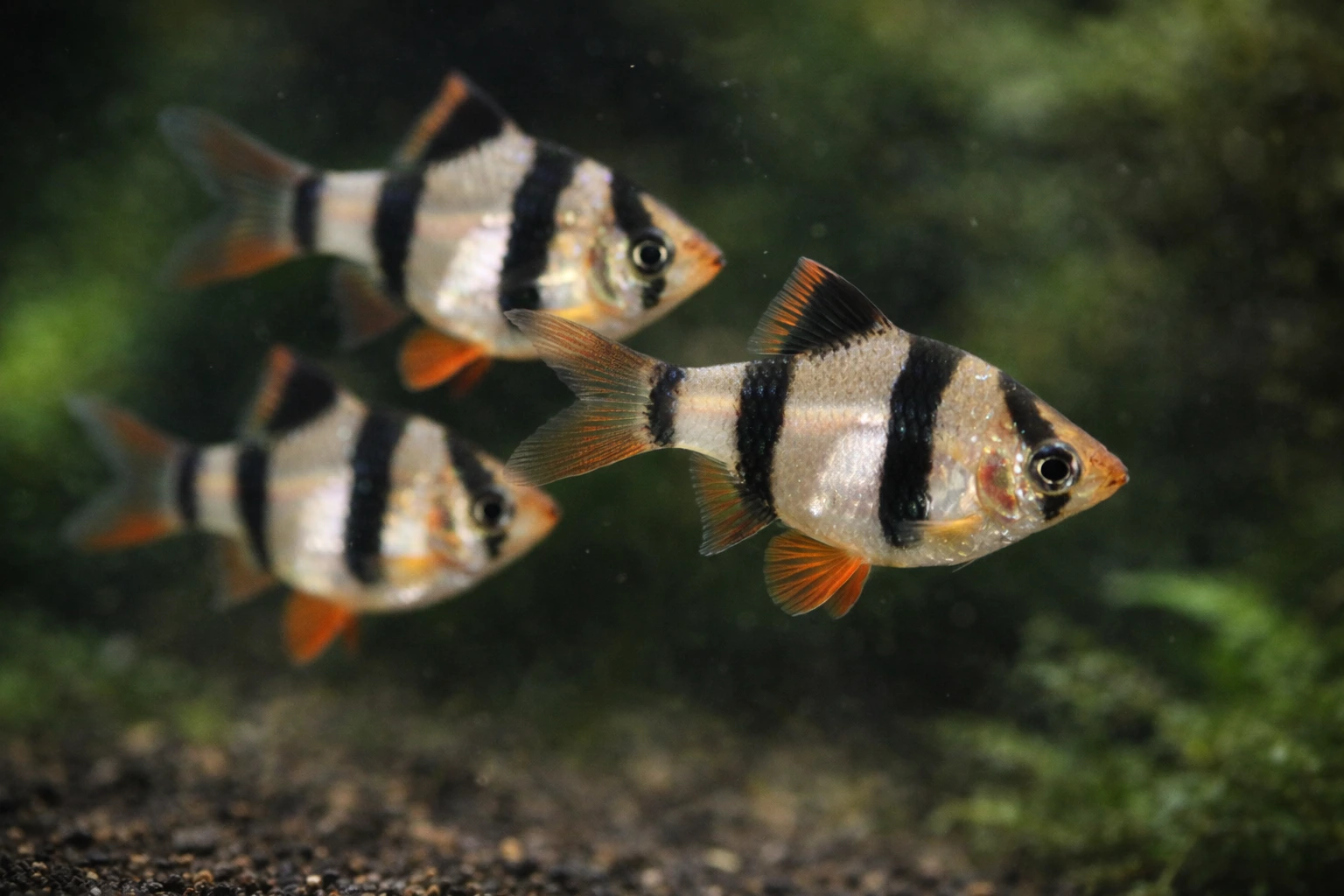
An interesting, active fish, but not suitable for an aquarium with fighting fish or angelfish.
Agassiz's cichlid (Apistogramma agassizii)
Level: intermediate/advanced (more sensitive to parameters than cockatoo)
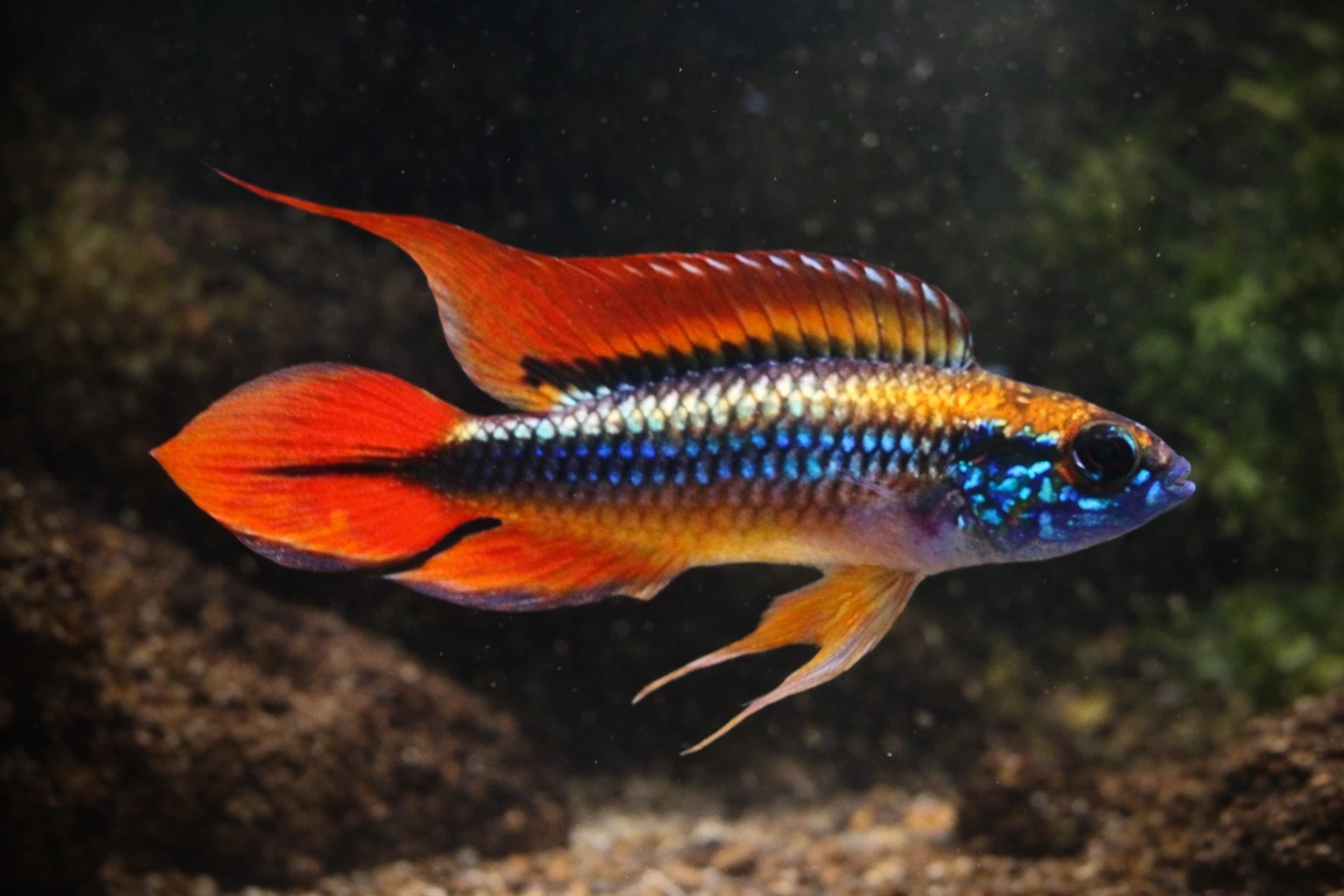
Litraż: 80–120 l+
Temperature: 25–29°C
pH / hardness: preferably pH ~5.5–6.8, soft water (stability is key)
Size: male ~7-10 cm
Behavior: territorial, "characteristic" during spawning
Arrangement: 1 male + 2-3 females or a pair
Feed: high quality, lots of frozen/live food
Arrangement: as above, but even more "blackwater" and hiding places
Combination: calm shoals, without disturbances; avoid very active fish
Errors: hard water + stress = diseases and poor color.
Nurse Cockatoo (Apistogramma cacatuoides)
Level: medium
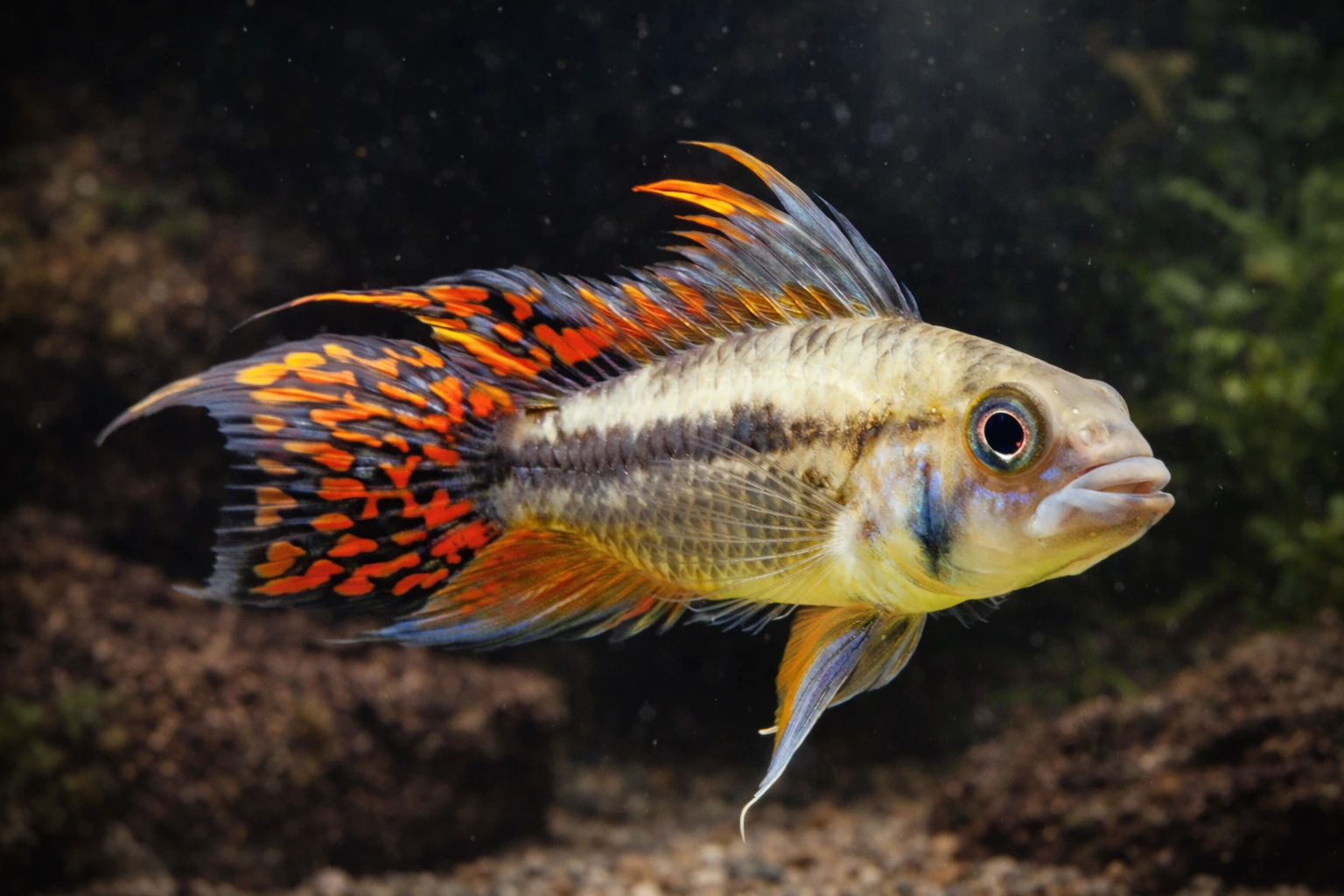
Litage: 60–100 l (pair/harem), more hiding places are better
Temperature: 24–28°C
pH / hardness: pH ~6.0–7.5 (one of the more tolerant apisto)
Size: male ~7–9 cm, female smaller
Behavior: territorial (especially the female near the eggs), generally calm
Arrangement: 1 male + 2-3 females (in a larger tank) or a pair
Food: frozen/live food + good granules
Arrangement: sand, coconut/caves, leaves, lots of hiding places and visual barriers
Combination: shoaling small fish + catfish (be careful when spawning)
Faults: lack of hiding places → aggression; too bright/"empty" aquarium.
Leopard's cutthroat (Pterygoplichthys sp.) – grows large
Level: intermediate/advanced (by size and dirt)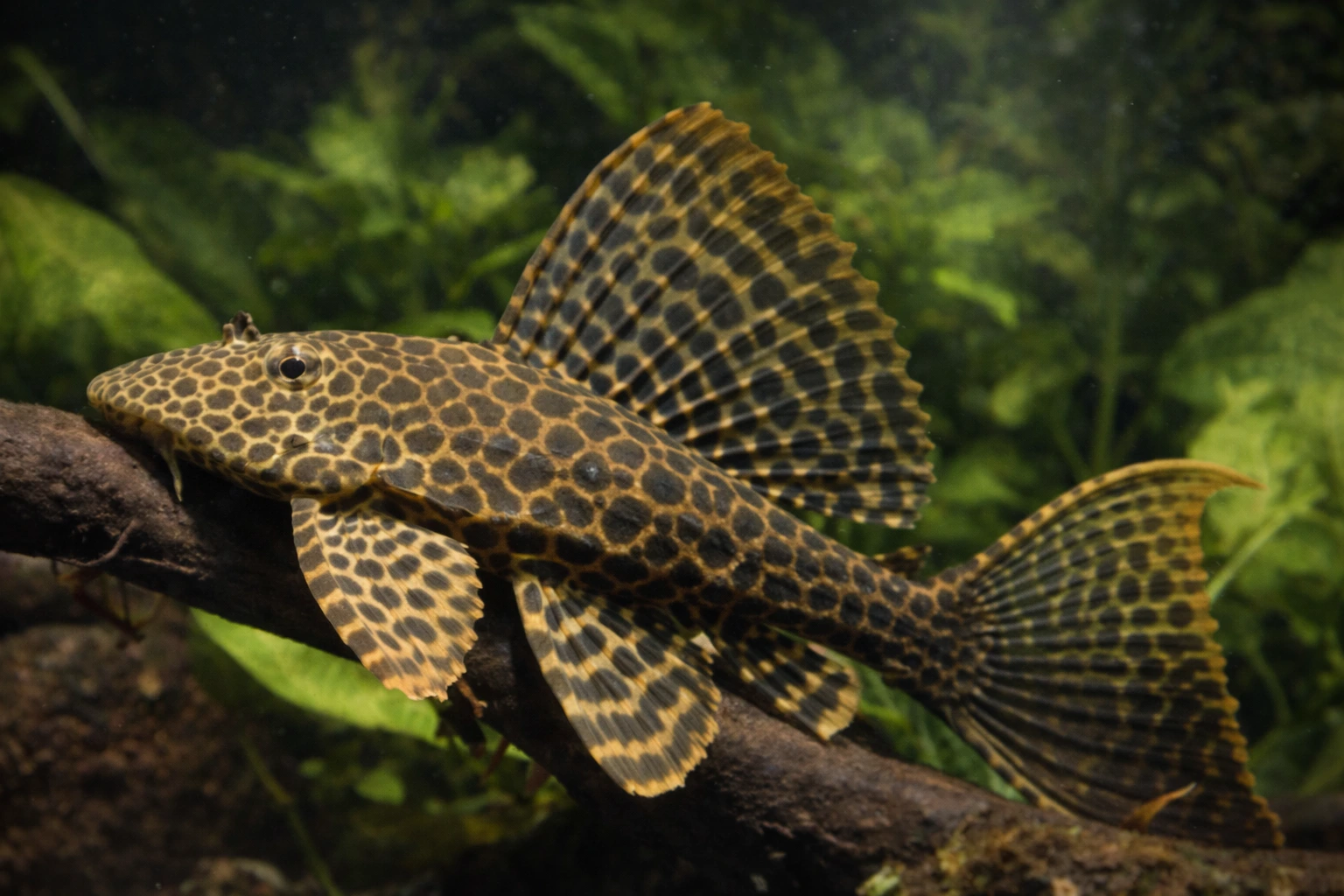
Litage: Realistically 300–500 l+ (depending on the species and target size)
Temperature: 24–28°C
pH / hardness: pH ~6.5–7.5, tolerant but likes cleanliness and oxygen
Size: often 30–45 cm (sometimes more)
Behavior: calm, nocturnal, territorial towards other "plecos"
Feed: algae + vegetables (zucchini, cucumber), tablets, wood/root (important)
Arrangement: large roots, hiding places, strong filtration and water movement
Combining: with large fish; not for small aquariums
Common mistake: buying for 100-150 l "because it eats algae" → the fish grows, destroys plants, gets dirty, and becomes stunted.
2.9 Glass catfish (Kryptopterus vitreolus) (often confused with K. minor; sometimes traded as "glass catfish")
Level: medium (delicate, requires stability)
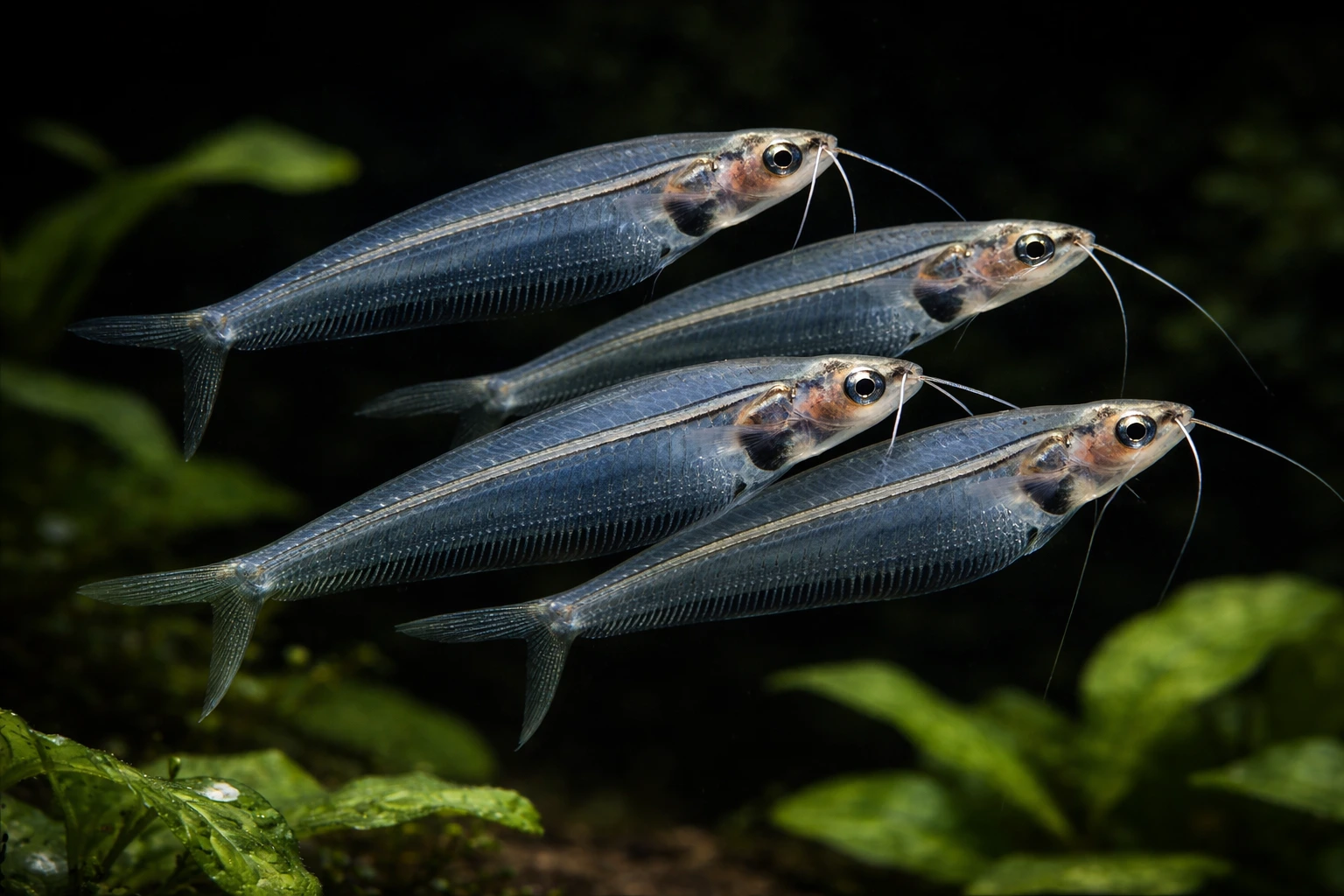
Litage: from 100 l for a group (better 150 l+; a long tank makes a difference)
Temperature: 24–28°C
pH / hardness: pH 6.0–7.2, soft–medium (stability and clean water are the most important)
Size: usually 6–8 cm
Behavior: very calm, timid; shock; most often it "stands" in the depths in a light current
How many pieces: minimum 6, preferably 8-12 (the more, the bolder and "visible")
Keepingindividually or in a small group → hides, gets stressed, gets wasted
3.0 Duch amazoński (Apteronotus albifrons) (black ghost knifefish)
Level: Intermediate/Advanced (easy to maintain, but demanding in terms of space, hiding places and company)
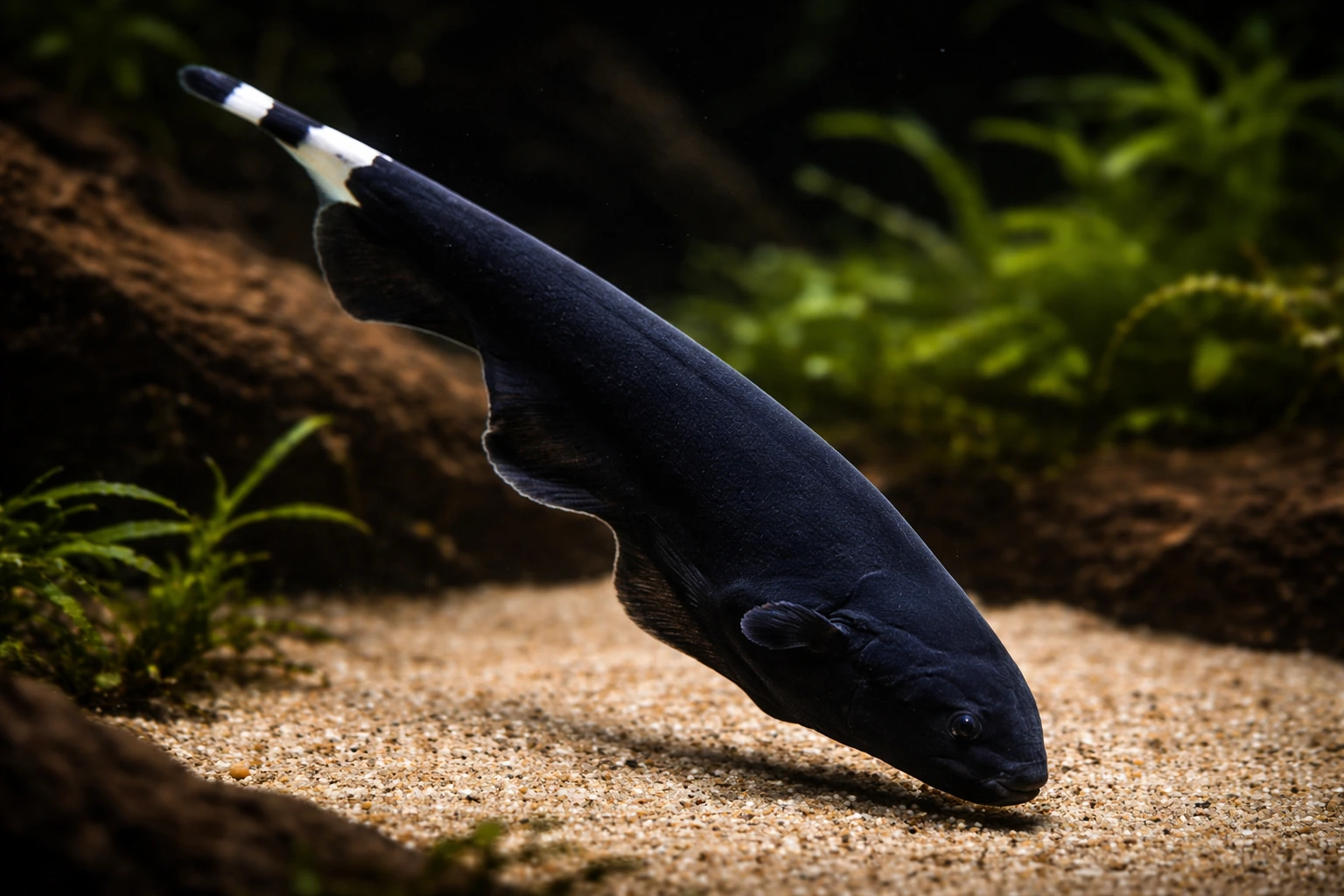
Litage: 200 l+ (for a juvenile), ultimately reasonable 300–450 l+ for an adult
Temperature: 25–28°C
pH / hardness: pH6.0–7.5, soft–medium; key stability and clean water
Size: usually 25–35 cm (sometimes larger)
Behavior: calm,nocturnal, territorial towards other "cutters"; hides in hiding places during the day
Lifestyle: moves with a waving "fin" on its belly, can swim backwards
Interesting fact: has electroreceptors and produces a weak electric field for orientation (in cloudy water / in the dark)
The most common mistakes: the tank is too small "because it is small in the store" → it grows quickly and needs space
3. Demanding species (for advanced users)
3.1. Discus / Discus
Difficulty level: difficult
Size: 15–20 cm
Minimum capacity: 250 l+ (group of min. 5-6 pieces)
Water: 28–30°C, soft, slightly acidic, perfect filtration
Behavior: calm, but demanding
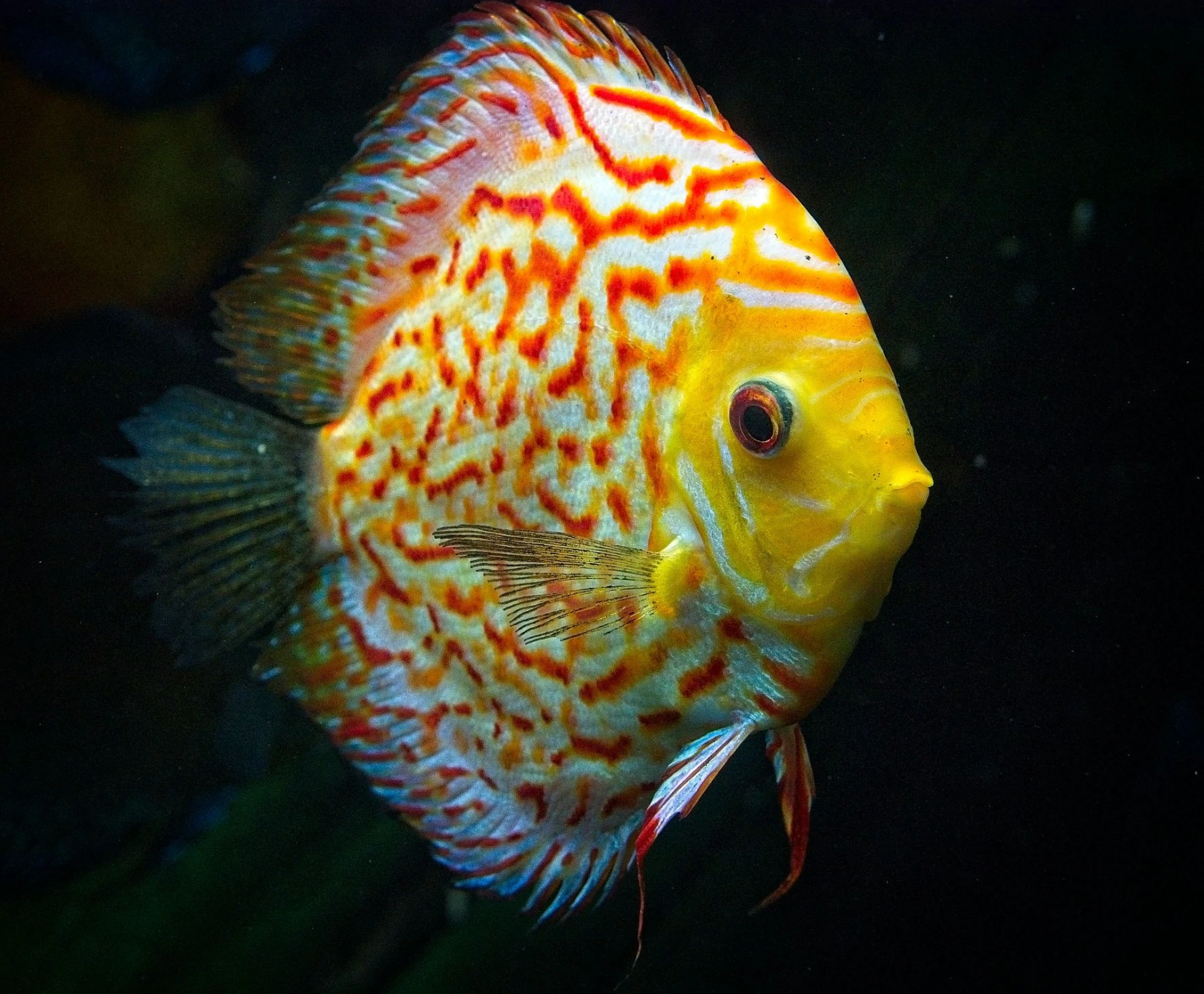
Characteristics:
The "royal" fish of the aquarium. It requires stable parameters, frequent water changes, a large tank and an experienced caregiver. This is definitely not a species for the first or second tank.
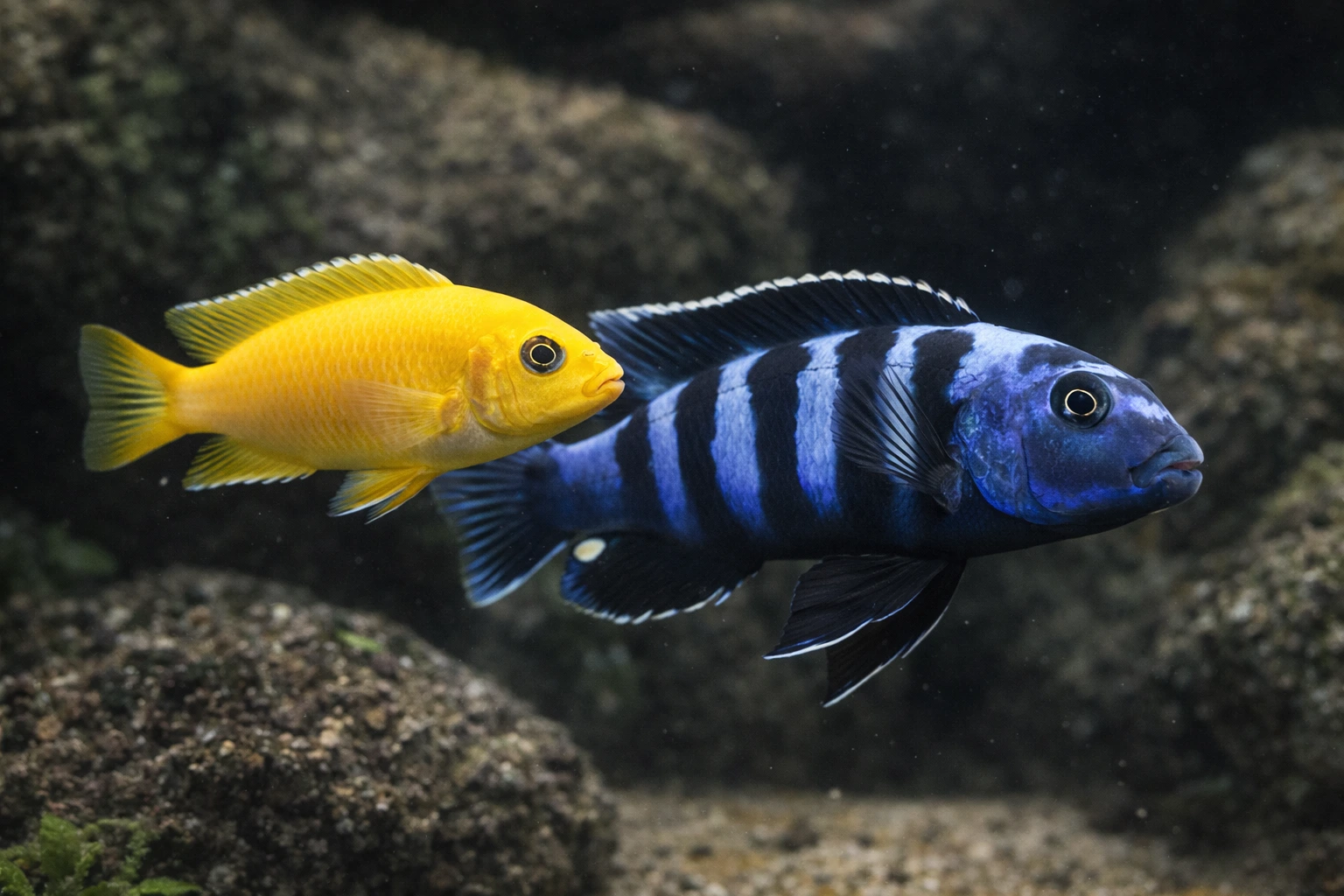
3.2. Cichlids from Tanganyika / Malawi
Here you rather createbiotope tanks:
hard, alkaline water,
many stones, caves, hiding places,
numerous, often aggressive species.
Magnificent loach (Chromobotia macracanthus)
Level: advanced (requires a group and a large tank)
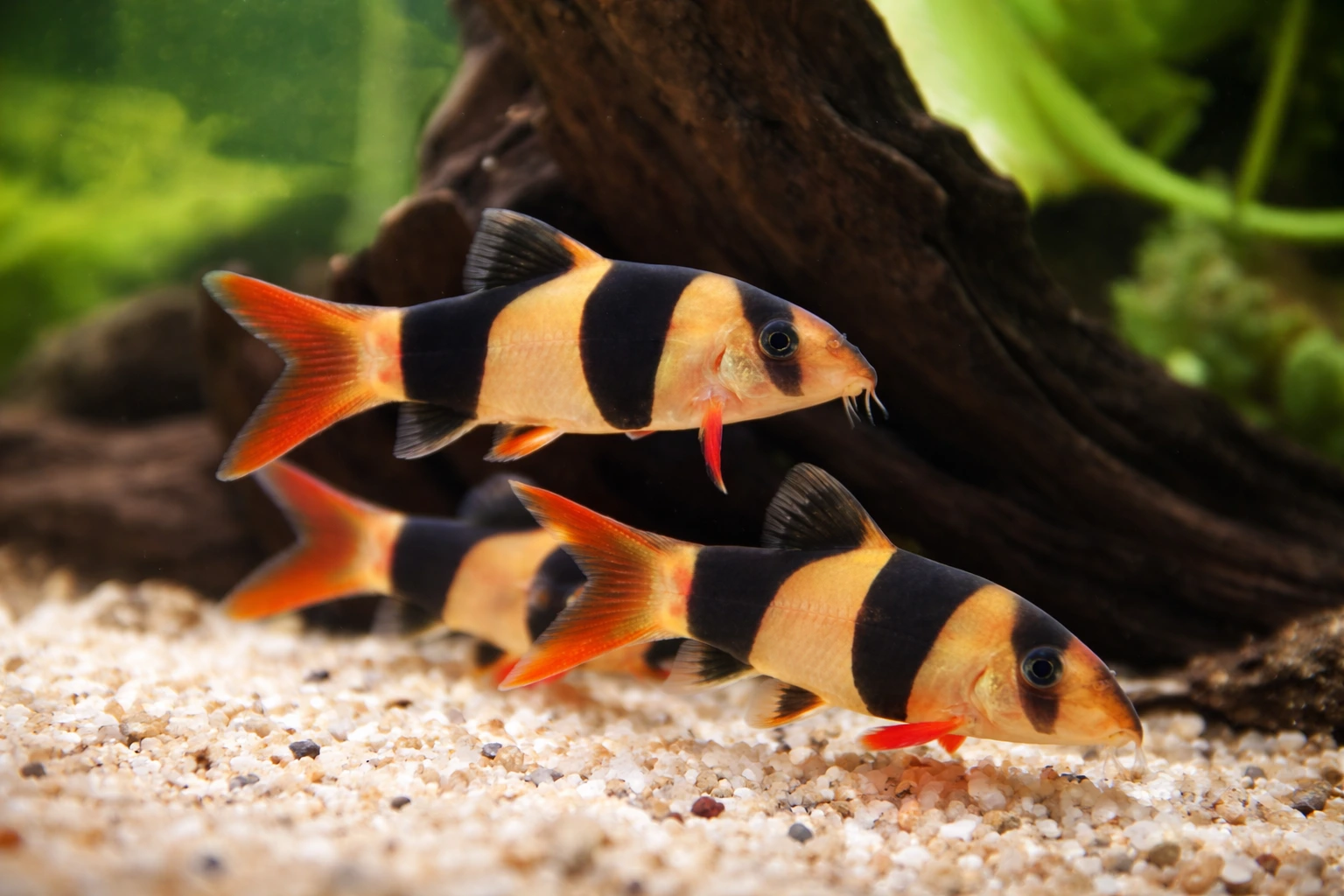
Litage: 300 l+ (eventually even more, because they grow large)
Temperature: 25–30°C
pH / hardness: pH ~6.0–7.5, well-oxygenated water
Size: 20–30 cm (in good conditions)
Behavior: gregarious, very intelligent, active; without group stress and illness
Number of pieces: min. 5-6, better 8+
Feed: omnivorous (tablets, frozen food, snails), likes to "dig"
Arrangement: hiding places, roots, sand/rounded gravel, strong current and oxygen
Pairing: with larger, calm fish with similar requirements
Mistakes: buying 1-2 pieces up to 100-200 l → stunting, stress, diseases (often ichthyosis).
Peacock cichlid (Astronotus ocellatus)
Level: advanced (by size, dirt and behavior)
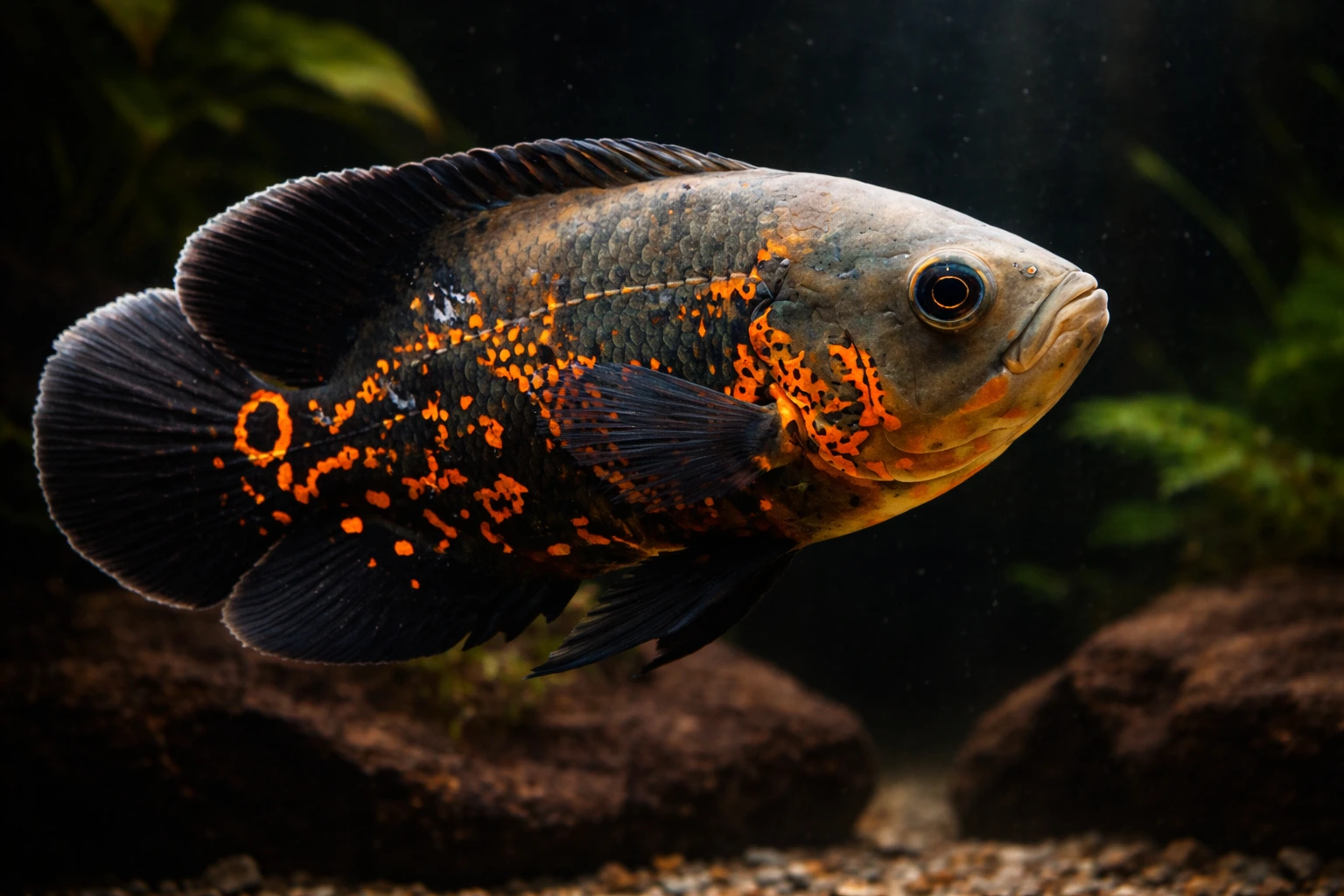
Litage: minimum 350-450 l per pair (or 250-300 l for one piece sensibly)
Temperature: 24–28°C
pH / hardness: pH ~6.0–7.5, tolerant, but the water must be clean
Size: 25–35 cm
Behavior: intelligent, strong, territorial; will eat smaller fish
Feed: large granules, frozen foods; varied diet
Arrangement: solid roots/stones, few delicate plants (will destroy)
Filtration: very strong + regular water changes
Mistakes: keeping with small plants "because it looks nice" → small plants disappear; too weak filtration.
3.5 Tęczanka Boesemana (Melanotaenia boesemani)
Level: medium
Litage: 200 l+ (this is a "length" fish)
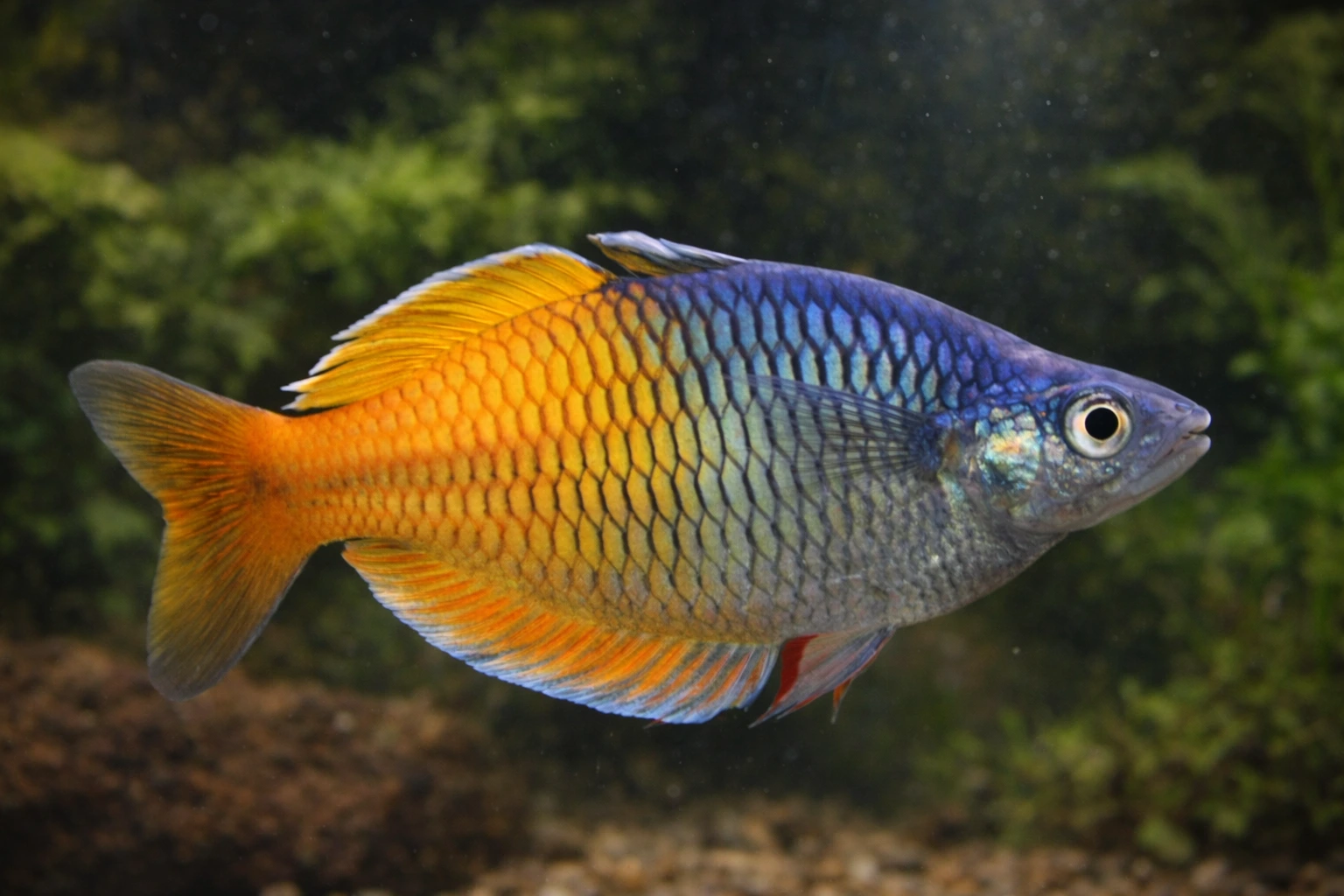
Temperature: 24–28°C
pH / hardness: pH ~7.0–8.0, medium–harder water (like stability)
Size: ~10–12 cm
Behavior: very active, shoaling, calm but fast
How many pieces: min. 6–8 (preferably 10+), it's good to have more females than males
Feed: granules/flakes + frozen food, they like to eat a lot
Arrangement: strong filtration, oxygen, swimming space, plants at the back
Pairing: with other fast fish of similar temperament; not for small, timid species
Errors: Too small a tank = stress, pale colors, diseases.
3.6 Pink barb (Pethia conchonius)
Level: beginner/intermediate
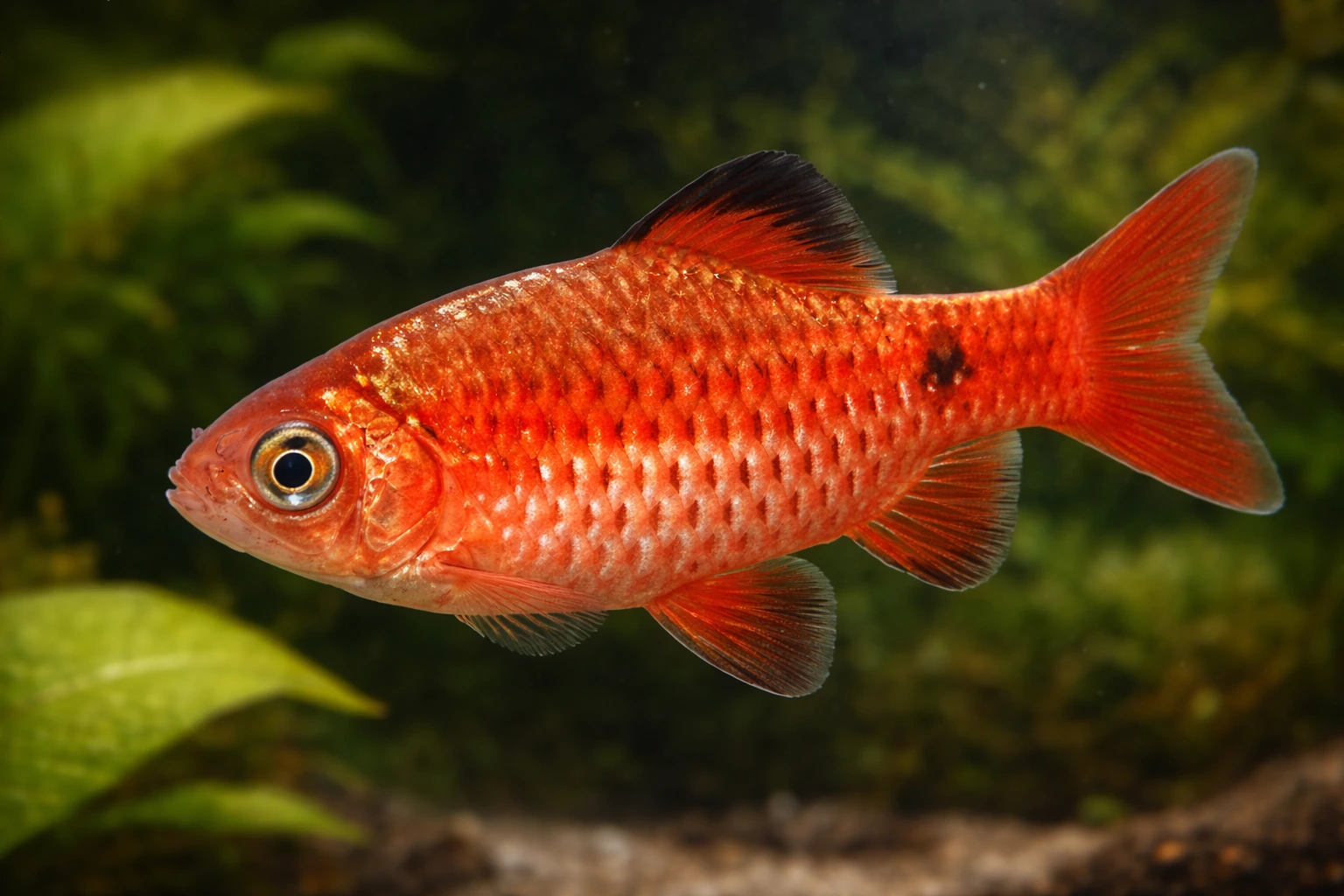
Litage: 100 l+ (they like to swim)
Temperature: 18–24°C (better cooler than too warm)
pH / hardness: pH ~6.0–7.5, medium hardness approx
Size: ~6–8 cm
Behavior: active shoaler, may nibble fins in bad conditions
Number of pieces: min. 8–10
Feed: omnivorous
Arrangement: plenty of space for swimming + plants on the sides
Combination: with more resistant and fast fish; not for veils
Mistakes: being kept too warm and in a small group → aggression/nervousness.
4. How to select the cast based on the atlas?
Zone in the aquarium: bottom / middle / top,
Characters: stadna / terytorialna / solista,
For whom: beginner / intermediate / pro,
Parameter range: e.g. 24–26°C, pH 6.5–7.5.
"How to choose aquarium stock - compatibility of aquarium fish"
"Are you looking for a pet store or aquarium service in the area?
Check SpotMeUp where to buy fish and accessories or find help in setting up an aquarium.
