


Discus (Symphysodon) – PRO guide: breeding, ideal conditions and reproduction | SpotMeUp
Quick scan
Discus fish are schooling fish and "water quality":stability and hygieneare more important than chasing "magic" numbers.
The safest path:a group of 6-10in a large tank, then selecting a pair for breeding.
PRO parameter that makes the difference: conductivity (µS/cm) and nitrates - it's easier to control this than pH itself.
For the growth of the young: frequent changes + lots of protein + heat (but without overheating and without dirty water).
Reproduction: eggs on a vertical surface → parental care → fry "eat" the parents' skin mucus (unique strategy!).
1) Discussed fish: what kind of fish are they and why are they considered "difficult"
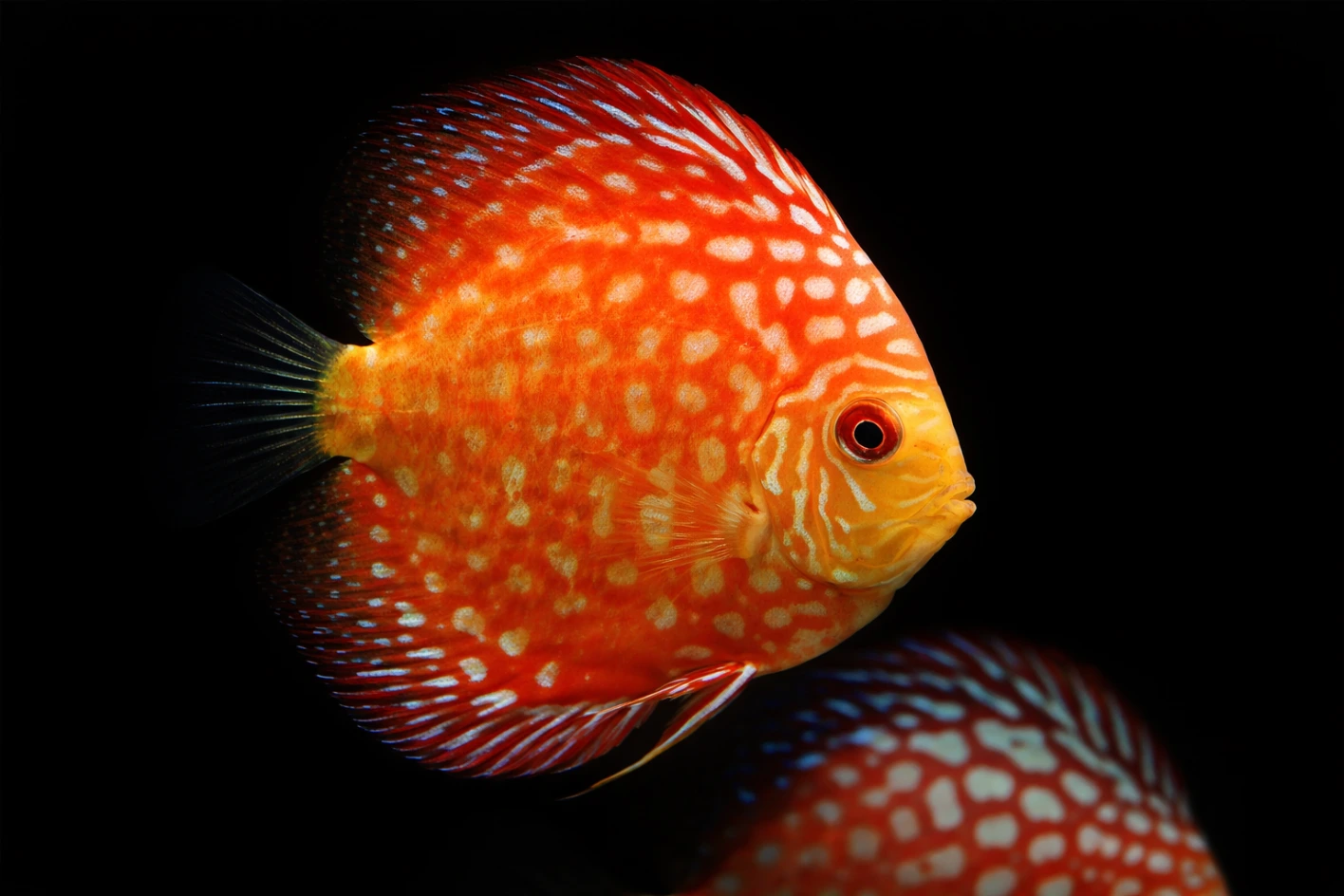
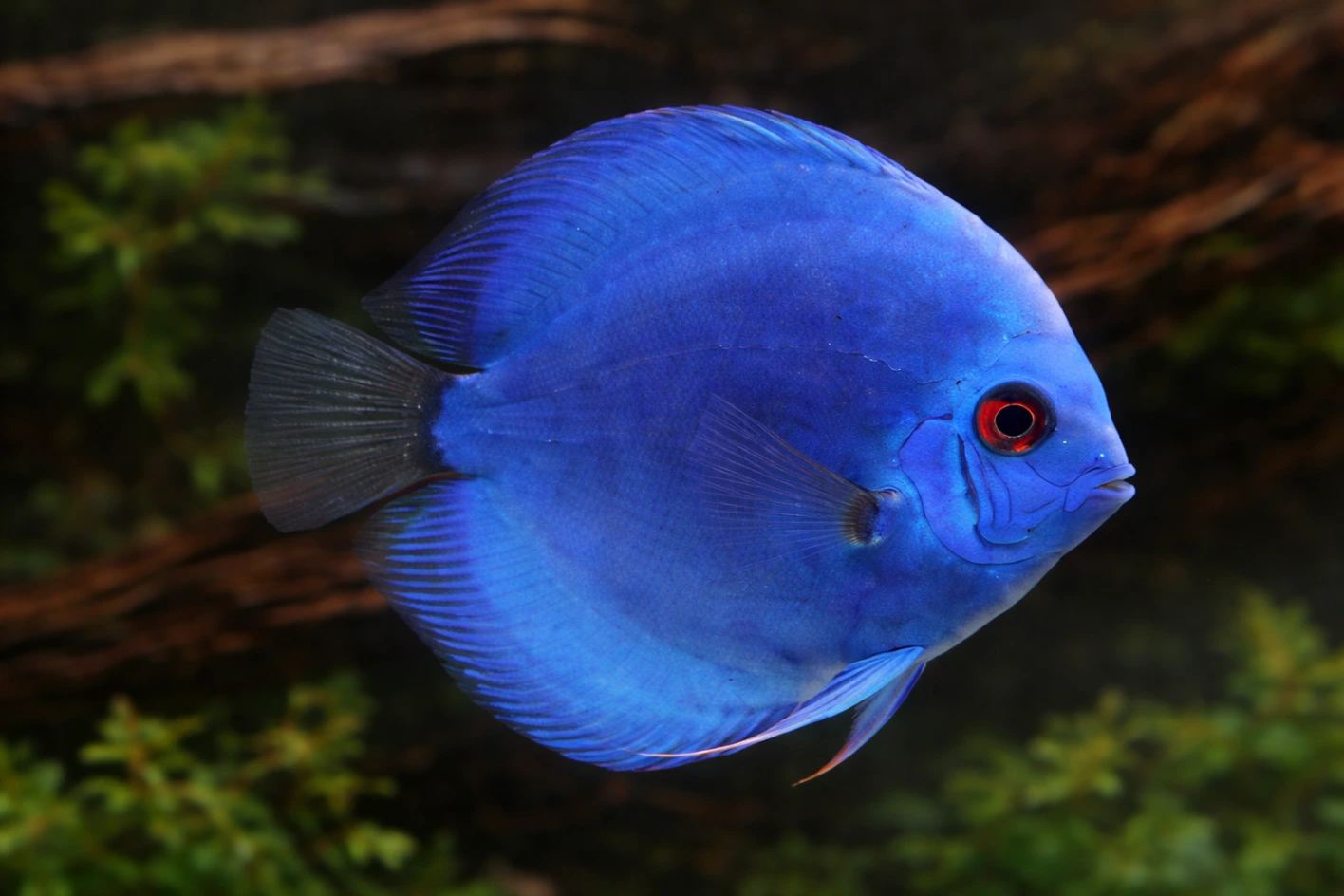
Discus fish (Discus,Symphysodon) come from the Amazon basin. In nature, they often live in warm, soft water with low mineralization, often in areas with roots, bays, and calmer currents.
Why are they “difficult”? Because the palette does not forgive three things:
parameter fluctuations,
poor hygiene (organics, nitrates, bacteria),
social stress (wrong group, too small a tank, domination).
The good news: once you build a stable system, the paddles are predictable and very clear in their behavior. This is a fish that teaches the breeder professionalism.
2) Two ways of breeding: “display tank” vs “grow-out PRO”
To avoid getting stuck in online arguments, think of it as two tools:
A) Demonstration aquarium (plants, arrangement)
plus: appearance, stable ecosystem, easier to keep fish "for years"
minus: it is more difficult to achieve maximum growth of the young, it is more difficult to maintain ultra-hygiene
B) PRO growth tank (grow-out, often "clean")
plus: fastest growth, control of feeding and excrement, water changes as in breeding
minus: less "nice", requires discipline
Pro tip: Many of the best breeders do both: the young ones grow in a grow-out and the target group goes into a beautiful tank.
3) Perfect conditions – “PRO, but humanly”
Minimal tank and stocking
Keep discus in groups: preferably 6-10 pieces (less = more stress and dominant hunting).
For a group, aim for an aquarium of 300-450 liters and above (the larger it is, the easier it is to be stable).
Height matters (these are tall fish), but even more important are: length, space and filtration.
Temperature
General breeding: 28–30°C
Reproduction and rearing (often): 29–31°C
High temperature increases metabolism and appetite, but it also increases the risk of oxygen drops - so aeration and movement of the surface are a must-have.
pH, hardness, conductivity - as the PRO breeder thinks
Instead of focusing on pH alone, look at the system:
KH (buffer) – if it is close to zero, the pH "floats" more easily.
GH/minerals – discus fish don't like "stone", but they also don't like total chaos.
Conductivity (µS/cm) – a brilliant indicator of whether the water is “light” and whether you are mixing RO repeatedly.
Practical ranges that work for many growers:
pH: ~ 5.8–7.0 (for beginners, it is often safer closer to neutral and stable)
GH: 1–8
KH: 0–3 (either low or stable - the key is no swings)
conductivity: often 80–300 µS/cm depending on the purpose (breeding usually lower, maintenance higher)
The golden rule of PRO: stable "good" > unstable "perfect".
Filtration and hygiene (this is where the level gets)
Discus fish love cleanliness, but they don't like hurricane of water:
high biological filter (bucket/sump + sponge prefilter),
gentle, even flow,
prefilter is salvation (catches dirt before it reaches the biology),
regular maintenance so as not to kill bacteria at once (clean in rotation, not "all at once").
Substitutions - the real "secret" of the palettes
There is no other parameter that so often distinguishes PRO breeding from "it will work out somehow".
Demonstration tank with adults: often30-50% per week(or more often if you are feeding heavily).
Grow-out of young: often30–50% per dayor every other day (depending on stocking rate and filtration).
It's not about records. It's about maintaining:
low nitrates,
low organics,
constant appetite and growth.
4) Feeding PRO discus fish: how to build growth without "belly" and without poisoning the water
The discus grows and "gets in shape" on protein, but loses health on dirty water. Therefore, PRO feeding = plan + order.
Young (height)
4–8 small feedings a day (depending on age),
high-protein foods: good granules, frozen foods, a reasonable mix of meat,
after feeding – check the bottom (in grow-outs, usually without substrate to suck out the remains).
Adult (maintenance)
2–4 feedings a day (fewer, but qualitative),
rotation: premium granules + frozen foods + additives (e.g. spirulina/vegetable ingredients in small quantities).
Classic error: “A lot of food = fast growth” without substitutions. Effect: decrease in water quality → stress → diseases → slowdown.
5) Company in the aquarium: compatibility without fairy tales
Discus cats are calm and sensitive to stress. Choose fish that:
they like heat 28–30°C,
they do not bite, do not dominate, and are not excessively quick when feeding.
Frequent, sensible directions: calm schools (e.g. larger characiformes that tolerate heat), small silverfish in moderate numbers (be careful of "sucking" to the discus at night in some species), possibly cichlids - but carefully.
Pro tip: If discus fish do not eat, the culprit is often... the company that stresses them or "eats" the food in a second.
6) Most common mistakes (and how to fix them)
1) Too few paddles in the group
2-3 pieces is often a recipe for one tyrant and two victims. Solution:larger groupand larger tank.
2) Buying a “mixture” from various sources without quarantine
Palettes can bring problems that become active after stress. Solution: quarantine, observation, stable conditions.
3) Parameter jumps after "corrections"
Constantly digging into pH, chemicals, additives. Solution: establishrepeatable water(e.g. RO + mineralization) and keep the rhythm.
4) Dirty water at high temperature
Heat + organics = problems come faster. Solution: prefilter, desilting the feeding zones, regular water changes.
5) Too strong a current and no calm zones
The paddles should be able to "hang" without fighting the current. Solution: Split the stream into a sprinkler/diffusion.
7) Discus breeding - step-by-step PRO plan
Step 1: How to choose a pair (without guessing the gender)
Most often it is done like this:
you buy a group of young people,
you let them grow up and develop naturally,
you observe: holding the area together, cleaning the surfaces, "dancing", shooing away the rest.
This is the most reliable method, because sexing palettes "by eye" can be a lottery.
Step 2: Spawning tank
80–150 l (for a pair) with perfect hygiene control,
smooth bottom (easy to clean),
sponge filter + gentle water movement,
spawning cone / vertical tube / smooth root.
Step 3: Spawning parameters
Most often works:
higher temperature (around 29–31°C),
soft water and lower conductivity,
many changes with “fresh” water with the same parameters (stimulus).
Step 4: Roe, molding and the first days
The pair lays eggs on a vertical surface and fans them with their fins. Most common problems:
the immature pair eats the eggs (normal at first),
mold due to water/dirt or too little water movement,
stress (presence of other fish, movement around the aquarium).
Pro tip: The first spawnings are often "training". A PRO breeder evaluates a trend, not one approach.
Step 5: Rearing fry - a unique "super thing" that few people talk about well
The greatest magic of discus fish: after a few days, the fry start feeding on the parents' skin mucus (it's not a joke, it's their strategy!).
This means that:
parents must be in great shape (diet + hygiene),
parents' stress = risk of abandoning the young.
When the young ones grow up:
you start feeding (e.g. newly hatched artemia) gradually,
you monitor the water quality like a surgeon.
8) Diagnostics "by behavior": how a PRO breeder reads discus
Paddles speak with their bodies faster than the test results will show.
Warning signs:
darkening and compressing of fins,
hiding and loss of appetite,
“standing still” next to the filter/heater,
white, thread-like feces (not always a disease, but always a signal for observation),
rapid breathing (oxygen/temperature/water quality).
PRO rule: before you think about medications,check water, oxygen, temperature, nitrates, water changes and social stress.
9) PRO maintenance plan (ready)
Daily (2-5 minutes)
quick observation of appetite and breathing,
temperature control,
removing leftovers (especially in the grow-out).
Every 2-3 days
NO3 test (or a fixed replacement schedule without tests, but consistent),
prefilter review.
Every week
greater replacement,
desilting feeding zones,
gentle maintenance of only part of the filtration.
Every month
analysis of growth rate (young ones), form and condition,
correction of the feeding/change plan.
10) FAQ
Are paddles for beginners?
No, it is important to keepstable, clean waterand not to keep discus fish in too small a group.
How many palettes should you keep together?
Most often 6-10 pieces - a smaller number means more stress and problems with eating.
What water parameters are “ideal”?
Ones you can maintain consistently. For many breeders, warm (28-30°C) and soft/stable water work best, and reproduction is often even easier.
Why don't discus fish grow despite good food?
Most often: too rare water changes, too high organic content, too small a tank, stress in the group, or feeding "a lot at once" instead of often and cleanly.
How to set up a decorative freshwater aquarium https://spotmeup.pl/blog/zwierzeta-20/jak-załozyc-ozdobne-akwarium-słodkowodne-507
Freshwater fish atlas: https://spotmeup.pl/blog/zwierzeta-20/atlas-ryb-słodkowodnych-akwariowych-510
Scalar: https://spotmeup.pl/blog/zwierzeta-20/skalar-pterophyllum-scalare-511
Atlas of the royal python (Python regius) https://spotmeup.pl/blog/zwierzeta-20/atlas-pytona-krolewskiego-python-regius-513
Thank you for reading this article
Blog Master
