


D. Stary Świat (OW) – fast, defensive, for advanced players
1) What does the species card look like in the atlas | SpotMeUp
We describe each species identically.
Origin and biotope: continent/region + habitat type (dry scrub, humid forests, savanna, etc.)
Lifestyle: terrestrial / arboreal / digging (fossorial) / "webber"
Level: start / intermediate / advanced
Temperature and defense: calm/shy/defensive + stinging hairs (New World) or stronger venom (Old World)
Terrarium: size, ventilation (critical), hiding place, bowl
Substrate and moisture: dry/moisture gradient/deep soil for digging
Feeding: what, how often, “what if he doesn't eat”
Moults: symptoms, safety rules, post-molt
Reproduction (in short): difficulty, key risks
The most common mistakes: 3-5 specific “what not to do”
SpotMeUp CTA: “show photo / ask community / find breeders nearby”
1) Poecilotheria regalis – OW, nadrzewny
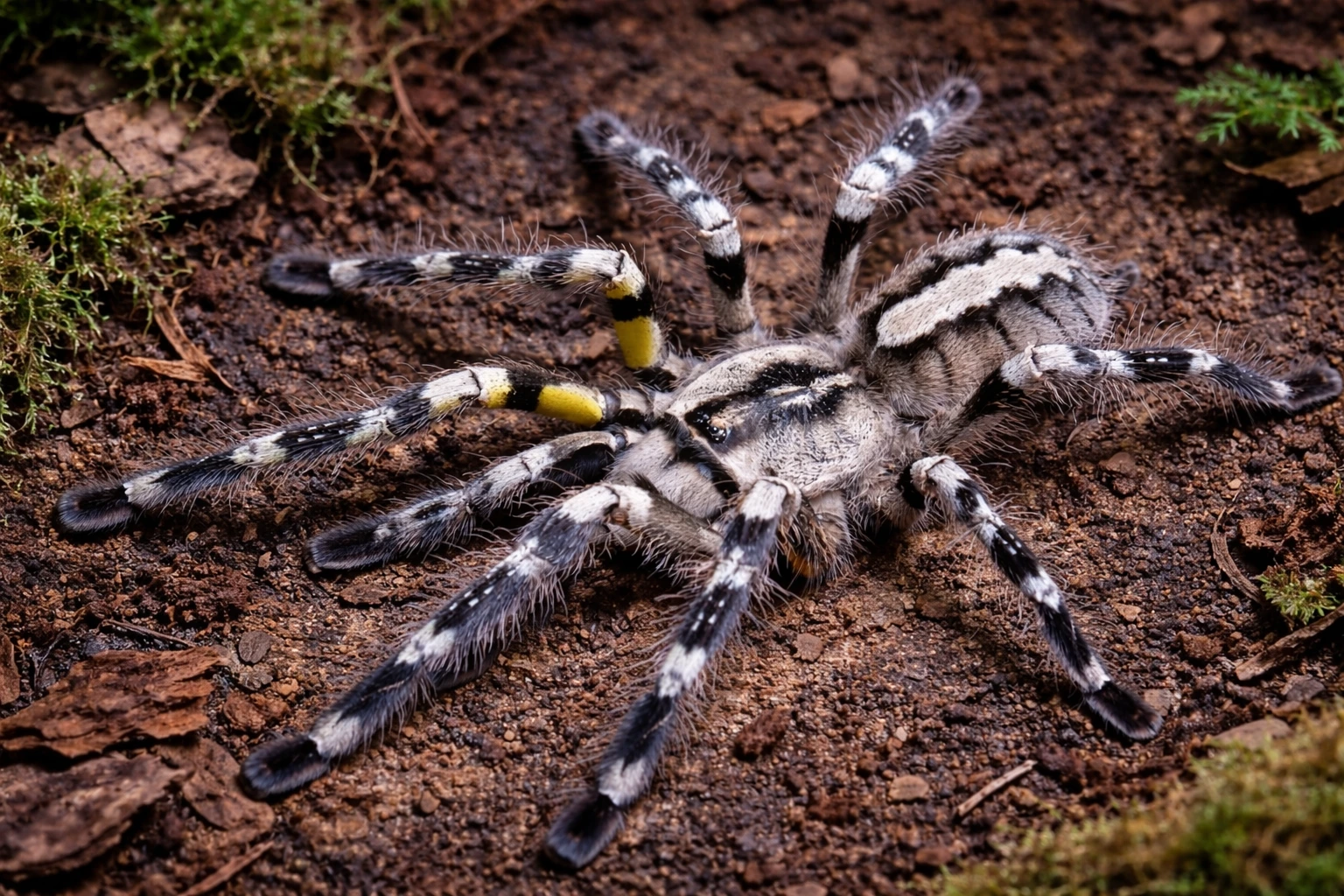
The Royal tarantula (P. regalis) is a large, fast-moving and highly venomous arboreal species from India (OW). When feeding, what counts issafety and serving the prey at a height.
What to serve?
Basic: active insects: crickets, cockroaches (TurkishB. lateralis, dubia),locusts.
Young (L1–L3): cricket/cockroach hatching, fruit flies; you can also give dead food (e.g. half a mealworm) placed high next to the dressing.
Adults: large cockroaches, adult locusts; occasionally Zophobas. Breeding vertebrates isnot recommended.
How often?
slings: co 2–3 dni
juveniles and adults: once a week or every 10 days
Arboreal feeding – how to do it?
Throw the insects so that they land on the bark/decorations/spinning. Feeders thatclimbwork best (e.g. Turkish cockroaches, crickets).
The most important rules
use 25-30 cm tweezers
when there are signs of molting, remove the live feeder; after molting, wait7-10 days
provide a bowl of water (often at a height) and humidity of approximately 70–80%
2) Poecilotheria metalica – OW, nadrzewny
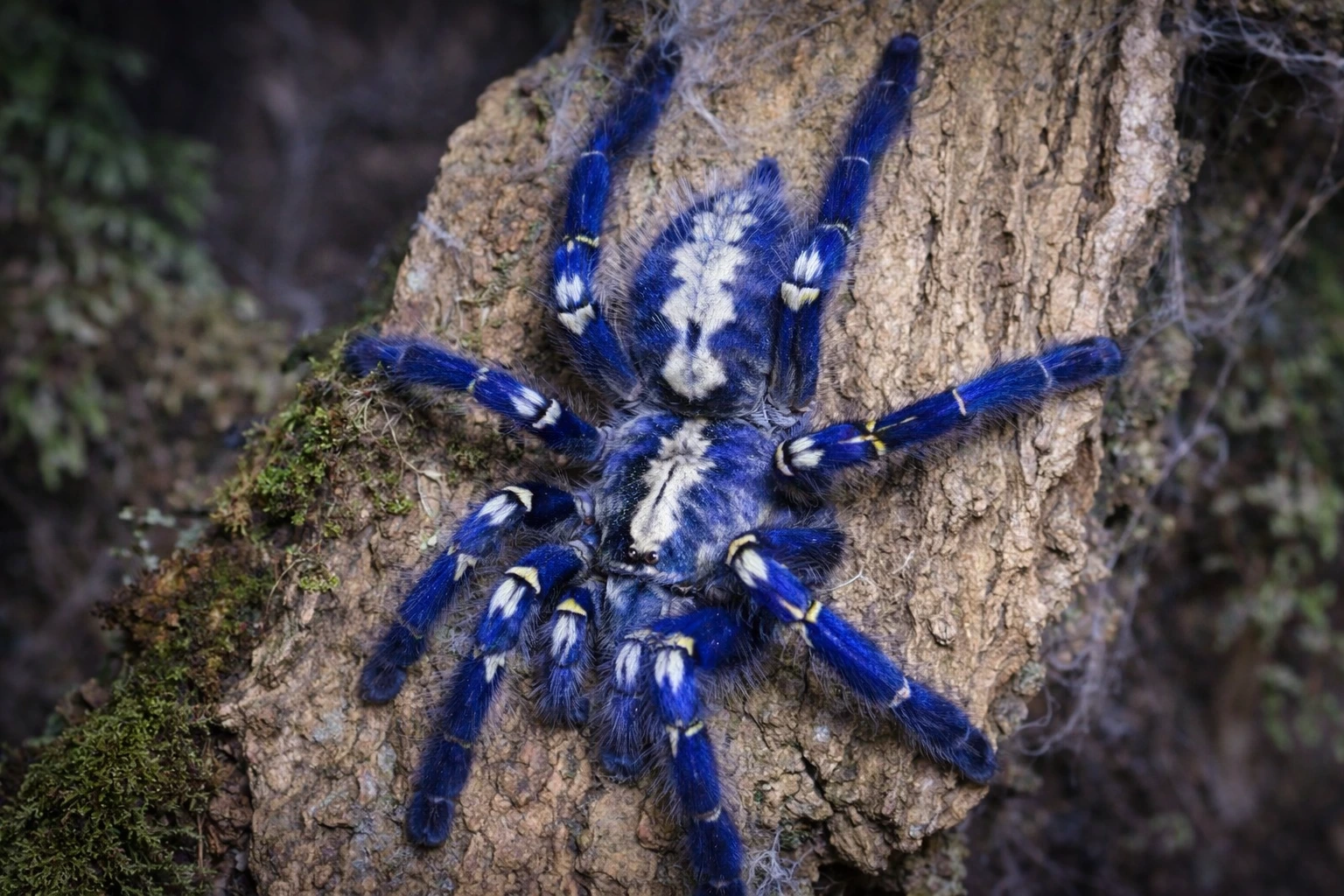
Poecilotheria metallica is an arboreal "jewel" from India (OW). Like most Poecilotheria, it isvery fast, hasstrong venomand can hit its preyviolently.
Menu for P. metallica
Young (L1–L4):
hatching ofTurkish cockroachorcricket
optional Drosophila hydei (grows out of them quickly)
Juveniles and adults:
cockroaches (Turkish, Argentine), crickets, locusts
Variety:
occasionally flying insects (e.g. a fly/moth from a certain source) - they are great at "winding them up" with movement
How to feed
frequency: young every 3-4 days, adults every 7-14 days
application: throw the feeder near the roost/nest - this species rarely hunts on the ground
safety: 30 cm tweezers are essential; the spider can quickly "follow" the tweezers towards the hand
Zasady PRO
prey size: preferably it should besmaller than the length of the cephalothorax + abdomen
Cleaning: remove boluses and uneaten insects after24 h (mould/mites)
water: Once a week, wet the wall near the nest (drinks drops) or givea bowl atheight
3)Pterinochilus murinus (OBT) – OW, terrestrial/webber
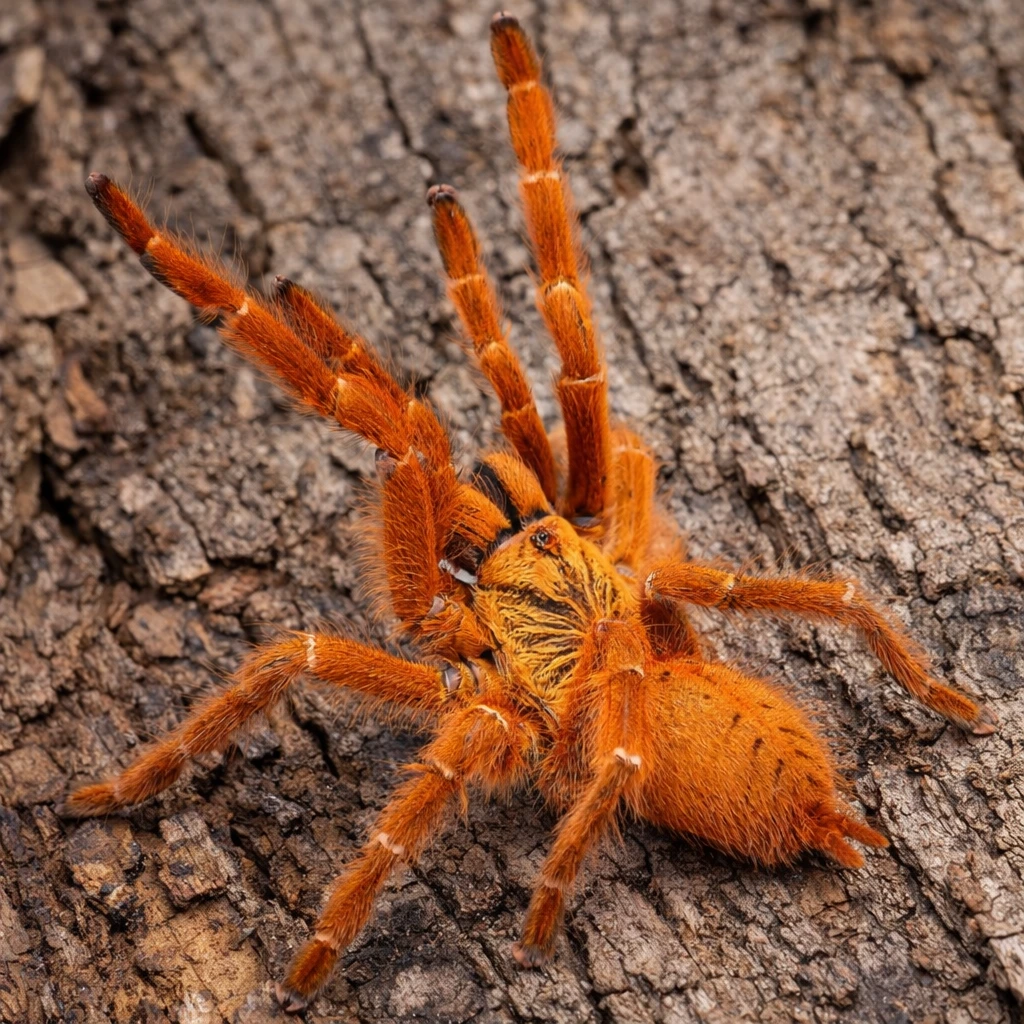
Pterinochilus murinus (OBT) is a very fast and highly defensive tarantula with a large appetite. It is an Old World (OW) species - it has no stinging hairs, and in case of stress it can defend itself quickly and bite severely.
Nutrition
Young (L1–L4): hatching Turkish cockroach, small crickets, possibly cut mealworms.
Sucklings and adults: cockroaches (Turkish, Argentine), crickets, locusts, mealworms, woodworms.
Select the size of your prey to the size of the spider.
The way of hunting
OBT is a typical "webber" - it builds dense tunnels of spider webs and often attacks from hiding, drawing prey into the nest.
Feeding frequency
Young: every 3–5 days (with warmth and regular food they grow very quickly).
Adult: every 7-10 days.
Do not overfeed - the abdomen should not be excessively "inflated".
Safety and administration rules
Uselong tweezersand work carefully.
It is best to throw the insectonto the spiderweb - the vibrations quickly trigger the hunting reaction.
Water and humidity
Despite originating from dry regions of Africa, it is worth providing adults with a constant bowl of water.
For the young, it is usually enough to gently moisten one corner of the terrarium every 2 weeks.
Molt
Before molting, the OBT can be extremely defensive. If he has blocked the entrance with a spider's web, do not feed him or put insects in - this is a signal that he needs peace.
4)Harpactira pulchripes – OW, terrestrial/digging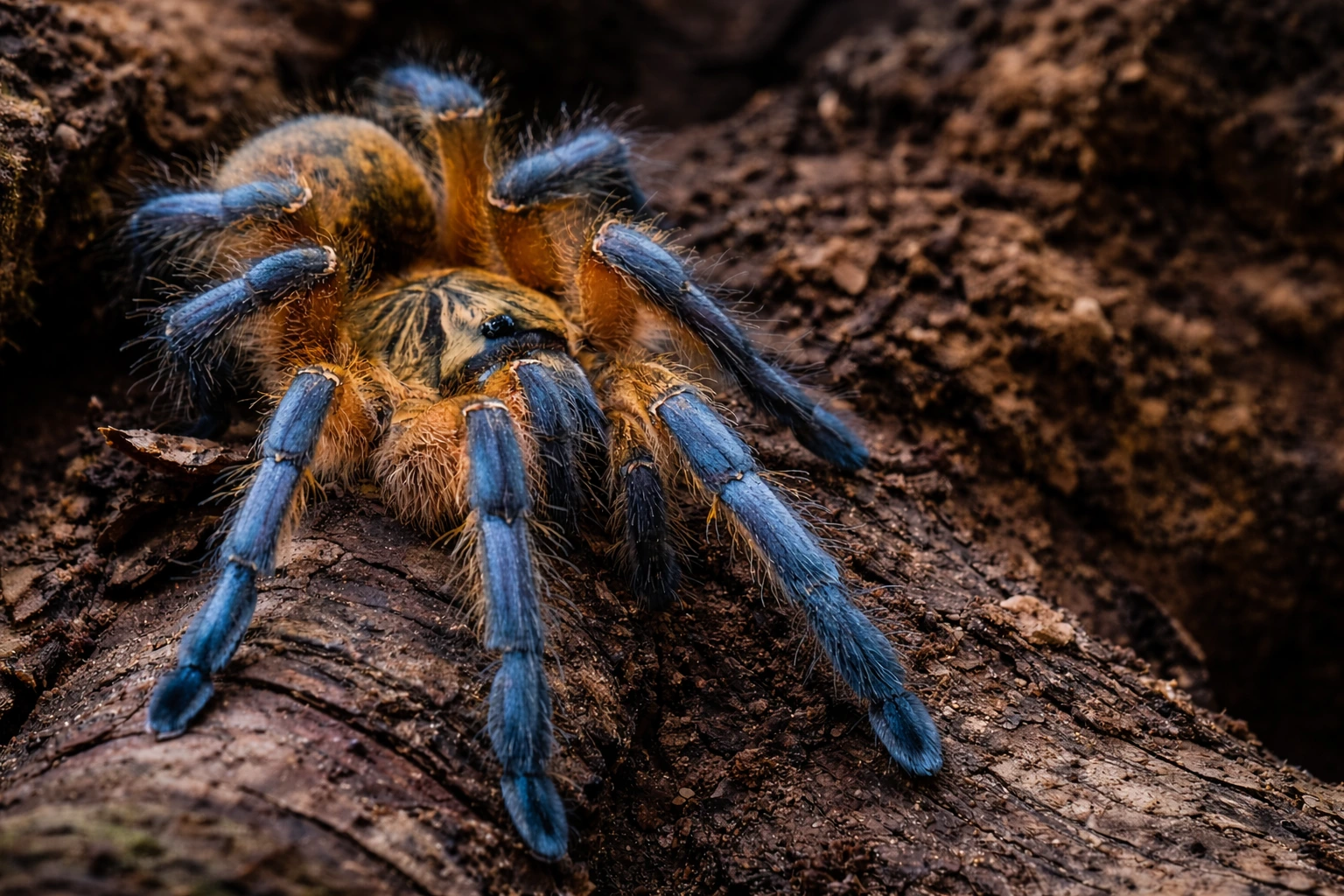
Biotope: southern Africa, rather dry conditions.
Breeding: arid + ability to dig; stable water.
Errors: too wet.
5) Ceratogyrus darlingi – OW, terrestrial/burrowing
Plus: “horned baboon” – distinctive look.
Breeding: digging ground, rather dry-moderate.
Errors: lack of deep ground.
6)Monocentropus balfouri – OW, terrestrial/webber
Plus: it is sometimes kept in colonies (this is a topic for very experienced people).
Breeding: semi-arid, lots of cobwebs, hiding places.
Errors: “starter colony” – no.
7)Heteroscodra maculata – OW, arboreal
Character: extremely fast.
Breeding: high tank, gaps, airflow.
Errors: lack of plan when opening the terrarium.
8) Stromatopelma calceatum – OW, nadrzewny
Breeding: vertical + air circulation; very fast and defensive.
Errors: as above - the service routine must be "automatic".
9)Hysterocrates gigas – OW, digging
Biotope: Africa, more humid microenvironments.
Breeding: deep, moist substrate + ventilation.
Faults: Dry driving and no room to dig.
10) Pelinobius muticus (King baboon) – OW, digging
Plus: icon for burrowing species.
Breeding: very deep soil, rather dry-moderate.
Mistakes: shallow terrarium = stress and worse condition.
11) Cyriopagopus lividus (cobalt blue) – OW, digging
Biotope: Asia, humid conditions in burrows.
Breeding: moisture "deep", plenty of substrate, airy.
Errors: superficial “wet” with no depth (the spider will go lower anyway).
12)Cyriopagopus sp. “Hati Hati” – OW, digging
Breeding: analogous to lividus: deep substrate + stability.
13) Chilobrachys fimbriatus – OW, digging/webber
Character: Fast, spider-webbing.
Breeding: deep soil, moisture in the lower layers, airy.
Errors: Too dry and too shallow.
14) Chilobrachys natanicharum – OW, digging/webber
Breeding: as in fimbriatus; very important tightness and service procedure.
15) Selenocosmia javanensis – OW, terrestrial/digging
Biotope: Southeast Asia, tropical conditions.
Breeding: moist, but well-ventilated soil.
Errors: lack of ventilation in a “wet” setup.
16) Poecilotheria ornata – OW, nadrzewny
Breeding: vertical, gaps, ventilation; a typically “experienced” genre.
Errors: unprepared feeding and opening.
17) Xenesthis immanis – NW, naziemny
Plus: "premium display".
Breeding: large terrarium, stable humidity, no overheating.
Mistakes: Trying to hold it “like a standard tarantula.”
18)Theraphosa blondi – NW, terrestrial
Biotope: equatorial forests, humid conditions.
Breeding: large tank, constant access to water, moist substrate + strong ventilation.
Moults: The risk increases when it is too dry or when the spider is dehydrated.
19)Theraphosa stirmi – NW, terrestrial
Thanks for reading this article
Blog Master
