


What are DIY cosmetics?
DIY cosmetics are home-made care products yourself from simple, often natural ingredients. These may include, among others: face masks, scrubs, body balms, oils and hair conditioners.
Their biggest advantage is full control over the composition. W Unlike many drugstore products, home cosmetics do not contain artificial preservatives, dyes or fragrances (unless you make them yourself we decide to add them). As a result, they are often better tolerated by people with sensitive skin.
DIY cosmetics can be very simple (e.g. peeling with sugar and olive oil), as well as more advanced ones that require precision measuring ingredients and knowing the basics of formulation.
Who are DIY cosmetics for?
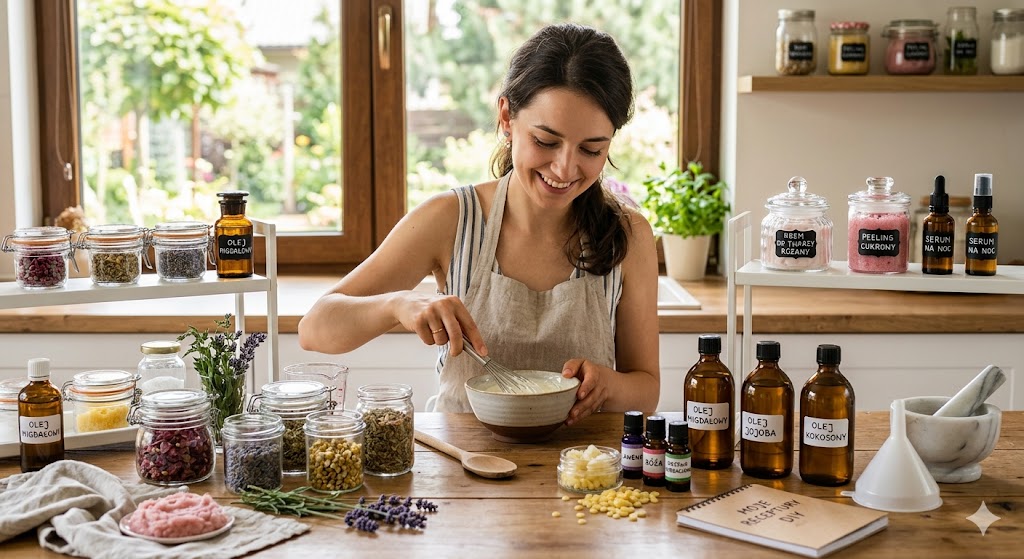
Home-made cosmetics can be practically adapted to all types of skin and hair. The key is to choose the right ingredients.
Cera
- Complexion dry – responds well to moisturizing and oiling ingredients, such as honey, vegetable oils or avocado.
- Complexion oily and acne-prone - it is worth using clays, hydrolates or light ones oils (e.g. jojoba) that help regulate sebum secretion.
- Complexion sensitive – simple, short ingredients work best, e.g. flakes oatmeal, aloe or chamomile.
Hair
- Hair dry and damaged– use masks based on oils, eggs or honey.
- Hair oily – herbal rinses may be helpful (e.g. z nettles) and light conditioners.
- Leather heads – DIY peels help remove dead skin and improve microcirculation.
Body
- Care everyday – DIY balms and butters based on shea butter or oil coconut.
- Peels – e.g. sugar or coffee, which smooth the skin and improve its appearance.
- Baths – additives such as Epsom salt or essential oils can support relaxation and regeneration.
Safety and hygiene
Even though DIY cosmetics are natural, that doesn't mean they are completely risk-free. Following the rules is key security:
1. Cleanliness and hygiene
- Always use clean tools and containers.
- The best disinfect them with alcohol or scald them with boiling water.
- Work on a clean surface.
2. Freshness of ingredients
- Use it only fresh food and cosmetic products.
- Return it attention to the expiration dates of oils and semi-finished products.
3. Short shelf life
- Cosmetics DIYs without preservatives have a limited shelf life (often from a few days to... several weeks).
- Store refrigerate them if they contain fresh ingredients.
4. Allergy test
- Before For the first use, test on a small piece of skin.
- Even natural ingredients may cause allergies.
5. Be careful with essential oils
- They are highly concentrated - use them in small quantities.
- Some not suitable for pregnant women or children.
Base ingredients in DIY cosmetics
The basis of home cosmetics are easily available ingredients, which can be combined in various proportions.
Vegetable oils
- olive oil olive oil – nourishing and universal
- oil coconut – moisturizing and antibacterial
- oil jojoba – light, well tolerated by oily skin
- oil argan – regenerating and anti-aging
Plant butters
- butter shea – strongly moisturizing and protective
- butter cocoa – smoothing and elasticizing
Food products
- honey – moisturizes and has antibacterial properties
- yogurt natural – soothes and gently exfoliates
- petals oatmeal – soothes and cleanses
- coffee – stimulates circulation (great for peeling)
Clays and powders
- clay green – for oily and acne-prone skin
- clay white – delicate, for sensitive skin
- clay red – strengthens blood vessels
Hydrolates (flower waters)
- rose – moisturizing and refreshing
- lavender – soothing
- z witch hazel – regulating sebum
Essential oils
- lavender – calming and antibacterial
- z tea tree – anti-acne
- citrus – refreshing (beware of photosensitizing effects)
.Summary
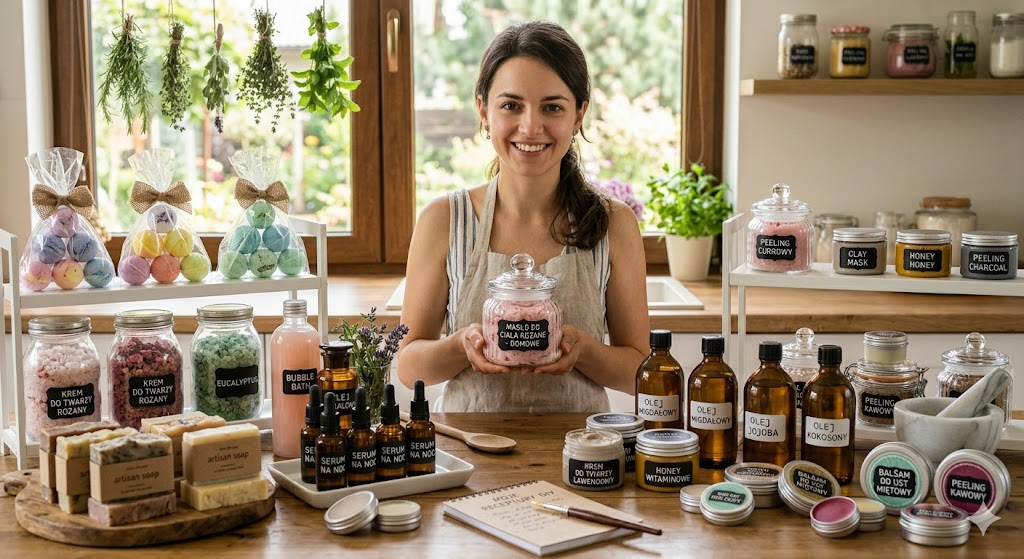
DIY cosmetics are a great way to be conscious and natural care tailored to individual needs. They give a lot of freedom experimentation, but also require responsibility and compliance hygiene.
Thanks to knowledge of basic ingredients and their properties you can create products that are effective, safe and skin-friendly – often cheaper and more ecological than their store counterparts.
Related articles on SpotMeUp:
1. Skin care :
- care acne skin
- how take care of problematic skin
- causes acne formation
- aware skin care
- makeup and facial styling
- experimenting with makeup
- trends in makeup
- preparation skin under makeup
- care skin after depilation
- methods hair removal
- how take care of your body skin
- treatments skin care
Sources:
- Creating your own natural cosmetics – a step-by-step guide step – the article discusses the basics of DIY cosmetics and the most important ones ingredients used in home care.
- How to safely make DIY cosmetics - hygiene rules and tests allergic – detailed instructions on safety and selection ingredients and risks associated with natural cosmetics.
- What ingredients to use in DIY cosmetics? – an overview of the most important base ingredients such as oils, clays and hydrolates.
- DIY cosmetics ingredients – list and application – a practical list of raw materials and examples of their use in care skin and hair.
- Basics natural cosmetics and ingredients to avoid – supplementing knowledge about the compositions of cosmetics and potentially irritating substances substances.
