


Tarantulas and the most popular species - origin, biotope, breeding, feeding, reproduction, molts and problems
1) What should the species card look like in the atlas? SpotMeUp
We describe each species identically.
Origin and biotope: continent/region + habitat type (dry scrub, humid forests, savanna, etc.)
Lifestyle: terrestrial / arboreal / digging (fossorial) / "webber"
Level: 🟢 start / 🟡 intermediate / 🔴 advanced
Temperature and defense: calm/shy/defensive + stinging hairs (New World) or stronger venom (Old World)
Terrarium: size, ventilation (critical), hiding place, bowl
Substrate and moisture: dry/moisture gradient/deep soil for digging
Feeding: what, how often, “what if he doesn't eat”
Moults: symptoms, safety rules, post-molt
Reproduction (in short): difficulty, key risks
The most common mistakes: 3-5 specific “what not to do”
SpotMeUp CTA: “show photo / ask community / find breeders nearby”
2) Golden rules of breeding
Ventilation > “magic humidity”
In practice, most problems result not from "too little humidity", but from an incorrect combination: wet + lack of ventilation + stagnant air (especially in Avicularia/Caribena). In arboreal environments, the priority isair and lack of stuffiness. (The Tarantula Collective)
Temperature
Most popular tarantulas perform well atstable room temperature.
Additional heating only makes sense if the room is cool - and always so as not to create a "hotspot" (never "mat under the entire bottom" in the case of terrestrial species).
The ground – practically
Arid / dry steppes (Brachypelma, Grammostola, Aphonopelma): rather dry substrate + cup; alternatively, you moisten one corner (gradient).
Tropical terrestrial (Lasiodora, Acanthoscurria, Theraphosa): moderately moist soil, but not swampy.
Fossorial (Chilobrachys, Cyriopagopus, Hysterocrates): a lot of substrate and moisture "deep inside", the surface may be drier.
Arboreal (Avicularia, Caribena, Psalmopoeus, Poecilotheria): height + bark shelter + cross-vent; moisture in the form ofperiodic dryness and draft, not a constant “sauna”.
Feeding – rules that limit problems
Choose your prey: smaller than the abdomen (especially in toddlers).
Remove uneaten insects: in pre-molt they can stress or even damage the spider.
Do not feed "wild" food from outside (pesticides/parasites).
In some species, "voraciousness" is the norm (Acanthoscurria/Lasiodora), but overfeeding is not the goal.
“My spider doesn't eat” – what to do (checklist)
First, peace of mind: tarantulas can fast for weeks or even longer (especially adult females).
Is it pre-molt? Decreased appetite, darkening of the abdomen, "dull" skin, more sitting in the hiding place.
Water: a full bowl always. Even species from arid regions drink, and dehydration increases the risk of complications. (The Bio Dude)
Stress: checking too often, vibrations, lack of hiding place, too large a terrarium for the toddler.
Conditions: stuffy in arboreal ones, too wet in dry-loving ones, too dry in tropical little ones.
If he doesn't eat: take away food, try again in 7-14 days (even less often in adults).
3) Molting - how to help, when NOT to help and why spiders die during molting
The most important rule
You don't touch the spider during molting. You don't "turn", you don't "help", you don't blow.
Shedding complications (dysecdysis) are usually caused by dehydration, trauma, poor conditions or general weakness.
Why do tarantulas die during molting (most often)
Dehydration → lack of “pressure” needed to shed the cuticle.
Suffocating + soaking (arboreal) → deterioration of condition, infections, “sudden deaths” described as SADS.
Fall (terrestrial species in a terrarium that is too high) → abdominal cracks / injuries.
Stress and anxiety (constant fumbling, moving just before)
Age – older individuals shed less frequently and more difficultly.
What you can do BEFORE molt (risk-free)
A full bowl of water; in many species, a slight moisture gradient in one corner (not flooding the whole area) also works. (The Bio Dude)
Stable conditions, no manipulation, no pre-molt feeding.
When to consider intervention?
Only when the spider is clearly "stuck" and a lot of time passes and the condition worsens. Then:
first you improve hydration and conditions, and only at the end do you consider mechanical help (this is the "last resort" and it can really do harm).
If you have no experience - it is better to ask experienced breeders (SpotMeUp / groups) and act based on photos/videos.
4) Reproduction – professionally, but without chaos
You only start breeding when you can maintain the species "without loss" for a long time.
Standard: mature male (bulbusians), makes a "sperm web", then you allow him to have sex with the female.
It is safest to mate a female after she has molted, when she is well fed and stable.
You always assume the risk of cannibalism - mating is a "supervised" activity.
5) TOP 50 spiders (tarantulas) most often found in breeding - atlas descriptions
Abbreviation: NW = New World (often stinging hairs), OW = Old World (often faster/defensive, without hairs, sometimes stronger venom).
Legal/Ethical Note: Some of the popular Mexican “red-knees” are regulated under international trade regulations (CITES). Buy legally, preferably CB (from a farm).
A. Starting genres 🟢 (calmer, predictable)
1)Brachypelma hamorii (Mexican redknee) – NW, terrestrial 🟢
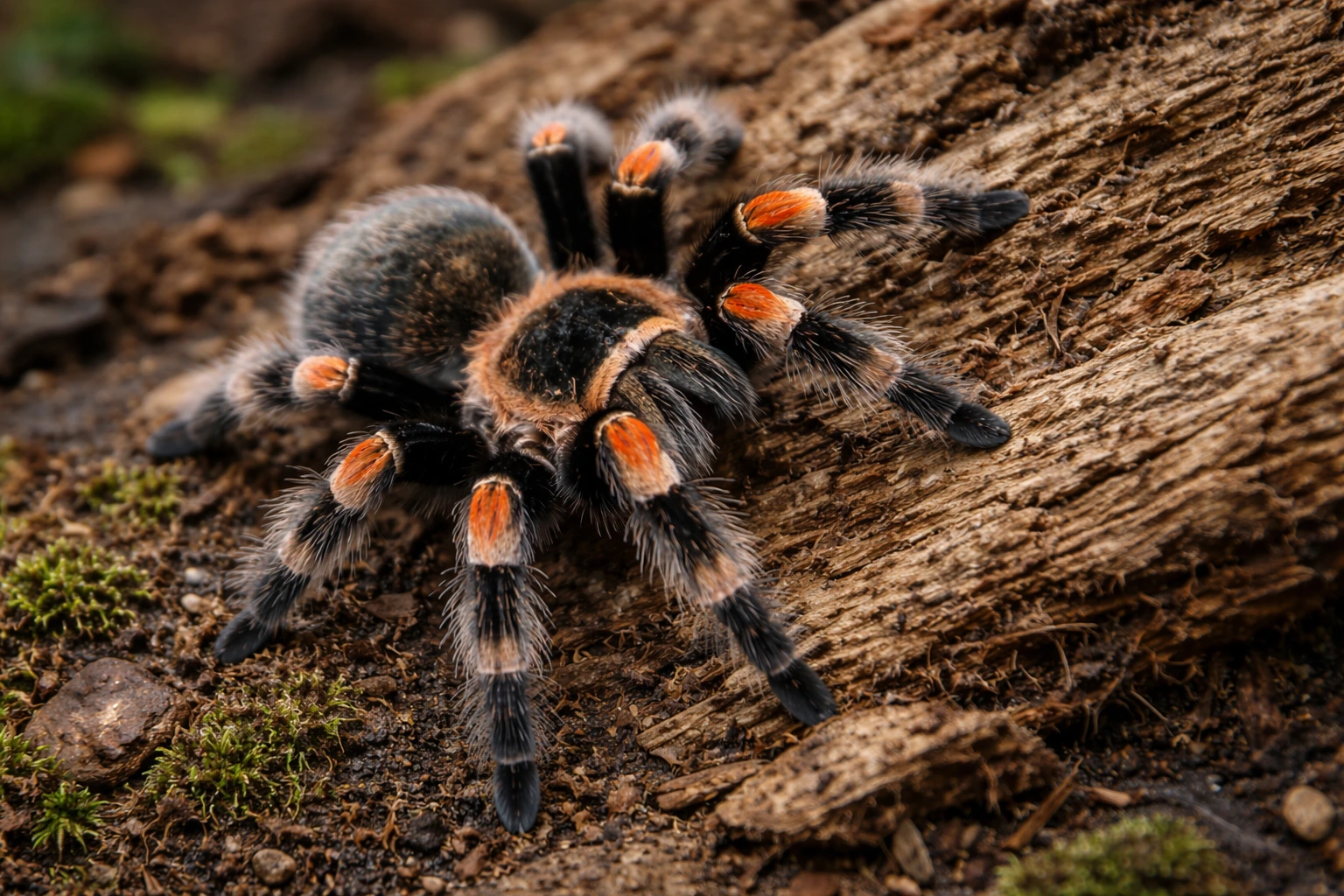
Origin/biotope: Mexico, warm, rather dry and seasonal regions.
Breeding: dry substrate, hiding place, bowl; you only moisturize in spots (gradient).
Feeding: moderate; adult females can fast for a long time - this is normal.
As a predator, it feeds mainly on insects.
- Basic: Cockroaches (e.g. Blaptica dubia, Turkish cockroaches), crickets, locusts and mealworms.
- Prey size: It is best to feed insects of a size that does not exceed the width of the spider's abdomen.
Moulting: do not accelerate it with moisture "forcibly"; stability + water.
Propagation: popular in breeding, but remember about the legality of trade/origin (CB). (Commission for Environmental Cooperation)
Errors: overflow, lack of hiding place, tank too high (risk of falling).
2)Brachypelma emilia – NW, terrestrial 🟢
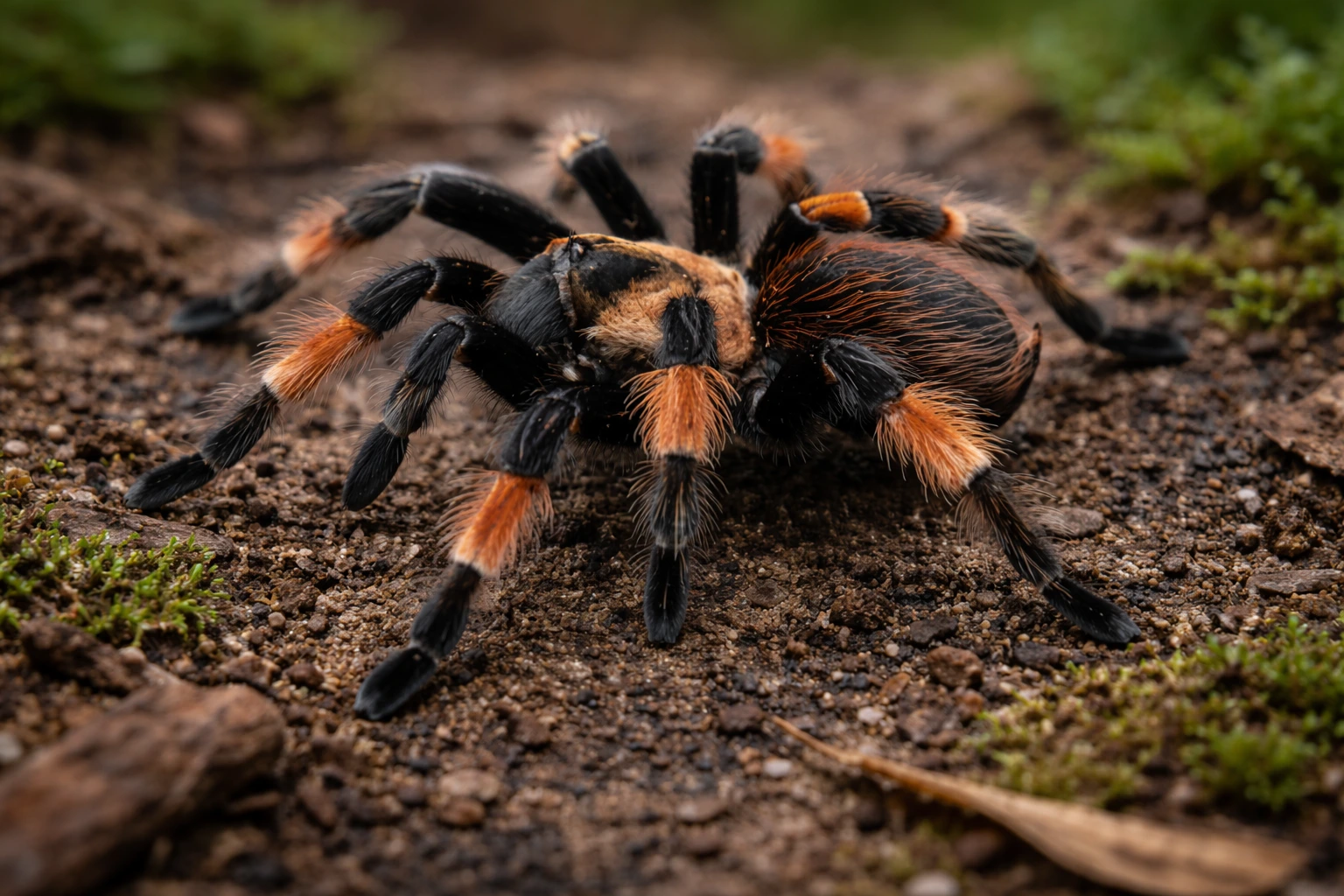
Biotope: Mexico, seasonal conditions.
Breeding: as in Brachypelma: dry + cup; a must-have hideout.
Feeding: regularly, but without "fattening".
She is not picky, although she can be a "slow" hunter.
- Basic: Cockroaches (Argentine, Turkish), crickets, locusts.
- For little ones: Breeding crickets, fruit flies or cut mealworms.
Frequency:
- Young (L1-L5): Once every 4-7 days.
- Adult: Once every 2-3 weeks. This species has a tendency to "bulge" its abdomen, so it is worth making sure that it does not become too large (risk of breaking when falling).
- The "abdomen" rule: Try to ensure that the abdomen is no more than twice the size of the carapace. If the spider is "stuffed", extend the breaks between meals.
Mistakes: too wet → stress and mold in the terrarium.
3)Brachypelma boehmei – NW, terrestrial 🟢/🟡
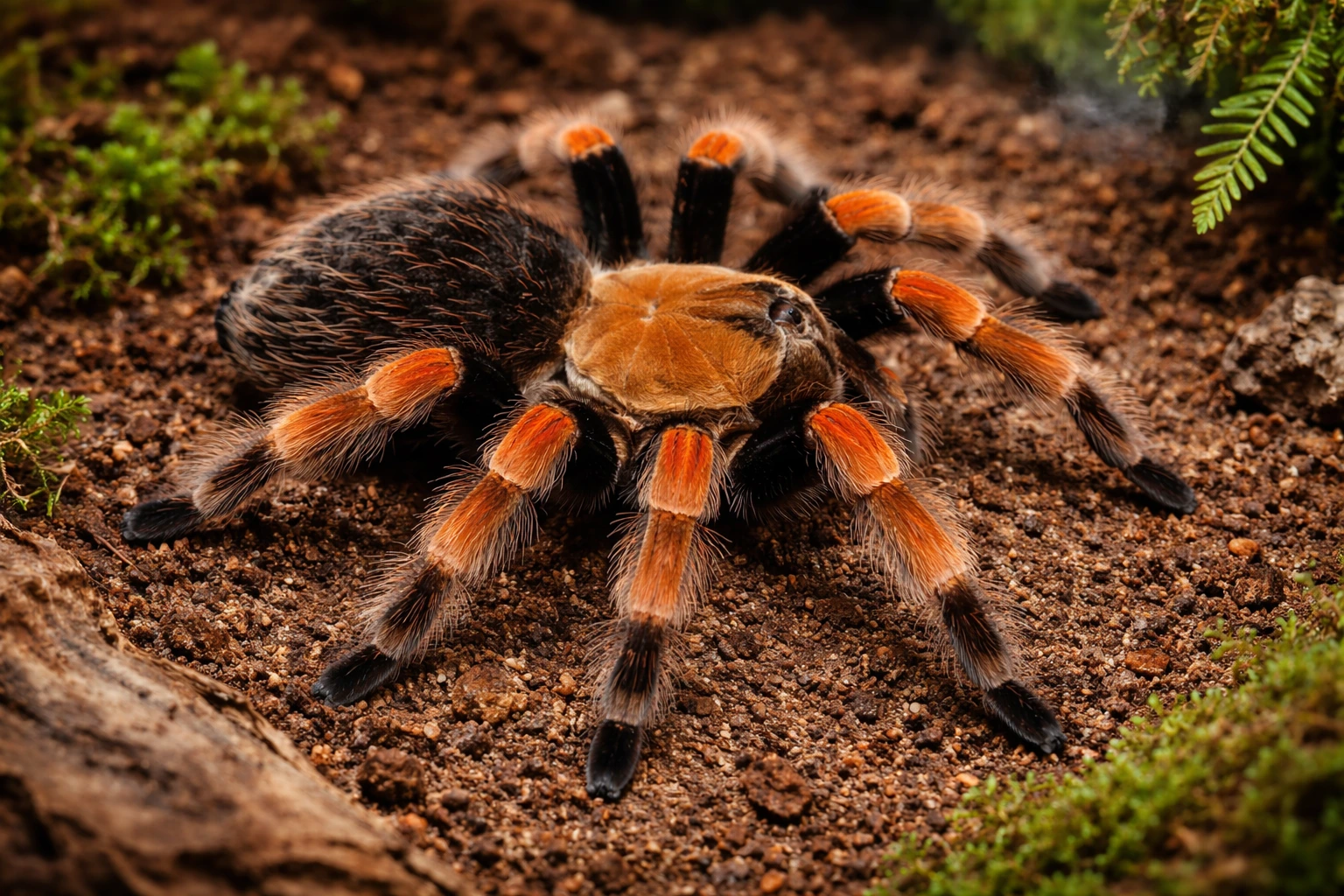
Character: often more "temperamental" (stinging hair).
Breeding: dry, lots of peace, little manipulation.
feeding:
- Classic food "team": cockroaches (Turkish, Argentine), crickets and locusts. Feed mealworms less frequently due to their high fat content.
Frequency:
- Young (L1-L5): Once every 4-6 days. They gain weight quickly, even though they grow slowly.
- Adult and mature individuals: Once every 2 weeks.
- Prey size: Standard - the insect should be no larger than the spider's abdomen. B boehmei can take down prey almost its own size, but it is safer to stick to smaller sizes.
- The "abdomen" rule: Try to ensure that the abdomen is no more than twice the size of the carapace. If the spider is "stuffed", extend the breaks between meals.
Errors: frequent "manual" contact attempts - this is an observational species.
4)Brachypelma albiceps – NW, terrestrial 🟢
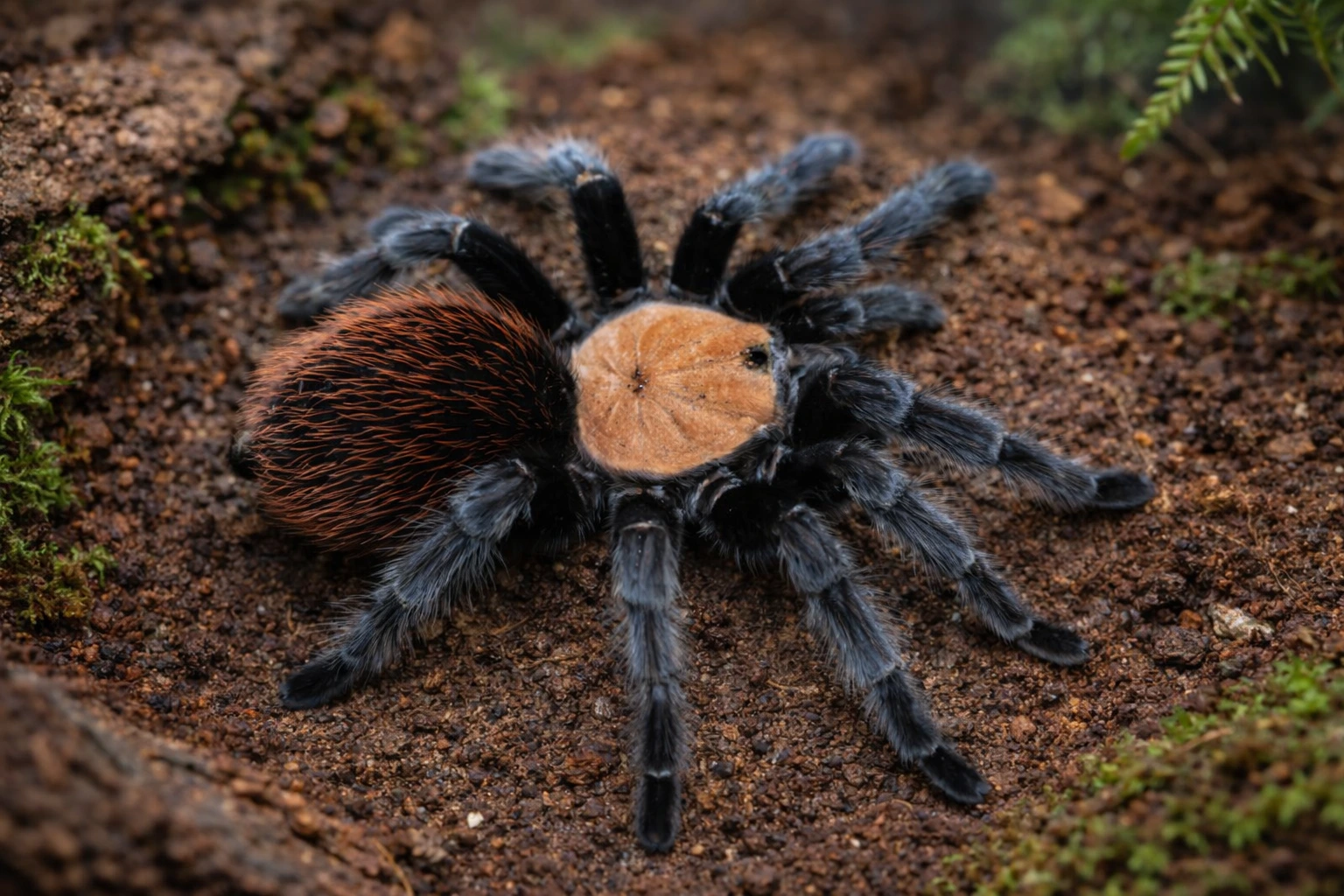
Biotope: warmer, seasonal regions of Mexico.
Breeding: dry, stable, good hiding place.
feeding:
He is not picky and eagerly hunts for typical food.
- Basic: Turkish and Argentine cockroaches, crickets, locusts.
- For little ones (L1-L3): Breeding a cricket, flightless fruit flies, or quartered mealworms.
Frequency:
- Young: Once every 4-6 days.
- Adults: Once every 2-3 weeks. Due to their very slow metabolism, adult females can easily be overfed.
- The "abdomen" rule: Try to ensure that the abdomen is no more than twice the size of the carapace. If the spider is "stuffed", extend the breaks between meals.
Plus: great “display”.
5) Tliltocatl albopilosus (curly hair) – NW, naziemny 🟢
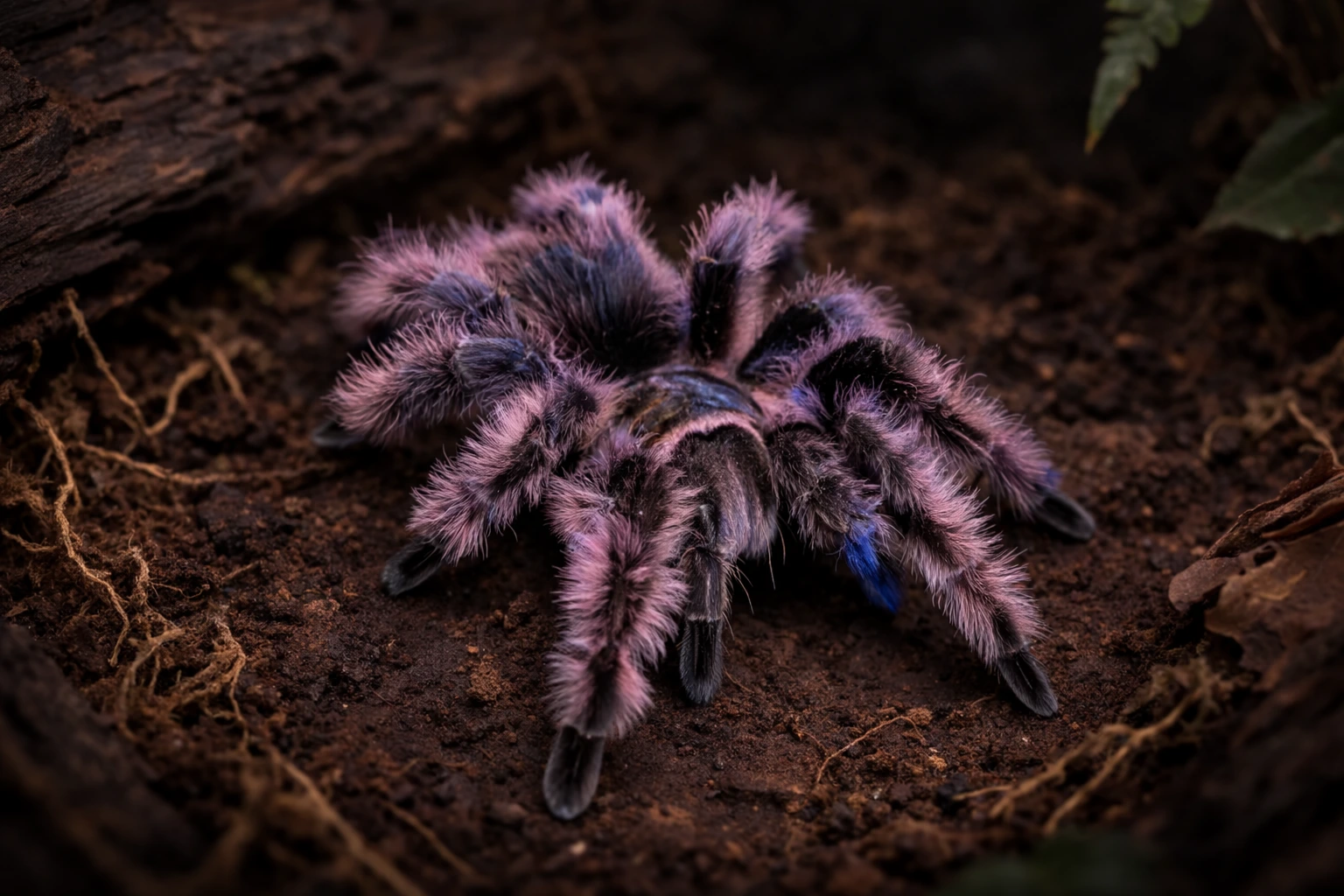
Biotope: Central America, rather moderate conditions.
Breeding: “forgiving”; light corner moisturization + water.
Feeding: usually problem-free.
This species is very voracious and rarely refuses a meal (except before the molt).
- Basic: Cockroaches (e.g. Blaptica dubia, Turkish cockroaches), crickets, locusts.
- Additives: Mealworm or woodworm larvae (less common due to high fat content).
Feeding frequency (2026):
- Young (L1–L5): Every 2–4 days. Frequent feeding at this stage allows them to grow faster.
- Juveniles: Once every 7-10 days.
- Adult: Once every 1-2 weeks. Adults can be fed less frequently (even once every 3 weeks) if their abdomen is significantly larger than the carapace.
Errors: lack of ventilation when the substrate is too moist.
6)Tliltocatl vagans – NW, terrestrial 🟢
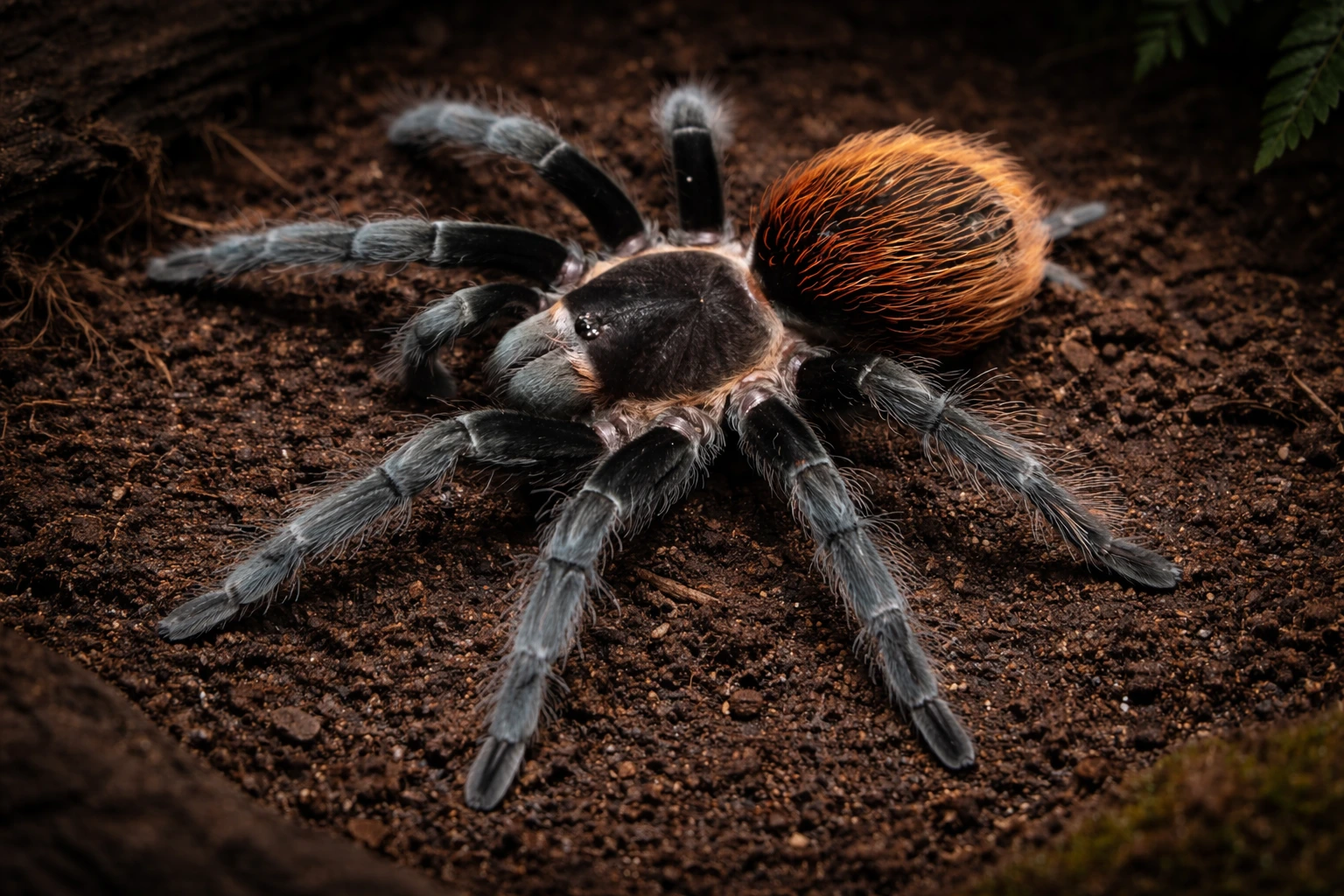
Biotope: warm areas of Central America.
Breeding: simple; dry/moderate + cup.
Feeding:
It is a very voracious species that is rarely picky.
- Basic: Cockroaches (Turkish, Argentine), crickets, locusts.
- For youngsters (L1-L4): Breeding a cockroach or cricket, possibly cut mealworms.
Frequency:
- Young: Once every 2-4 days (rapid metabolism at this stage).
- Adult: Once a week.
- Adult: Once every 1-2 weeks.
Key principles
- Hunting aggression: T. vaganshunts very dynamically. Always use long tweezers when feeding, as the spider may jump violently towards its prey.
- Fast before molting: When the abdomen becomes dark and shiny and the spider stops eating, remove all the food. Insects (especially crickets) can severely bite the spider during molting.
- Time after molting: Stop feeding until the mouthparts (venom teeth) are fully hardened. In 2026, breeders recommend a safe margin: 5 days for babies and 10-14 days for adults.
- Water: As a terrestrial species that likes to dig through the ground, it often fills water bowls. They should be cleaned and refilled regularly so that the spider has constant access to fluids.
Errors: too little soil (they like to dig their own way).
7)Grammostola pulchripes – NW, terrestrial 🟢
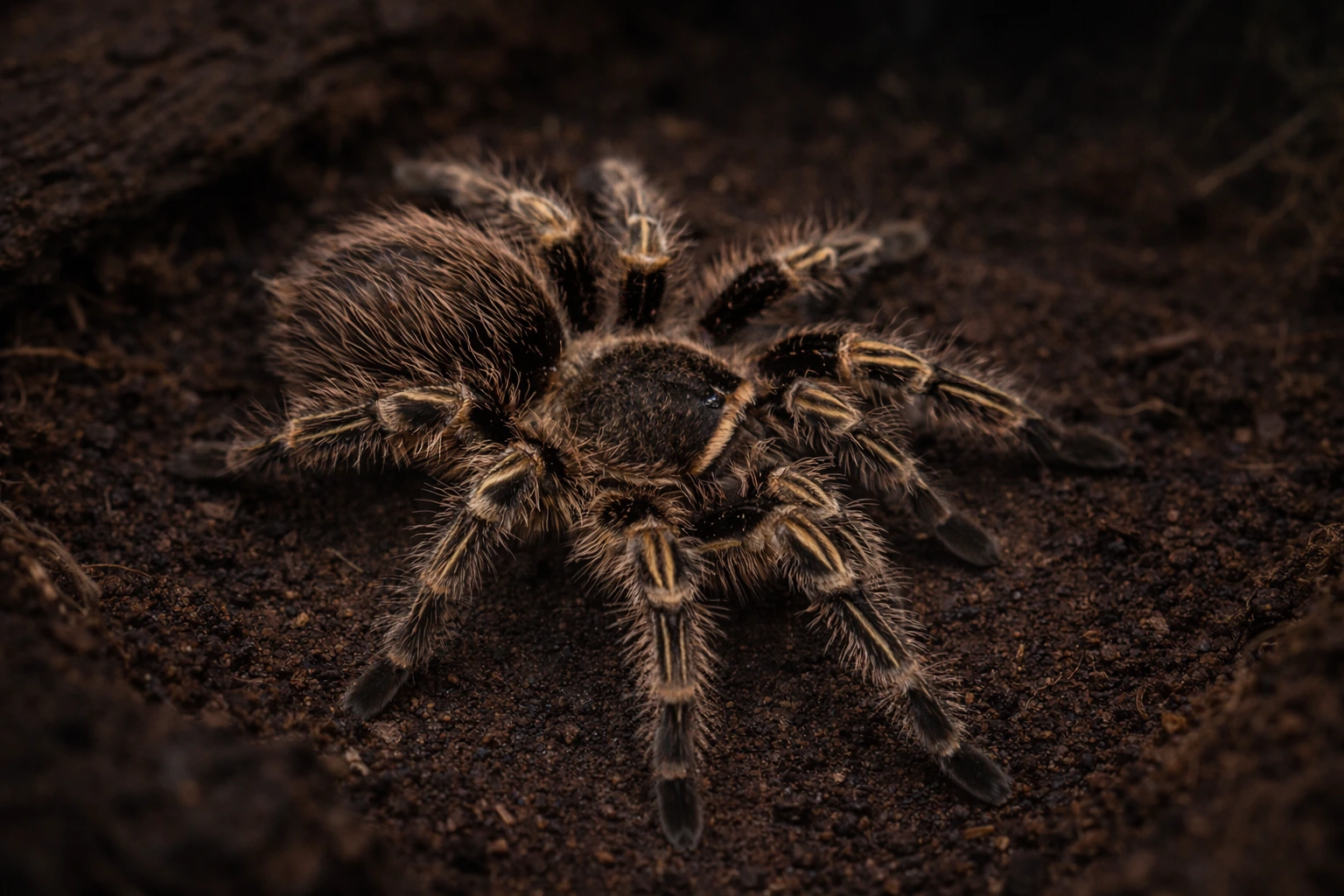
Biotope: South America, drier/steppe areas.
Breeding: stable and rather dry; often slower growth.
Feeding: calm appetite, long breaks possible.
- Cockroaches (Argentinian, Turkish), crickets, locusts.
- Prey size: The insect should be about the size of the spider's carapace (cephalothorax) or slightly smaller than its abdomen.
Frequency:
- Young (L1-L5): Once every 3-5 days.
- Adult: Once a week.
- Adult: Once every 2 weeks (or less often if the abdomen is very large).
Important breeding notes
- Starvation before molting: When the abdomen becomes dark and shiny (the "mirror" disappears), stop feeding. In this species, fasting can last from several weeks to several months.
- Time after molt: Do not feed the spider until its venom fangs turn black. In adults, wait at least10-14days.
- Hydration: Provide a shallow bowl of water. This species prefers moderate humidity (50–60%), so it is enough to moisten only a small part of the substrate.
- Safety: Due to the large size of adult females, avoid too high terrariums - a fall of a "full" spider from a height of more than 20 cm may result in a rupture of the abdomen.
Errors: “overheating” because “it is supposed to grow faster”.
8)Grammostola pulchra – NW, terrestrial 🟢
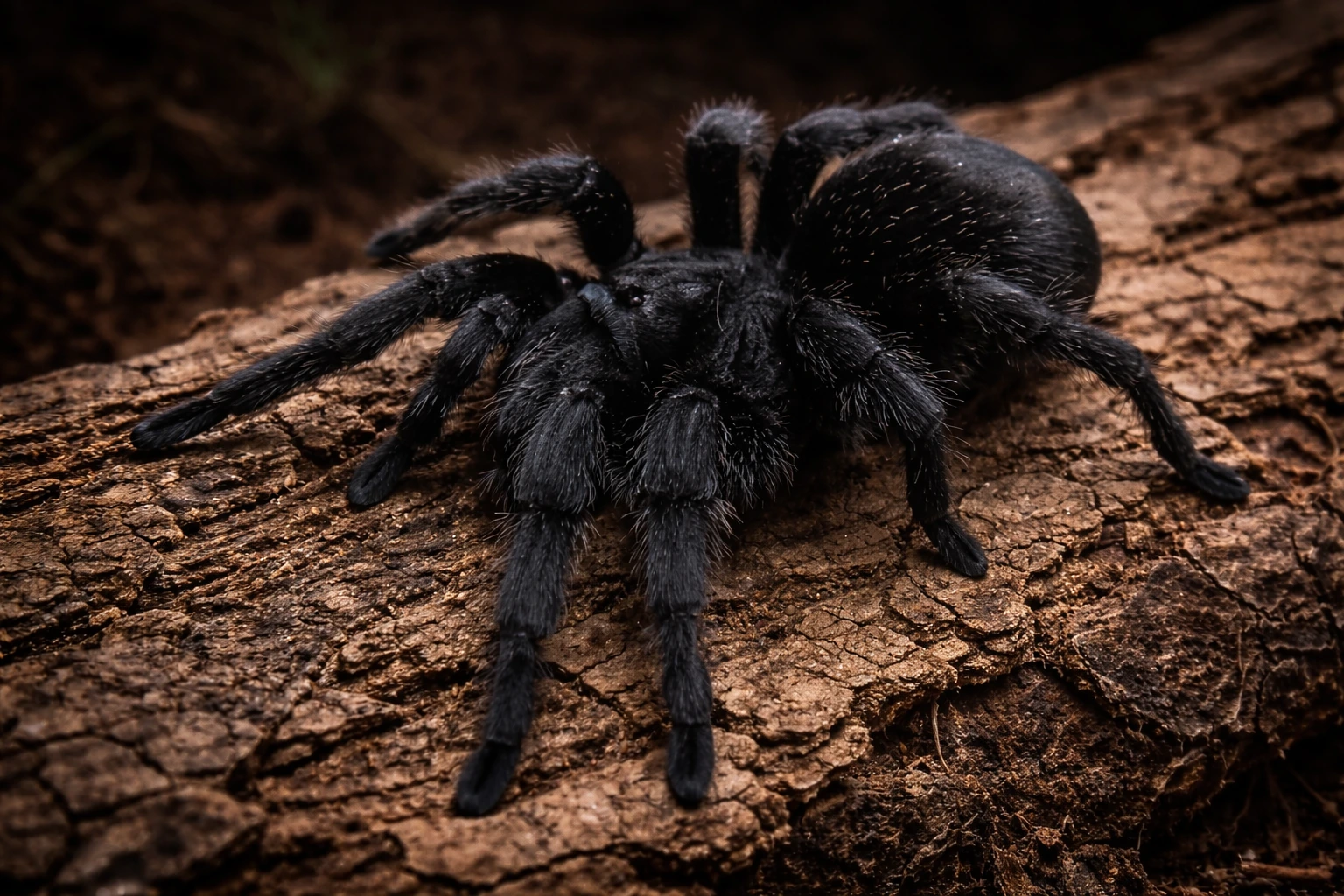
Breeding: Similar to pulchripes, usually very predictable.
Feeding:
- The species is not picky and willingly accepts standard food: cockroaches (Turkish, Argentine), crickets, locusts.
Frequency:
- Young (L1-L5): Once every 5-7 days.
- Adult: Once every 2-4 weeks. Due to their very slow growth, it is easy to overfeed them - make sure that the abdomen is not unnaturally large.
- Specifications: G. pulchra can take very long breaks from eating (even with no apparent connection to molting). If the spider is "stuffed" and refuses to eat, do not worry.
Key principles:
- Removing leftovers: Remove any uneaten food after 24 hours. The insect left behind may stress the spider or attack it during molting.
- After molting: Stop feeding until the venom teeth have completely hardened: 5-7 days for babies and 14 days for adults.
- Water: Ensure constant access to a shallow bowl of water. This species likes moderate humidity (50-60%), so it is enough to keep the substrate mostly dry, slightly moistening only one corner.
Errors: too wet and no airflow.
9) Grammostola rosea/porteri (complex) – NW, terrestrial 🟢
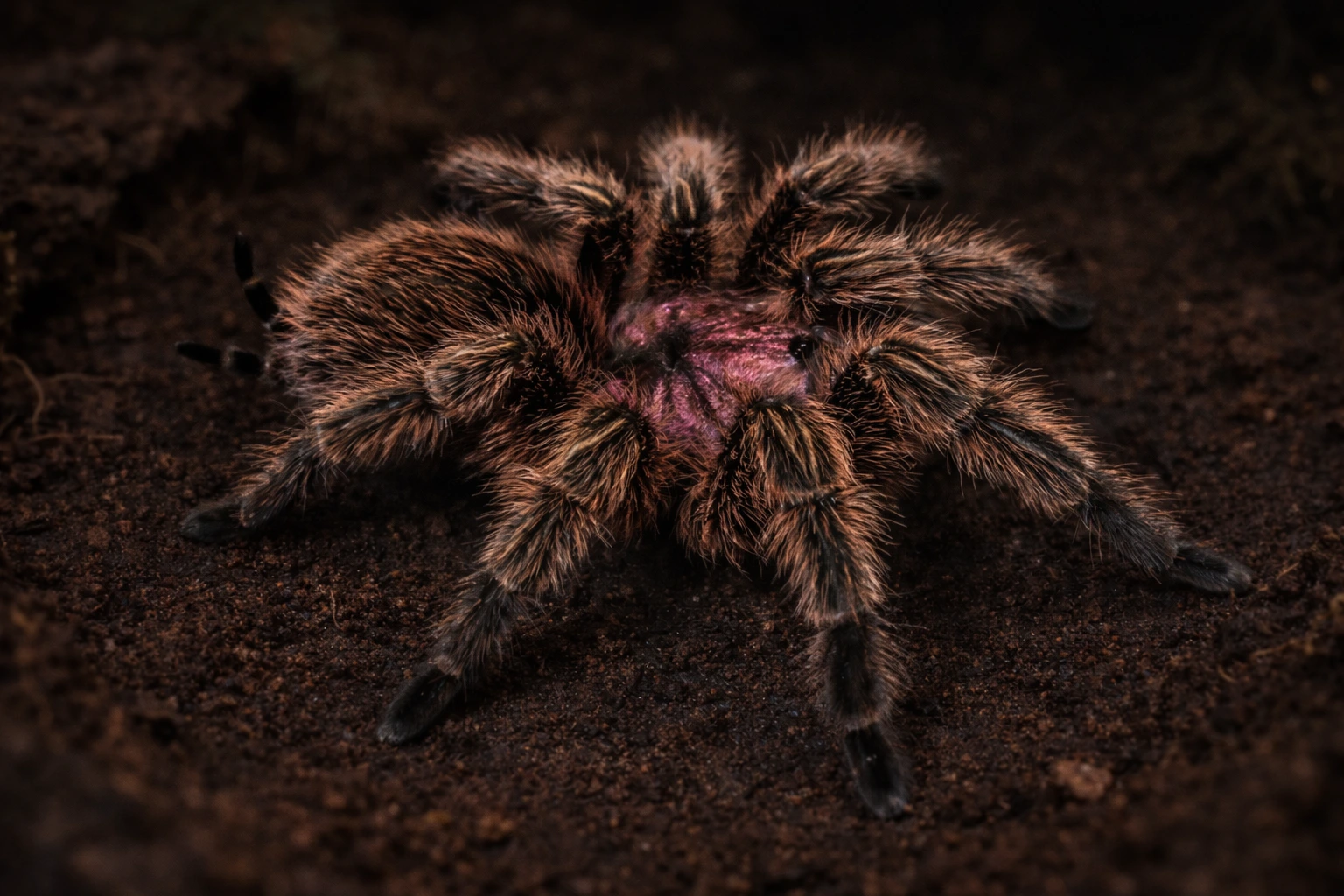 Biotope: Chile, often drier conditions.
Breeding: dry + water; known for their “legendary posts”.
Feed:
• Classic food: cockroaches (Turkish, Argentine), crickets, locusts.
Frequency:
- Young (L1-L5): Once every 7-10 days.
- Adult: Once every 2-4 weeks. Often, one solid meal once a month is enough for them.
- Legendary Fasting: These species can go without food for 6-12 months for no apparent reason (not necessarily before molting) and without any visible weight loss. If the abdomen is large and the spider refuses to eat, simply stop harassing it with food.
Key principles
- Degree of "loading": These are spiders that live in nature in difficult conditions, so they save energy. Avoid overfeeding - if the abdomen of a ground spider is too heavy, there is a huge risk of it breaking when falling from even a small height.
- Feeding after molting: Due to slow physiological processes, in adults, wait a safe 14-21 days before feeding the first meal.
- Water is key: During long periods of not eating, access to a bowl of fresh water is critical.
- Humidity: These species prefer a dry climate (40-50%). The substrate should be almost completely dry - excess moisture often causes stress and attempts to escape to the walls of the terrarium.
Mistakes: Panic due to lack of food.
10) Aphonopelma chalcodes – NW, terrestrial 🟢
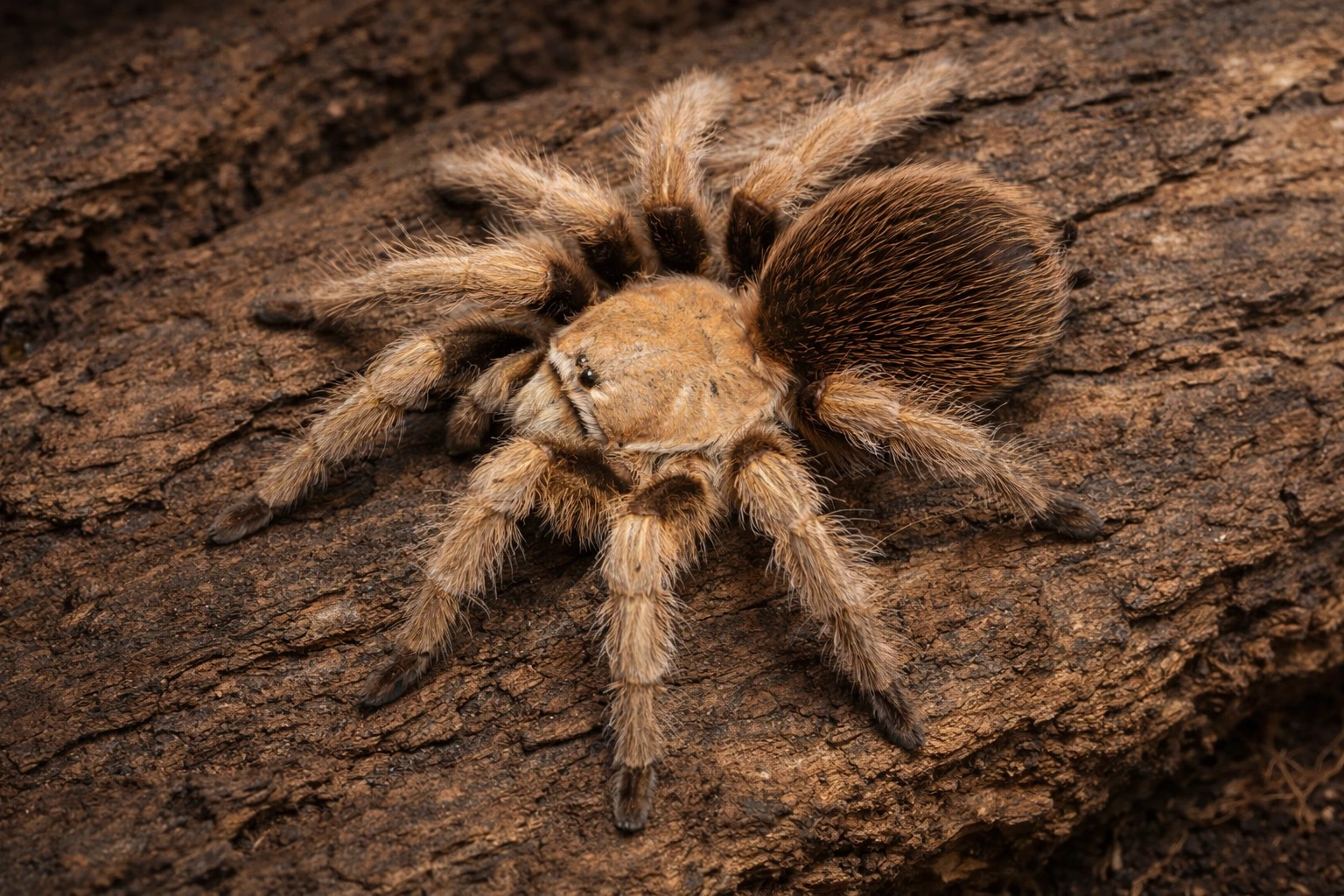 Biotope: dry regions (USA/Mexico).
Nutrition:
- Type of food: Prefers typical food: Turkish cockroaches, crickets, small locusts. Avoid feeding mealworms that are too fatty as a staple of the diet.
Frequency:
- Young (L1-L5): Once every 7-10 days.
- Adult: Once every 2-4 weeks. Adult females have a very low metabolism and one larger cockroach may be enough for them for a month.
- Starvation diets: Similar to G. rosea, this species is a champion of fasting. It may not eat for many months (especially in winter or before molting). If the abdomen is round, lack of appetite is not a cause for concern.
Supportive conditions
- Humidity: This is an extremely dry-loving species. The substrate should be completely dry. Excessive moisture may cause the spider to stop eating and sit on the walls of the terrarium.
- Water: A shallow bowl with clean water is necessary (e.g. from terrarium stores). The spider rarely drinks, but it must be able to do so, especially during fasts.
- Temperature: Higher temperatures (approx. 26-28°C) stimulate metabolism, which may slightly accelerate the willingness to feed and grow in this "slow" species.
- Service after molting: In adult animals, the fangs take a very long time to harden - serve the first meal only after 14-21 days.
Breeding: arid: dry, bowl, lots of peace.
Faults: “tropical” handling (wet ground).
11) Aphonopelma seemanni – NW, terrestrial/digging 🟢/🟡
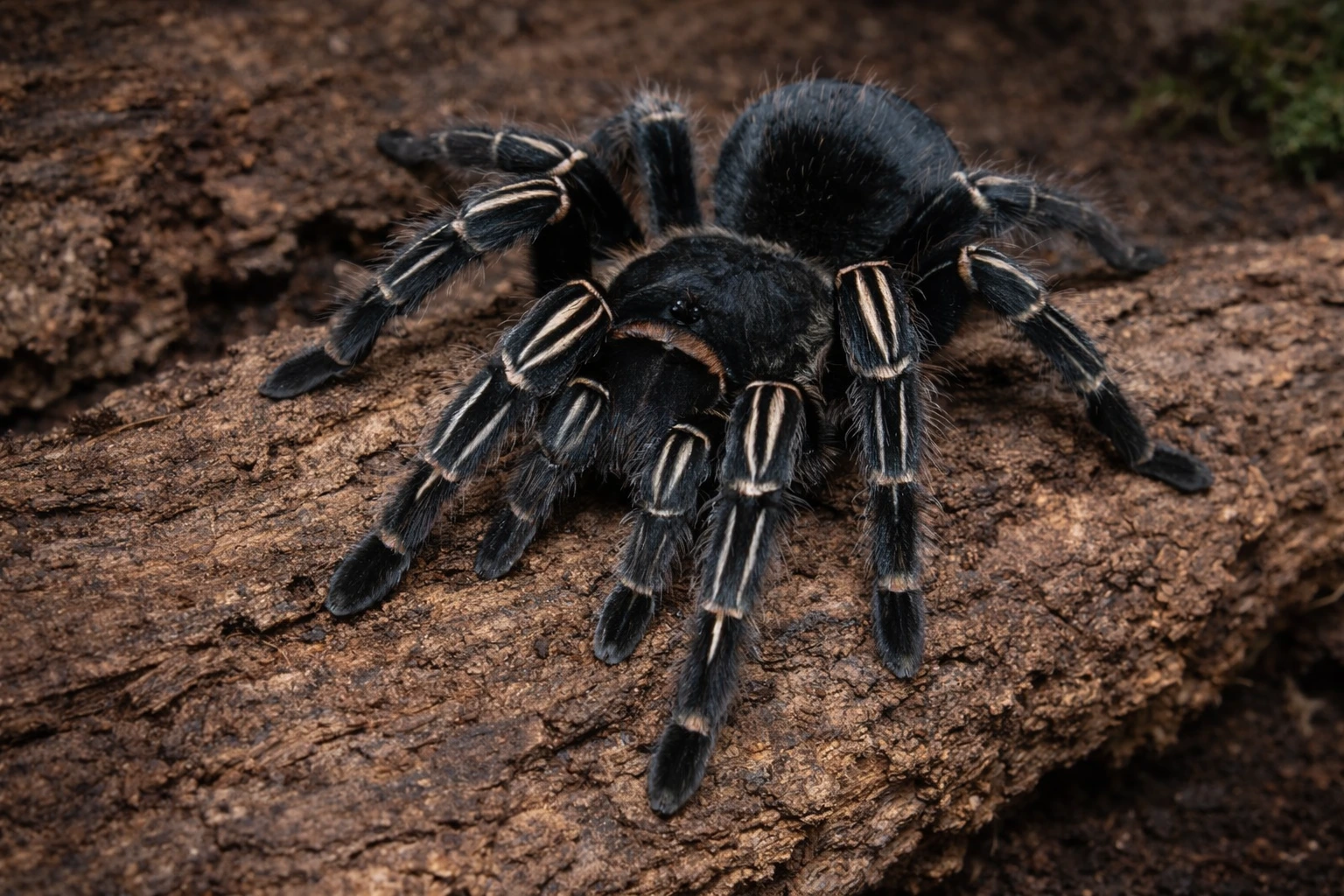 Biotope: Central America, often more humid microenvironments.
Breeding: deeper substrate, moisture in the lower layers, the surface does not have to be wet.
- Type of food: Classic food: cockroaches (Turkish, Argentine), crickets, locusts.
Frequency:
- Young (L1-L5): Once every 4-6 days.
- Adult and adult: Once every 1-2 weeks.
- Hunting specifics: It often lies in wait for its prey at the mouth of its burrow. If the spider is sitting deep in the tunnel and shows no interest, do not force food into it - it may mean that it is about to molt.
Key Principles (2026)
- Humidity and appetite: Unlike A. chalcodes, this species prefers higher humidity (65–75%). Too dry a substrate may weaken the spider and discourage it from eating. It is recommended to keep the lower layers of the substrate constantly moist.
- Removing debris: Since the spider often drags its prey into its burrow, check to make sure it doesn't leave any "waste" there. Uneaten leftovers in a damp nest can quickly become moldy.
- Feeding after molt: As with most Aphonopelmas, the process of hardening the shell is slow. In adults, give the first meal after approximately 14 days.
- Water: A bowl of water is necessary (e.g. available at Terra Sklep). These spiders drink often, especially if the temperature in the terrarium is higher.
Important breeding note This species is sometimes called a "ghost spider" - it can spend weeks in its burrow, especially before molting. If the entrance to the tunnel is sealed with cobwebs and dirt, do not let the feeder enter there under any circumstances. Have you prepared a sufficiently thick layer of substrate for it (min. 15 cm) so that it can fulfill its digger instincts?
Errors: too dry without a cup → problems with shedding.
Thanks for reading this article
Blog Master
