


B. Popular “gluttons” and large tarantulas for intermediate players
1) What does the species card look like in the atlas | SpotMeUp
We describe each species identically.
Origin and biotope: continent/region + habitat type (dry scrub, humid forests, savanna, etc.)
Lifestyle: terrestrial / arboreal / digging (fossorial) / "webber"
Level: start / intermediate / advanced
Temperature and defense: calm/shy/defensive + stinging hairs (New World) or stronger venom (Old World)
Terrarium: size, ventilation (critical), hiding place, bowl
Substrate and moisture: dry/moisture gradient/deep soil for digging
Feeding: what, how often, “what if he doesn't eat”
Moults: symptoms, safety rules, post-molt
Reproduction (in short): difficulty, key risks
The most common mistakes: 3-5 specific “what not to do”
SpotMeUp CTA: “show photo / ask community / find breeders nearby”
12)Acanthoscurria geniculata– NW, terrestrial
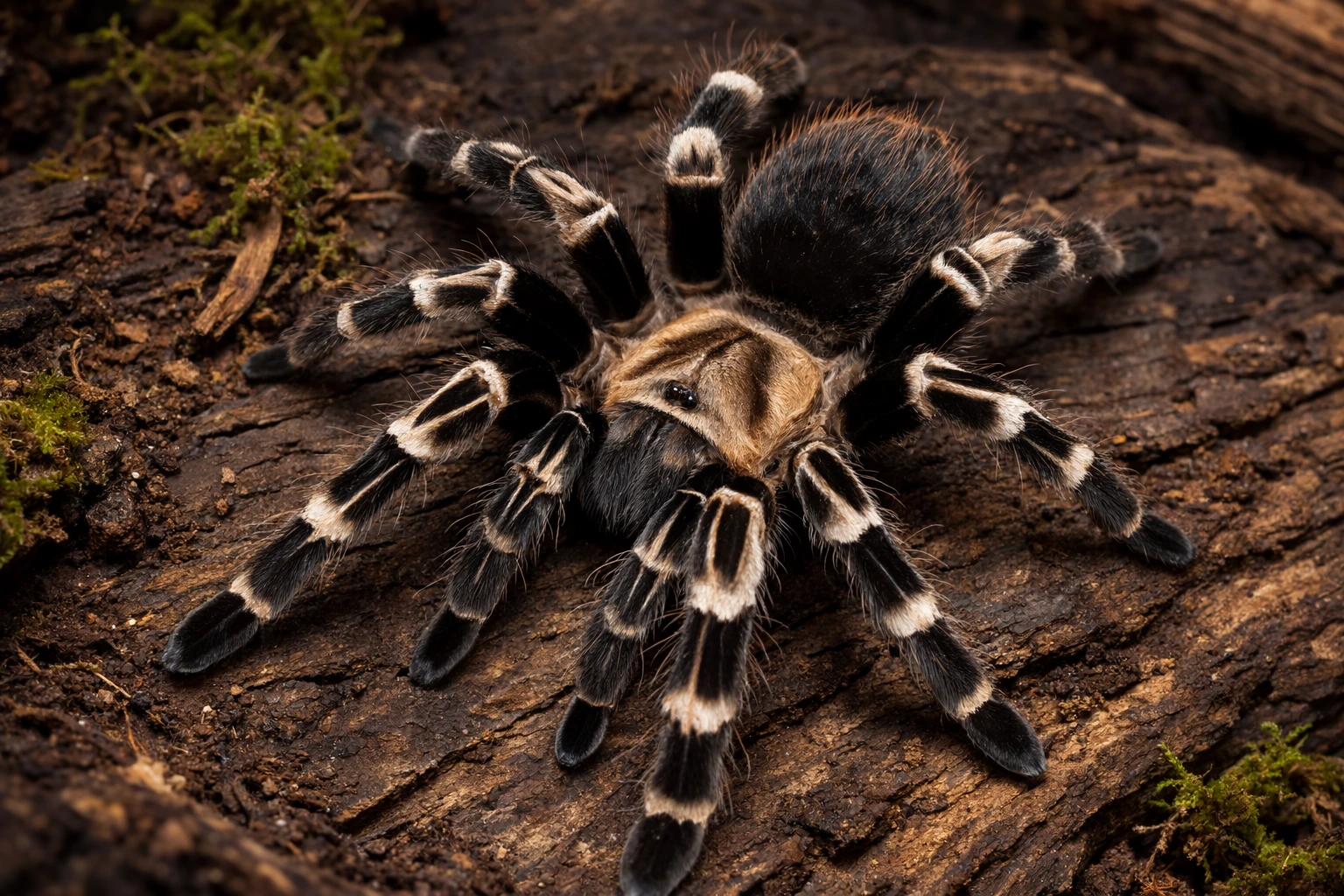 Origin/biotope: Brazil; likes warmer and moderately humid conditions.
Breeding: slightly moist substrate, bowl, solid hiding place; often active “display”.
Feeding: very good appetite - make sure that food is not left in the pre-molt.
The diet should be varied and based on live insects:
- Young (L1-L5): Breeding cricket, Turkish cockroach, fruit fly or cut mealworms.
- Sucklings and adults: Cockroaches (Argentine, Brazilian), crickets, locusts, wood-eaters.
- Size rule: Food should be no larger than the spider's abdomen.
Feeding frequency/schedule depends on life stage:
- Little ones (slangs): Every 2-4 days. You can feed more often to speed up growth.
- Juveniles: Every 5-7 days.
- Adult females: Once every7-14 days. A hearty meal can last up to a month.
- Adult males: They eat much less, sometimes not at all.
Important tips
- Abdomen index: Observe the abdomen - if it is clearly wider than the cephalothorax, limit feeding to avoid the risk of mechanical damage (e.g. in the event of a fall).
- Pre-molt fasting: The spider stops eating a few days (young) or weeks (adult) before molting. Never leave live food in the terrarium during this time as it may injure the spider.
- Water: Always have fresh water available in a shallow bowl
Errors: Too small a terrarium (for a large individual), drying out without water.
13) Lasiodora parahybana – NW, terrestrial
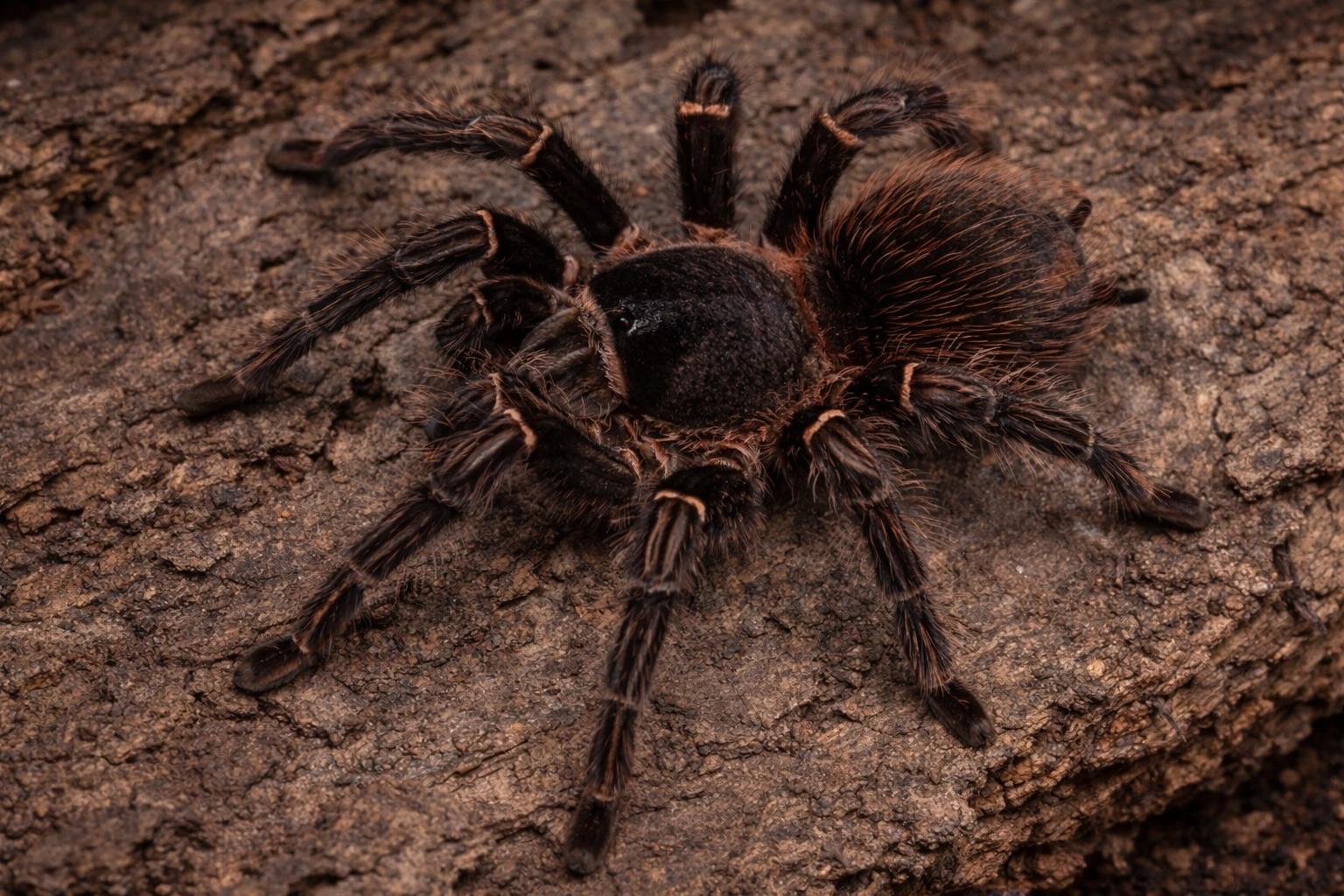 Biotope: Brazil, more humid and tropical.
As one of the largest spiders in the world,Lasiodora parahybanacan handle most food insects.
What to serve?
Little ones (L1–L4): Turkish cockroach hatching, fruit flies, cut mealworms.
Adults: medium-sized crickets, cockroaches, adult mealworms.
Adults: large cockroaches (e.g. Madagascar), locusts, adult woodworms.
Beware of vertebrates: Although an adult female can handle a small mouse, vertebrates are not recommended. This increases the risk of injury to the spider and provides too much calcium, which may prevent it from molting properly.
Feeding schedule
Young ones: every 2-3 days (they grow very quickly and can shed even every month).
Medium: every 5-7 days.
Adults: one larger meal every 10-14 days.
What to watch out for?
Risk of abdomen rupture: the species has a tendency to "overeat". If the abdomen is unnaturally large, hard and tight (like a balloon), take a break from feeding. A fall of a heavy spider, even from a low height, can be fatal.
Feeding aggression: L. parahybana has a very strong grasping reflex - it can attack anything that comes into the terrarium (including tweezers or a water jet). Be careful when opening the tank.
Moult: a decrease in appetite and darkening of the abdomen (like in A. geniculata) is a "do not disturb" signal - do not feed at this time and limit interference.
Breeding: larger tank, moderately moist substrate, good ventilation.
Errors: "swamp" + stuffiness.
14)Lasiodora klugi– NW, terrestrial
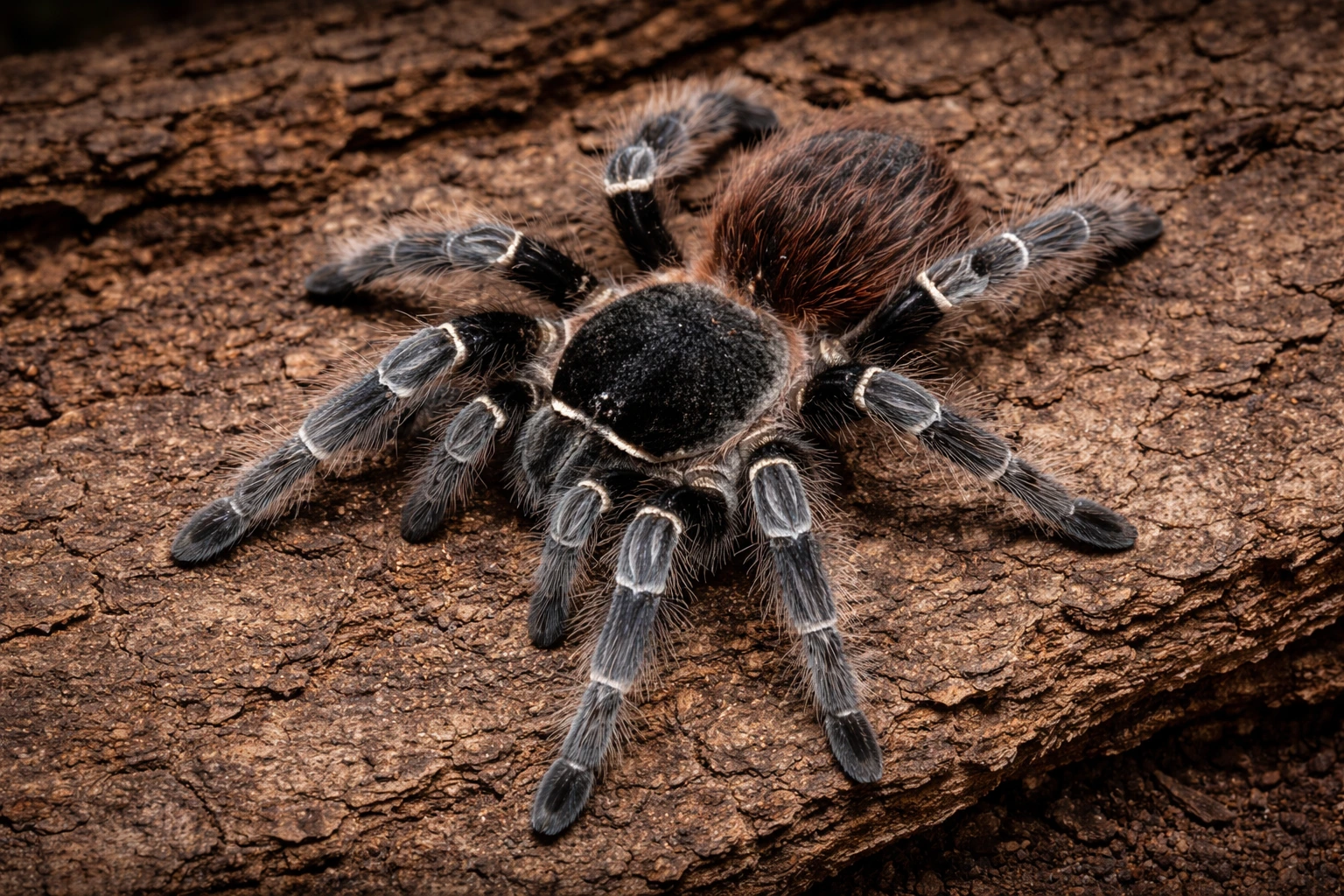 Character: strongly "Italian", sometimes defensive.
Little ones (L1–L4)
They grow very quickly, so feed frequently:
every 2-3 days
best: hatched Turkish cockroach orquartered mealworms
Juveniles / juveniles / "standard" adults
They like to hunt:
crickets andArgentine cockroaches,Feeding: every 5-7 days
Large adult females (the heaviest animals),They prefer larger, more substantial prey:
locusts, large Madagascar cockroaches, dubia
Feeding: 1 solid meal approximately every 2 weeks
Key principles (must-have)
1) Feeding safety
L. clugi attacks instantly and strongly.
Use long tweezers and do not "wave" when opening - the spider catches the movement immediately.
2) Weight control (very important)
This species is prone to overfeeding. Too large an abdomen in a heavy ground tarantula = greater risk of rupture after a fall / sudden movement.
If the abdomen is~2× larger than the cephalothorax -cut the frequency of feeding.
3) Hydration
With a fast metabolism, water is essential.
Constant access to fresh water = lower risk of molting problems.
Breeding (in short)
Jak u Lasiodora:
lots of space,
stable conditions, minimum "fucking around".
Errors: opening/disturbing too often.
15)Nhandu chromatus– NW, terrestrial
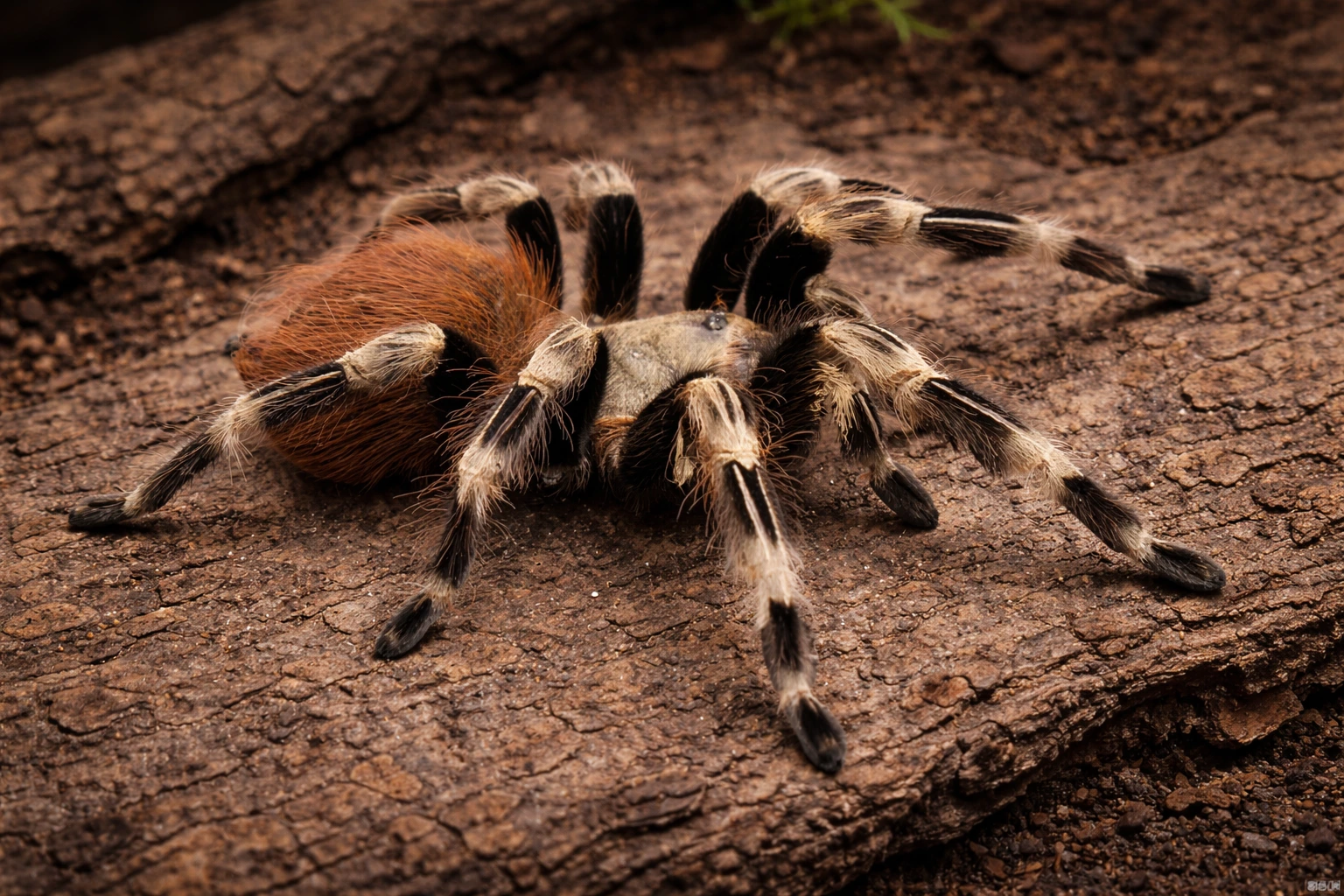 Biotope: Brazil (tropics/seasonality).
Nhandu chromatus (white-banded tarantula), classified by some breeders as Vitalius chromatus, is an attractive and extremely voracious species. It is famous for its strong appetite and rarely refuses a meal if conditions are right.
Breeding: moderate humidity + airiness; can be quick to feed.
What to serve?
The basis of the diet are live insects selected to the size of the spider - the prey should not exceed the size of its body.
Young (L1–L5):
Hatching Turkish cockroach, small crickets, fruit flies, possibly finely chopped mealworms.
Adults:
Medium-sized cockroaches, crickets, mealworms.
Large cockroaches (e.g. dubia), locusts, adult crickets.
Feeding schedule
Young individuals: every 3–4 days - this promotes the rapid growth typical of this genus.
Adult: once a week or every 7-10 days.
Before molting: The spider may stop eating for up to several weeks. During this time, live food should be removed from the terrarium so that it does not stress and damage the weakened individual.
Specificity of feeding
Activity: It is best to give food in the evening - this is when spiders are most active.
Temperament: An opportunistic and quite defensive species. It reacts instantly to movement, can attack tweezers or comb out hairs that sting when entering the terrarium.
Hydration: Constant access to a shallow, regularly cleaned bowl of water is necessary for proper functioning and trouble-free molting.
Errors: catching "in hand" (stinging hairs).
16)Nhandu tripepii–NW, terrestrial
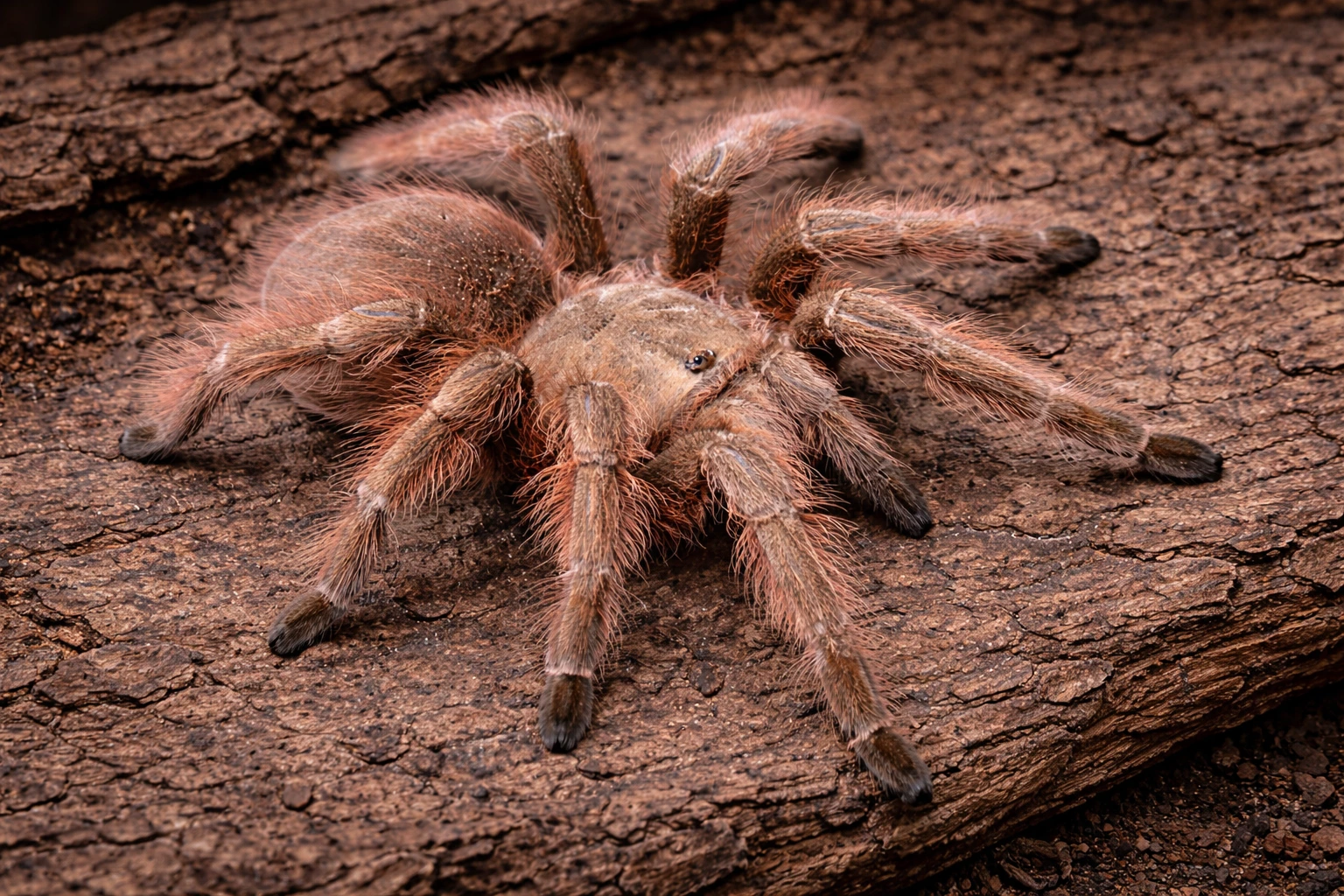 Breeding: Same as chromatus.
Nutrition:
What ends up on the plate?
Young (slings):
Hatching of a Turkish cockroach, fruit flies and pieces of mealworm. They grow very quickly, so they need regular, small portions.
Juveniles and adults:
Cockroaches (Argentinian, Brazilian), crickets and locusts. Larger individuals can easily cope with more solid prey.
Nutrition specifics:
Due to their thick hair and large size, adult females require an appropriate dose of energy, especially before molting.
Feeding frequency
Young: every 3–4 days.
Adult: once every 7-14 days.
Although the species can eat a lot at one time, it is worth being moderate - an excessively enlarged abdomen increases the risk of injury.
Important notes
Defensiveness:
Nhandu tripepii can be very excitable. While feeding, it may violently attack the victim and intensively comb the stinging hairs. It is recommended to use long tweezers and be careful.
Humidity and appetite:
The species prefers moderately increased humidity (approx. 75–80%). Too dry a substrate may result in decreased activity and reduced appetite.
Wylinka:
Darkening of the hair and a marked reduction in activity are signals of the approaching molt. During this period, food should be stopped and live insects removed from the terrarium.
Mistakes: lack of hiding place = stress = worse condition.
17)Megaphobema robustum– NW, terrestrial
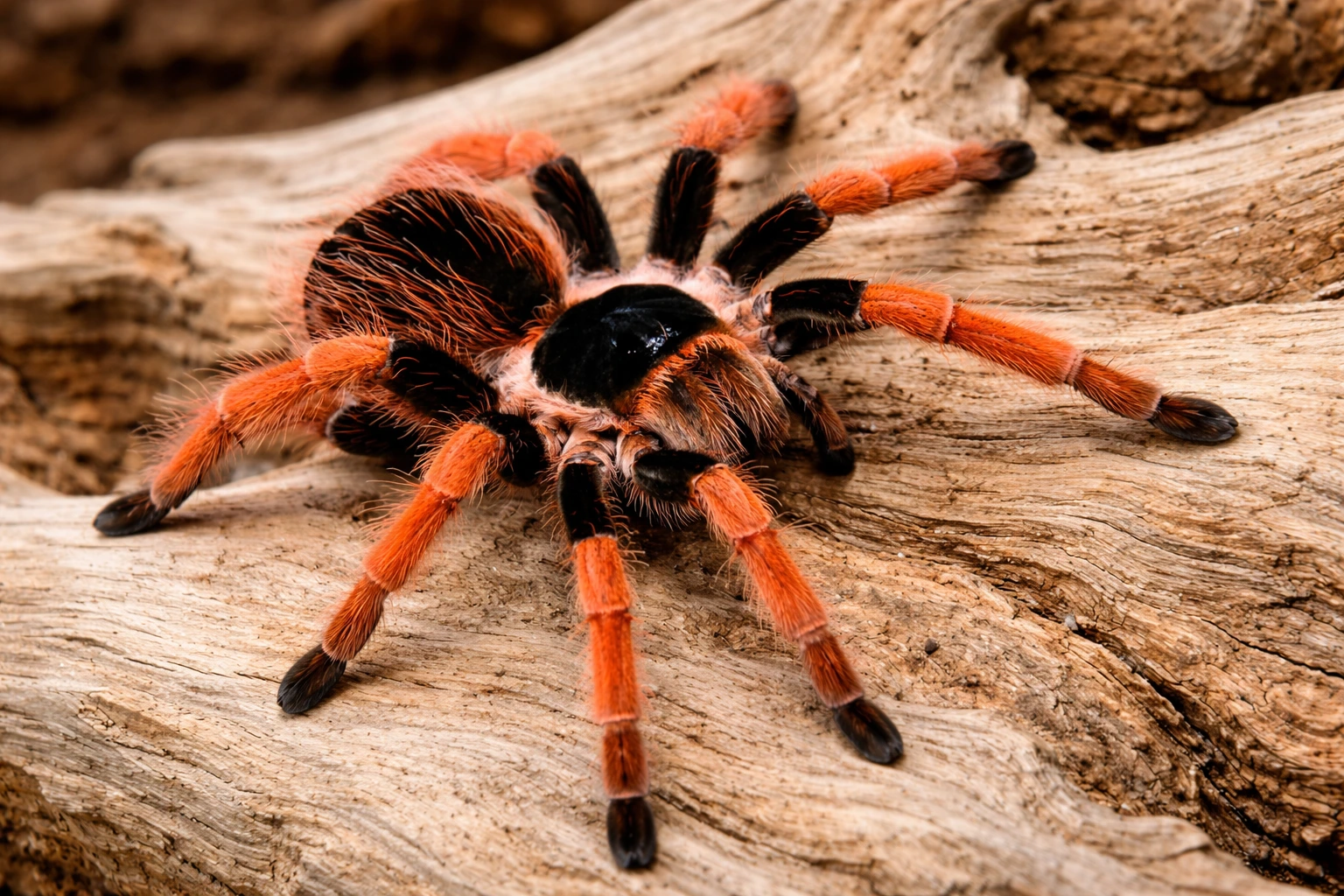 Character: can be nervous, has "characteristic" defensive movements.
Breeding: substrate + hiding place; minimize stress.
Megaphobema robustum – Colombian aristocrat among terrestrial NW
Large, attractively colored and with character. Unlike "vacuum cleaners" like Lasiodora or Nhandu,M. robustumcan have its own opinion – also at the bowl.
Menu and preferences
Young (L1–L4):
• Turkish cockroach hatching
• tiny crickets
Juveniles and adults:
• Argentine cockroaches
• locusts
• adult crickets
Genre specificity:
Megaphobema can be more picky. He may refuse to eat for no apparent reason - and this does not always indicate a health problem.
Feeding schedule
Toddlers: every 4-6 days
Adults: once every 10-14 days
They don't tend to overeat extremes likeL. parahybana, but controlling the size of the abdomen is still important.
Feeding behavior
A defensive strategy instead of a frontal attack
Instead of attacking prey, M. robustum often performs a characteristic "defensive dance" - it runs in circles, raises its abdomen and tries to strike with its hind legs. This is his hallmark.
Temperature sensitivity
It naturally occurs in the cooler, moist forests of Colombia.
• Above 26°C, appetite drops significantly
• Optimum: 22–24°C
Humidity
The substrate should be constantly slightly moist (not wet or muddy). Dryness is a common cause of eating problems.
And you? Do you keep it slightly cooler than the rest of the collection, or do you keep it at standard room temperature?
Mistakes: too frequent cleaning/fumbling.
18)Bumba cabocla– NW, terrestrial
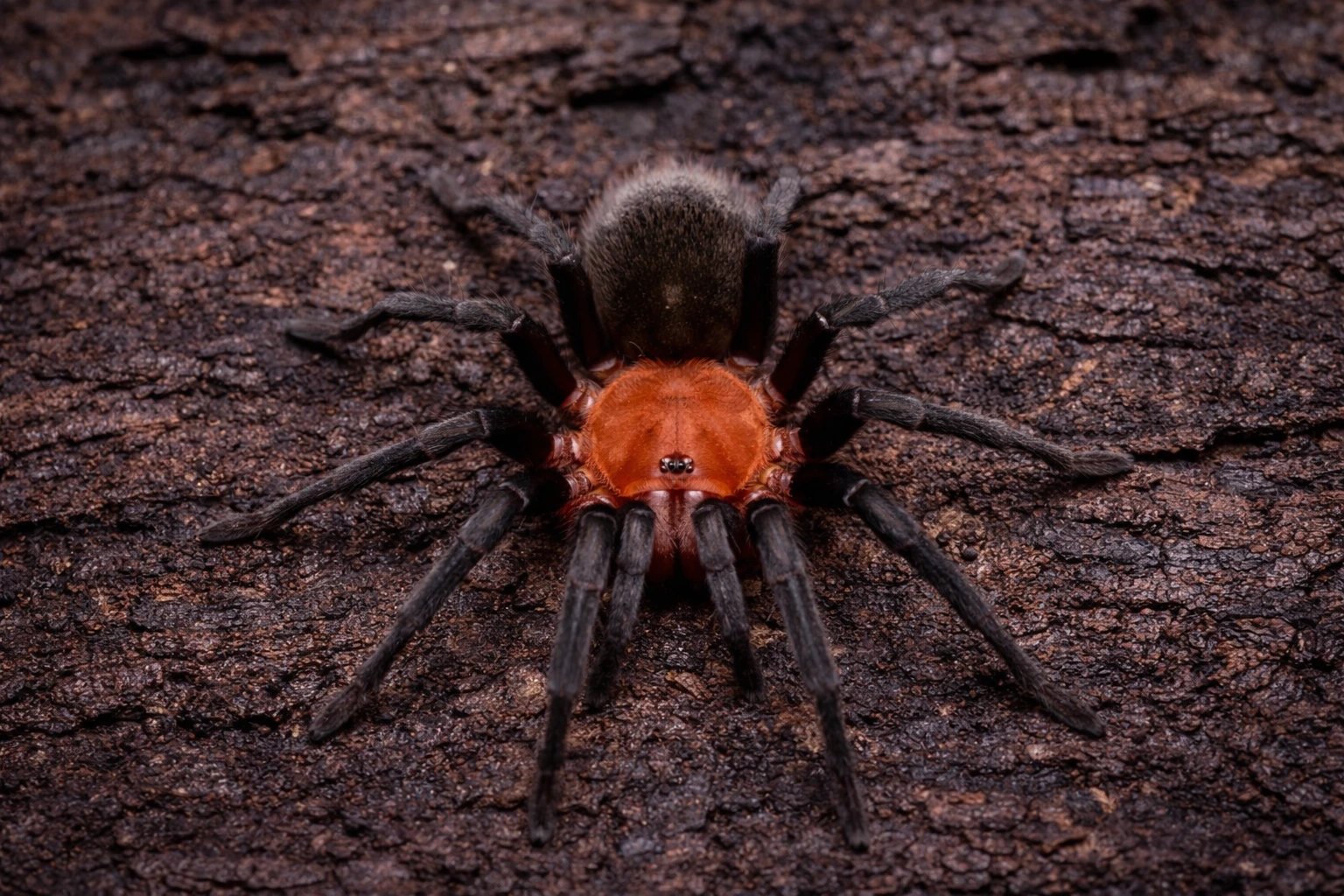
If you want a colorful tarantula, but without the huge size, Bumba cabocla is a great choice. This terrestrial species from Brazil has arust-red carapaceand avelvety black abdomen.
Info at a glance:
Size: 5–6 cm DC, 13–15 cm span
Temperament: quick, skittish; it escapes or brushes hairs more often than it attacks
Venom: weak
Breeding:
Terrarium: approx. 25×25×20 cm (adult female), substrate for shallow minks
Temp.: 24–27°C (toleruje 21–22°C)
Humidity: ~70%, part of the substrate slightly damp; Don't dry out the young ones
Light: no requirements
Feeding:
young: every 3–5 days (small insects, cockroach hatching)
adults: every 10-14 days (cockroaches, crickets, locusts) do not overfeed
Plus: It often spiders well and is great for observing.
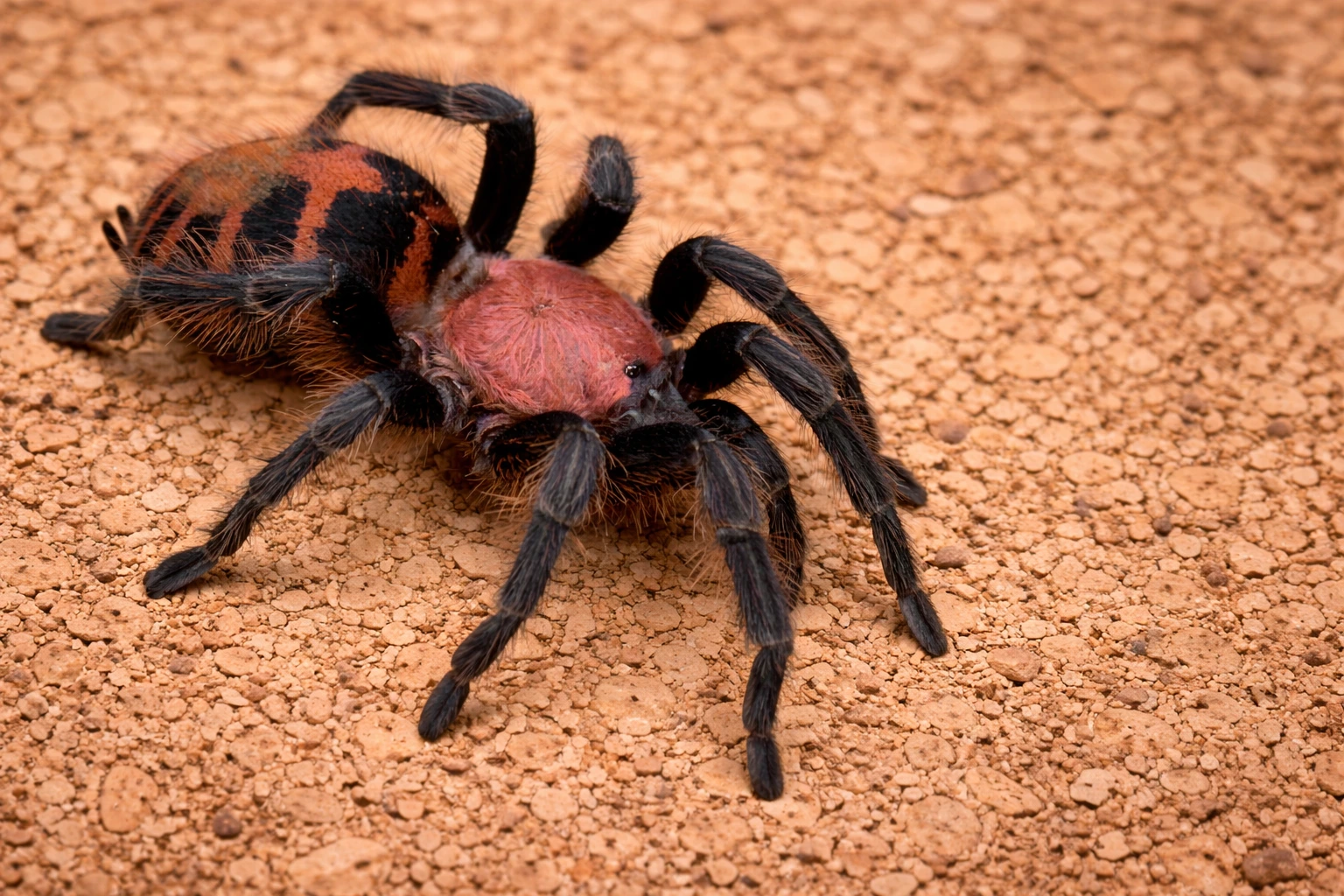
19)Davus pentaloris– NW, terrestrial
What to feed (safe, standard feed)
Cockroaches: red runner/turkish, dubia (if you have it), lateralis – usually the best.
Crickets: ok, but watch out (they can bite during molting).
Locusts (smaller individuals) – also ok.
Larvae (mealworm/superworm) – rather as a variety, because they are fatty; best served in a bowl so they don't get buried.
Forage size: approximately feeder length = 0.5–1× the length of the spider's carapace (rather smaller in toddlers).
How often to feed (approximately)
Sling (baby): 2× a week (small cockroaches/small crickets, possibly "pre-killed").
Juvenile: 1× a week (1-2 appropriate feeds).
Subadult/adult: every 10-14 days (1 larger or 2 smaller feeders).
Abdominal rule: let the abdomen be approximately ~1-1.5× the size of a carapace. If a "balloon" is made - less often; if you noticeably lose weight – more often.
Water and humidity and feeding
Always a bowl of water (also for young people - shallow, with a pebble).
For slings, aslightly moist corner of theground may help, but without a "swamp".
Important safety rules
Do not feed during pre-molt/molt: when the spider refuses to eat, its abdomen darkens and it becomes lethargic - this is normal.
Take away uneaten food after 24 hours (and if you suspect molting, it's best to do so immediately).
After molting: wait before feeding
sling: usually3-5 days
larger: 7–14 days (until the fangs become noticeably darker/harder).
Do not feed vertebrates (mice, etc.) - unnecessary risk and it is easy to make the spider fat.
Breeding: rather “dry” with a bowl; likes hiding places and spider webs.
Faults: Wet terrarium with no ventilation.
20)Neoholothele incei (gold/olive) – NW, terrestrial/webber
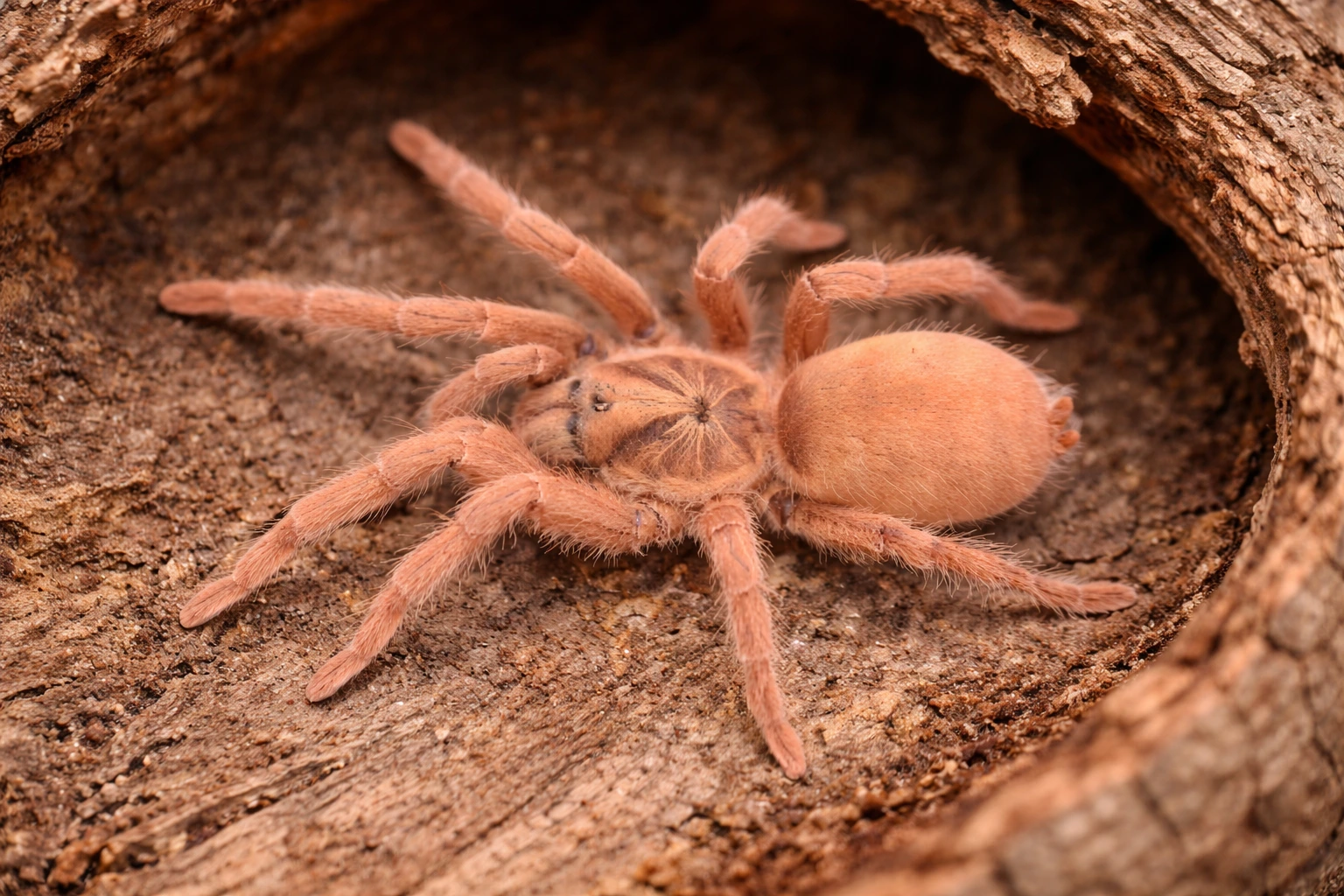
Feeders (the best)
Cockroaches (most comfortable): red runner / turkish / lateralis, dubia (nymphs).
Crickets (ok, but be careful, especially before molting).
Locust (smaller pieces) – as a variety.
Larvae (mealworm/superworm) – sporadically, because they are fatty and often bury themselves (better in a bowl).
Forage size: usually 0.5–1× the length of the carapace (rather smaller in slings).
How often to feed (practical scheme)
Sling (toddler): 2-3x per week small feeders (cockroach nymphs, small crickets; in the case of midgets they may be "pre-killed").
Juvenile: 1× per week (1-2 suitable pieces).
Adult female: every 7–10 days (1 larger or 2 smaller ones).
Adult male: usually less frequent and smaller (often has less appetite).
Inspection after the abdomen: don't let it "balloon" - it's easy to overfeed it.
How to serve at Webber's (important for incei)
Place the feederclose to the entrance to its web tunnel - it often hunts from an ambush.
If the feeder runs around the entire container and is not caught:remove after 24 hours.
For very small slings, it is safe to give lightly bruised / killed food so that it does not cause stress and does not risk biting.
When not to feed
Pre-molt: refusal to eat, lethargy, "dimming" colors - normal.
After molting, wait:
sling: usually3-5 days
larger: 7–14 days (until the fangs darken and harden)
Water
Always a bowl of water (even a small one).
Humidity is rather moderate: you can keep the corner slightly moist, but without overwatering it (too wet = mold in Webbers).
Plus: intense spiderwebbing, great "display" in a small tank.
Breeding: dry-moderate, good ventilation.
Reproduction: can be reproduced often - watch out for "excess young".
21)Cyriocosmus elegans– NW, terrestrial (dwarf)
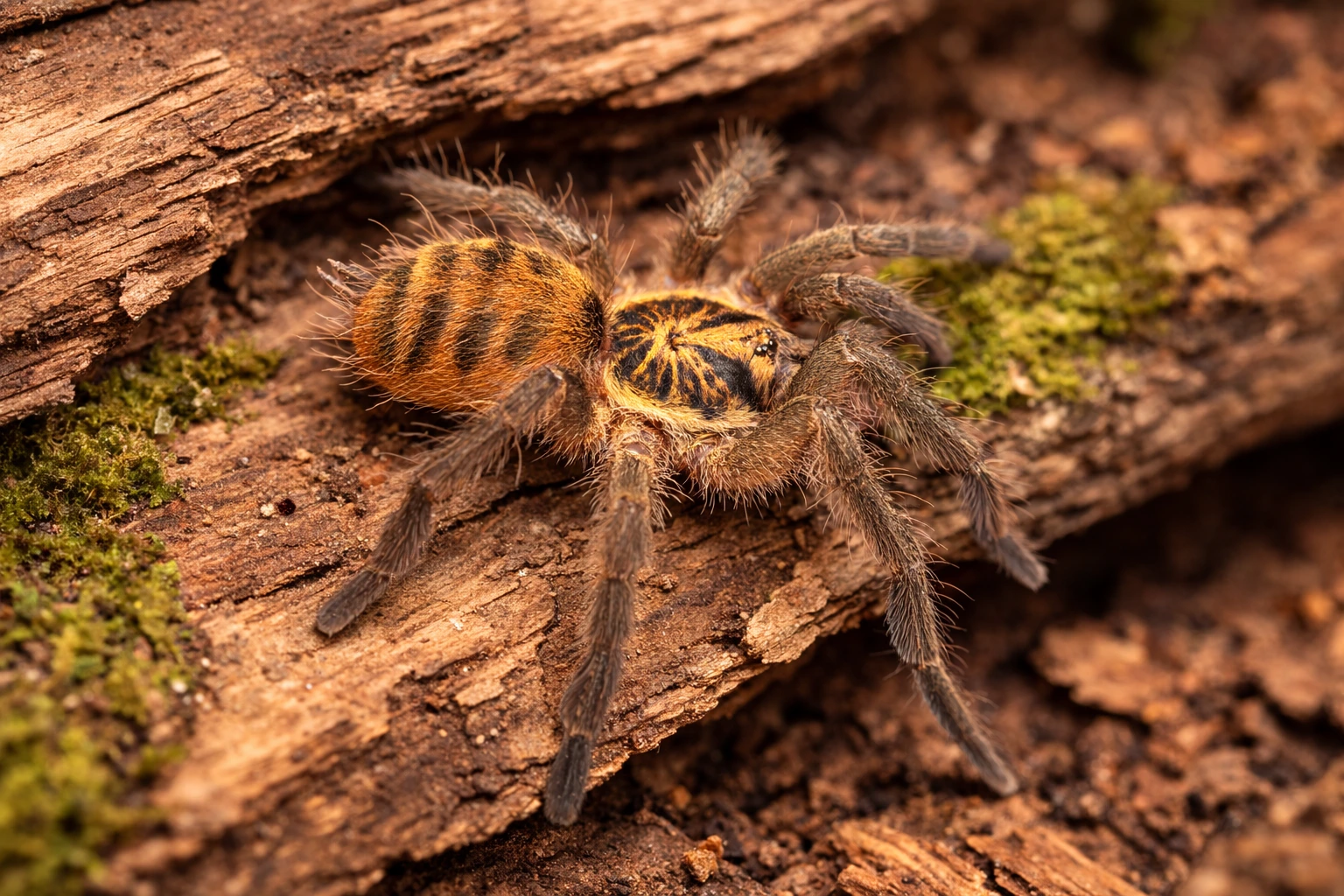 Biotope: tropics, small species.
Feeding Cyriocosmus elegans requires precision because it is a miniature species - especially in the early stages (L1), when the baby is only a few millimeters.
Food selection
Young (L1–L4/L5):
fruit flies (Drosophila melanogaster / larger D. hydei),
"pinheads" (cricket hatching) or micro-roaches,
optionally dead food (a piece of mealworm, a cricket leg) - at this age they cope well with carrion.
Adults/juveniles:
little crickets,
small cockroaches (e.g. B. dubia up to approx. 1 cm),
mealworm as a variety.
Frequency
Slings (L1–L5): co 2–3 dni.
Adult: once a week or every 10 days.
PRO rules (safe and practical)
Forage size: no larger than abdomen (max.carapace).
Leftovers: remove uneaten prey after 24 h (moisture = risk of mold and stress).
Moult: do not feed during and after the molt for approximately 7 days (until the tusks/carapace harden).
Water: if the substrate is moist, adults can be given a micro-bowl; toddlers usually benefit mainly frommoisture and food.
Growing: small container, slight moisture gradient, great ventilation.
Mistakes: terrarium too large (harder to control and find food).
22) Pamphobeteus (np. antinous / sp.) – NW, naziemny
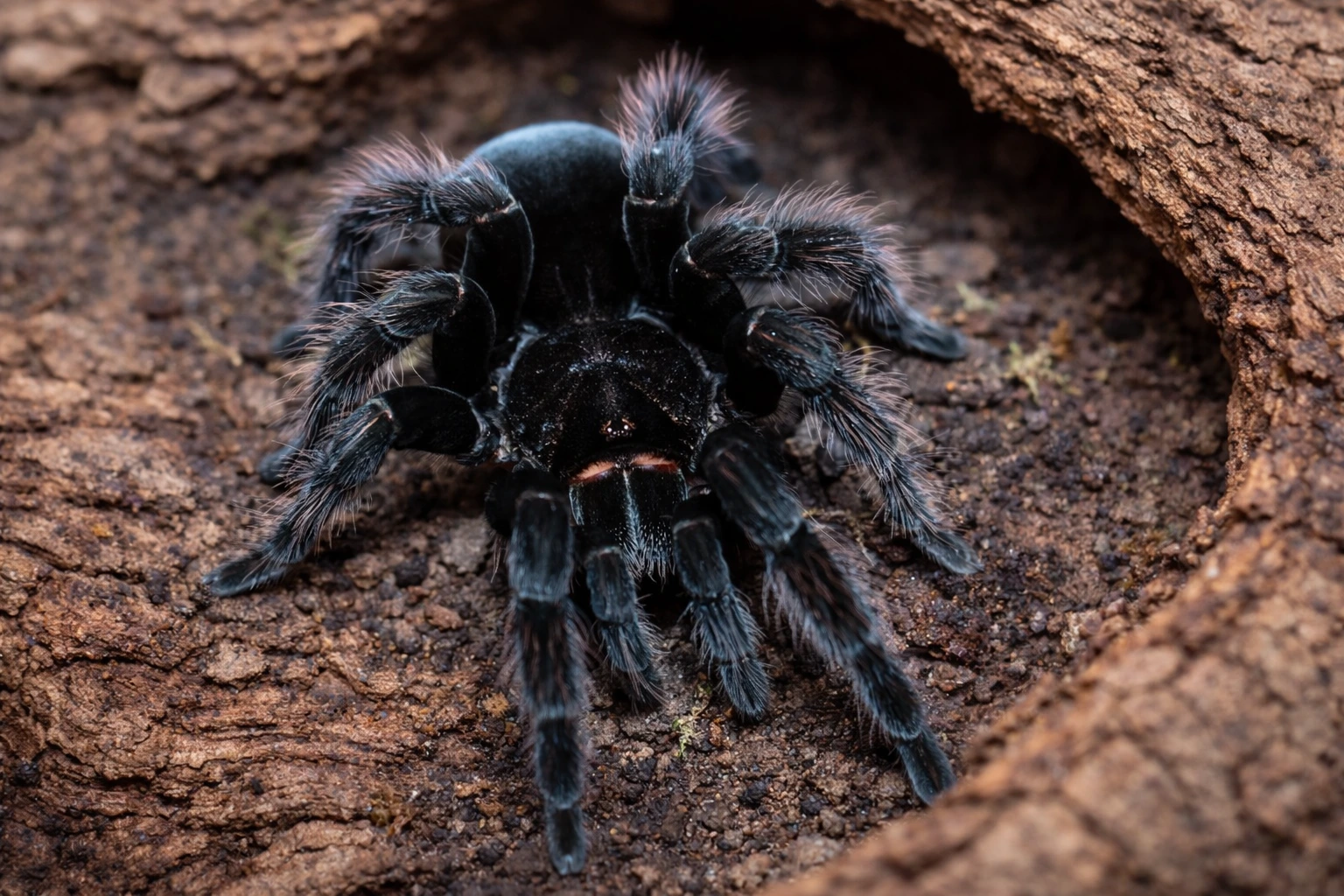
Pamphobeteus - feeding terrarium "vacuum cleaners" (P. antinous, P. sp. Machala)
Tarantulas of the genusPamphobeteushave a reputation as real "vacuum cleaners" in the terrarium. They are famous for theirhuge appetite, quick reaction to movement and very aggressive food intake. If you like species that don't bother you when eating, you're in the right place.
What to serve?
The basis of the diet (the safest and most convenient way):
świerszcze
cockroaches (e.g. Turkish, Argentinian, dubia)
szarańcza
Young (L1–L4)
hatching a cricket or cockroach
finely chopped mealworms
they also often acceptdead food (“carrion”), which can be convenient with the youngest
Adult
Due to the size (in females, the leg span can exceed20 cm), the portion is also "specific". An adult female can eat several large cockroaches or several pieces of locusts in one feeding.
Variety (optional)
Sometimes it is possible to administer mouse pups (e.g. once a year), but this is notnecessary and it can easily lead tofatness. In practice, insects are enough.
How often to feed?
Young (slings):
2-3 times a week (rapid growth = more frequent meals)
Juveniles and adults:
once a week or every 10 days
Pro tip: look at the abdomen. If it becomes noticeably "exaggerated" and much wider than the cephalothorax - slow down with feeding.
Key rules (so as not to make mistakes)
Selection of prey size
It is best for the insect to beclose in size to the spider's abdomen (not larger).
Tidy after feeding
remove boluses and uneaten insectsafter 24 hours
This limits mold and reduces spider stress.
Moult = break in eating
Pamphobeteuses grow quickly and shed frequently. Before molting, they may not eat for up to several weeks - this is normal.
Water and humidity
Always providea shallow bowl of water. This genus usually likeshigher humidity (approx. 70-80%)so constant access to water is mandatory.
C. "Architects of the Spider's Web" and arboreal for intermediate levels
23)Chromatopelma cyaneopubescens (GBB)– NW, terrestrial/webber
Origin/biotope: Endemic to Venezuela; strongly associated with the dry "xeric scrub" of Paraguaná and the surrounding area, it makes hiding places in dead wood/bark cracks. (wsc.nmbe.ch)
Breeding: rather dry, but with a bowl; gives a lot of cobwebs (great "display").
Feeding: usually trouble-free.
Mistakes: "tropical sauna" - this species does not need a wet substrate.
24) Caribena versicolor – NW, nadrzewny
Biotope: Caribbean (Martinique), arboreal life.
Breeding: high tank + cross-vent; moisture yes, but without stagnation.
Key: Historical problems (SADS) today are mainly associated with stagnant, too humid airand poor ventilation. (The Tarantula Collective)
Faults: too wet + poor ventilation; no hooks to build a spider web "tube".
25) Avcularia avcularia – NW, nadrzewny
Breeding: as in Caribena: airiness, height, cork tube, bowl.
Errors: "closed jar" and wet substrate.
26) Avcularia purpurea – NW, nadrzewny
Breeding: air + stability; a genre rather for people who already understand "arboreal air".
27) Ybyrapora Diversipes – NW, nadrzewny
Breeding: Similar to Avicularia, but can be faster and more timid.
Bugs: too few hiding places and “attachment points”.
28) Psalmopoeus irminia – NW, nadrzewny/”semi”
Temperature: Fast, defensive, but great at observation.
Breeding: high tank, hiding place, moderate humidity + air circulation.
Errors: attempts at “manual operation”.
29) Psalmopoeus cambridgei – NW, nadrzewny
Breeding: as above; Routine and calm service are important.
30) Tapinauchenius violaceus – NW, nadrzewny
Character: Very fast.
Breeding: high tank, lots of hiding places, airy.
Errors: opening wide without a plan - escapes most often occur during feeding/servicing.
31)Ephebopus murinus (skeleton tarantula) – NW, terrestrial/burrowing
Interesting fact: it has stinging hairs in an unusual place (not on the abdomen).
Breeding: more humid in the ground, but with air.
Thanks for reading this article
Blog Master
